

Argentina sparks new Falklands tensions after World Cup victory as UK defends Royal Navy warship mission

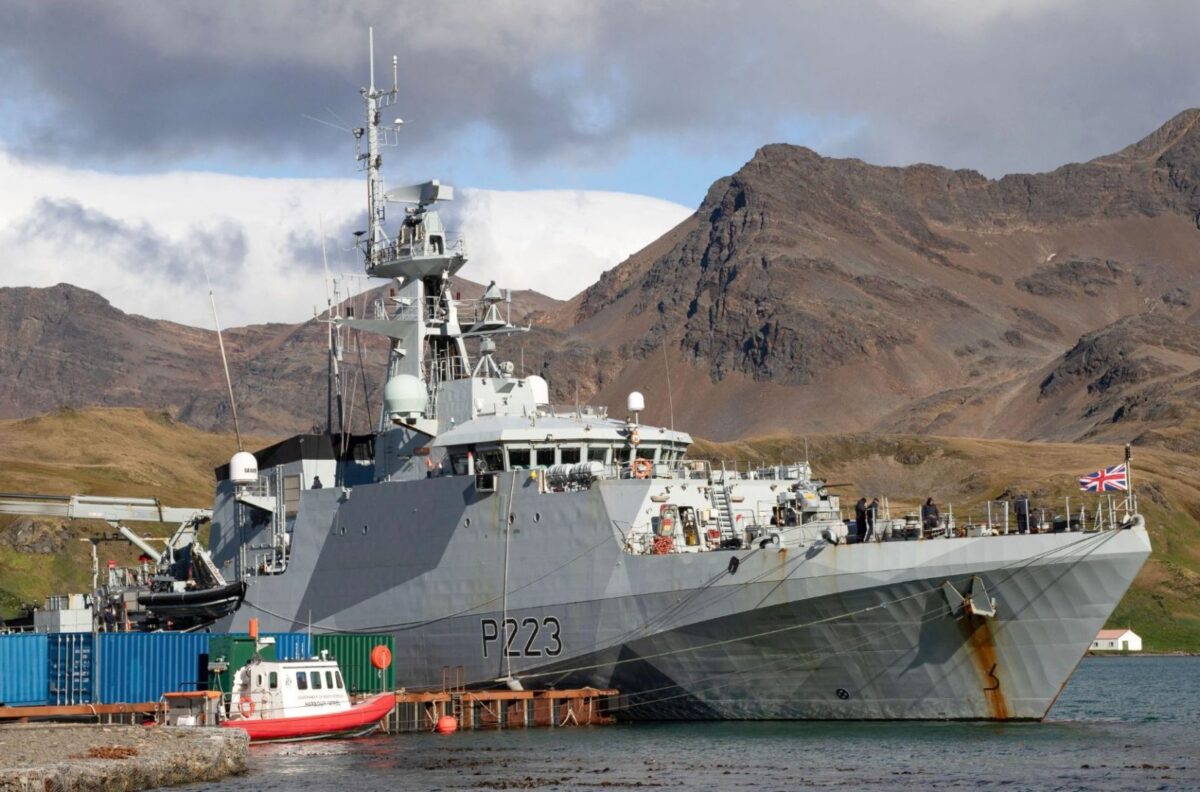
Argentina World Cup victory over England has renewed diplomatic tensions with the UK over the Falkland Islands and HMS Medway’s movements. Image Credit: Alamy
Diplomatic tensions between Argentina and the United Kingdom have intensified after Argentina’s dramatic World Cup semi-final victory over England reignited the long-running dispute over the Falkland Islands.
The controversy erupted when Argentine players celebrated their 2-1 win by displaying a banner reading “Las Malvinas son Argentinas” (“The Falklands are Argentine”), prompting an immediate response from British officials.
The dispute escalated further when Argentina accused British warship HMS Medway of making an “illegal incursion” into Argentine waters, adding a geopolitical dimension to what had initially appeared to be football-related tensions.
UK Responds Firmly to Argentina’s Falklands Claims
Downing Street quickly rejected Argentina’s renewed sovereignty claims.
A spokesperson for Prime Minister Keir Starmer’s government stated that while England may have lost the football match, Britain’s position regarding the Falklands remains unchanged.
British officials reiterated that the principle of self-determination remains central to the UK’s stance, pointing to the 2013 referendum in which Falkland Islanders overwhelmingly voted to remain a British Overseas Territory.
The UK government also emphasised its continued commitment to defending the islands and supporting their residents.
Argentina Accuses HMS Medway of ‘Illegal Journey’
Hours after the football match, Argentine Foreign Minister Pablo Quirno accused the Royal Navy’s HMS Medway of entering Argentine territorial waters without proper authorization.
Buenos Aires claimed the patrol vessel transited waters near Santa Cruz and Tierra del Fuego earlier this month without consultation, describing the movement as a “military incursion.”
Argentina subsequently lodged a formal diplomatic protest with the British embassy.
However, British officials strongly disputed the allegations.
According to the UK government, Argentina was informed in advance of HMS Medway’s route, which formed part of a routine logistics mission supporting British Antarctic research operations.
British authorities insist the vessel’s transit complied fully with international maritime law.
International Law at the Center of the Dispute
The disagreement largely centers on differing interpretations of the United Nations Convention on the Law of the Sea (UNCLOS).
British officials argue that HMS Medway’s voyage constituted an “innocent passage”, a legal principle that permits ships to move through territorial waters without requiring prior authorization, provided they are not engaging in hostile activities.
The UK notes that Article 17 of UNCLOS explicitly allows such movements and points out that Argentina is itself a signatory to the convention.
Defense sources maintain that the ship followed the most direct route possible while considering weather and operational requirements.
READ ALSO
Who are the Falkland Islanders? Everything to know as Argentina reignites battle over the Islands
World Cup Banner Rekindles Historical Tensions
The Falklands issue has long carried deep emotional and political significance in Argentina.
Ahead of the semi-final, Argentine Vice-President Victoria Villarruel had referred to England as “invaders” and “usurping pirates,” while celebrating Argentina’s victory as more than just a sporting triumph.
The players’ decision to display the political banner has also sparked calls for FIFA to investigate whether its rules prohibiting political messaging during tournaments were breached.
UK Business Secretary Peter Kyle described the display as “entirely inappropriate,” arguing that politics should remain separate from football.
The Falklands Conflict Still Shapes Relations
The Falkland Islands remain one of the most sensitive issues in UK-Argentina relations.
The two nations fought a brief but deadly war in 1982 after Argentina invaded the South Atlantic archipelago. The conflict resulted in the deaths of 649 Argentines and 255 British military personnel.
Despite the passage of more than four decades, sovereignty claims continue to generate political tension.
Analysts suggest Argentina increasingly uses diplomatic, legal and symbolic measures to keep international attention focused on its claim over the islands.
Experts note that major global events, including football tournaments, provide opportunities to reinforce domestic nationalist sentiment and raise awareness of Argentina’s position internationally.
Could Tensions Escalate Further?
Most experts believe another military confrontation remains highly unlikely.
However, recent developments demonstrate that the Falklands issue remains unresolved and emotionally charged in both countries.
Political analysts argue that while current disputes are being pursued through diplomacy, symbolism and international institutions, sovereignty disagreements are likely to continue shaping relations between Buenos Aires and London for years to come.
FAQ
Why are Argentina and the UK disputing the Falkland Islands?
Argentina claims the islands, known locally as Las Malvinas, were illegally occupied by Britain in 1833. The UK argues that the islanders have the right to self-determination and have repeatedly chosen to remain British.
Who currently controls the Falkland Islands?
The Falkland Islands are currently governed as a British Overseas Territory under UK administration.
What is “Las Malvinas son Argentinas”?
The phrase translates to “The Falklands are Argentine” and is widely used in Argentina to reinforce its sovereignty claim over the islands.
What happened with HMS Medway?
Argentina accused HMS Medway of entering its territorial waters without authorization during a logistics mission to Chile. Britain says the voyage complied with international law and that Argentina was notified beforehand.
Did the UK break international law?
The UK maintains that HMS Medway exercised the right of innocent passage under the UN Convention on the Law of the Sea, making the transit lawful.
Why did Argentina’s World Cup celebration cause controversy?
Argentine players displayed a political banner regarding the Falkland Islands after defeating England, raising concerns about political messaging during sporting events.
Could FIFA punish Argentina?
Potentially. FIFA generally prohibits political statements during tournaments. Any disciplinary action would depend on whether the governing body determines that its regulations were violated.
What happened during the 1982 Falklands War?
Argentina invaded the Falkland Islands in April 1982. Britain launched a military operation to retake the islands, leading to a 74-day conflict that ended with Argentina’s surrender.
How far are the Falkland Islands from Britain and Argentina?
The islands are approximately 300 miles from mainland Argentina and about 8,000 miles from the United Kingdom.
Is another Falklands war likely?
Most analysts believe another military conflict is highly unlikely. Current disputes are largely diplomatic and political in nature.
What did Falkland Islanders vote for?
In a 2013 referendum, more than 99% of voters chose to remain a British Overseas Territory.
Why does the Falklands issue remain important in Argentina?
The issue is deeply tied to national identity, history and sovereignty. It remains a significant political and emotional topic in Argentine society.