

Inside the Lindsay Clancy trial closing arguments: Prosecutors and defense clash over criminal responsibility

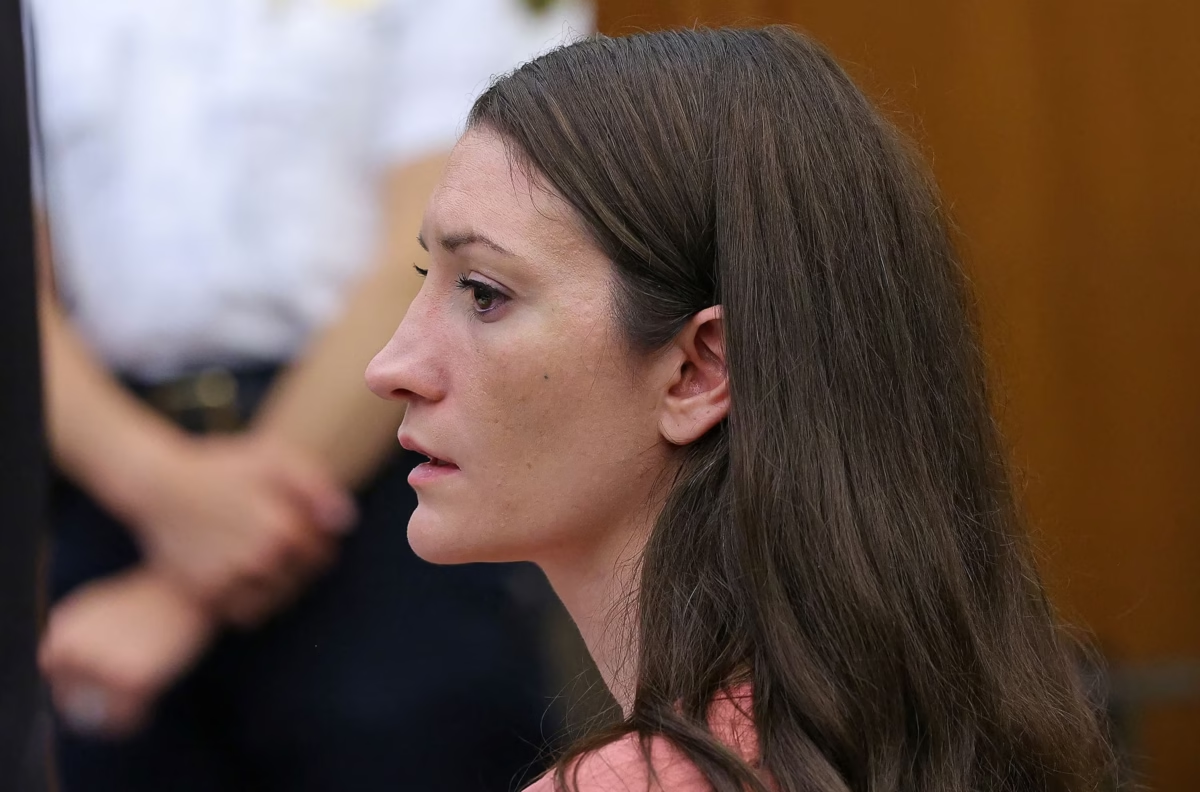
Lindsay Clancy attends her murder trial at Plymouth Superior Court, in Plymouth, Massachusetts, August 3, 2026. CREDIT: Greg Derr/Pool via Reuters
The Lindsay Clancy murder trial has reached one of its most consequential moments, with attorneys delivering their closing arguments before a Massachusetts jury prepares to decide whether the mother is criminally responsible for the deaths of her three children.
Clancy, 36, is charged in connection with the January 2023 deaths of her children, Cora, Dawson and Callan, at the family’s home in Duxbury, Massachusetts. There is no dispute that Clancy caused their deaths. The central issue for jurors is her mental state at the time and whether she can legally be held criminally responsible for her actions.
The defense has argued that Clancy was suffering from postpartum psychosis and severe mental illness, while prosecutors contend that she was aware of the wrongfulness of her actions and acted deliberately. The case has drawn widespread attention because of its focus on maternal mental health, psychiatric treatment and the legal standard for criminal responsibility.
What Prosecutors Told the Jury About Lindsay Clancy
During closing arguments, prosecutors argued that Clancy’s mental health struggles did not eliminate her criminal responsibility.
The prosecution’s position is that Clancy was depressed and experiencing mental health difficulties but still understood the difference between right and wrong. Prosecutors highlighted evidence they say showed planning and deliberate decision-making before the deaths.
According to reporting from the trial, prosecutors pointed to Clancy’s actions on the day of the killings, including events surrounding her husband’s departure from the family home, as evidence supporting their argument that the deaths were premeditated.
The prosecution has emphasized that the case is not simply about whether Clancy was mentally unwell. Instead, the key legal question is whether her mental condition prevented her from understanding the wrongfulness of her conduct or from conforming her conduct to the law.
Lindsay Clancy’s Defense Argues Postpartum Psychosis Caused the Tragedy
Clancy’s defense team has presented a sharply different explanation.
Her attorney, Kevin Reddington, has argued that she was experiencing a severe psychiatric crisis and was suffering from postpartum psychosis when her children were killed. The defense has maintained that her mental health had deteriorated significantly and that she should not be considered criminally responsible because of her psychiatric condition.
Defense experts testified during the trial about Clancy’s mental health and the possibility that psychosis affected her perception and control over her actions. The defense also raised concerns about her psychiatric treatment and medication history.
The argument places the jury at the center of a difficult legal and medical question: whether severe mental illness can rise to the level required under Massachusetts law to remove criminal responsibility.
Postpartum psychosis is a serious psychiatric emergency, and the case has renewed public discussion about the need for effective maternal mental health support and early intervention for women experiencing severe symptoms after childbirth.
READ ALSO
Why Criminal Responsibility Is the Central Issue in the Lindsay Clancy Trial
The Lindsay Clancy case is unusual because the identity of the person responsible for the children’s deaths is not the primary dispute at trial.
Instead, jurors must decide whether Clancy was legally criminally responsible at the time of the killings.
Judge William Sullivan instructed jurors on criminal responsibility and the standards that apply when mental disease or defect is raised as a defense. Under the instructions described in court reporting, the question involves whether a mental disease or defect left the defendant without substantial capacity to appreciate the criminality or wrongfulness of her conduct or to conform her conduct to legal requirements.
Jurors were also instructed on the murder charges and a possible manslaughter consideration, meaning they must carefully evaluate both the evidence surrounding the deaths and Clancy’s mental condition.
Expert Testimony Created Sharp Disagreement Over Psychosis
Much of the five-week trial focused on competing expert opinions.
Defense witnesses supported the argument that Clancy was experiencing psychosis, while prosecution experts challenged whether her reported symptoms demonstrated that she lacked criminal responsibility.
The prosecution’s rebuttal case included expert testimony questioning whether Clancy’s reported experiences were consistent with psychosis and whether she remained aware of the nature and wrongfulness of her actions.
That conflict between psychiatric experts has become one of the defining features of the trial. Jurors must now assess testimony from mental health professionals alongside evidence about Clancy’s behavior before and after the deaths.
The jury heard from approximately 85 witnesses before testimony concluded, underscoring the scale and complexity of a case that has attracted national attention.
What Happens After Lindsay Clancy’s Closing Arguments?
Following closing arguments and the completion of jury instructions, the case will move to deliberations.
Jurors will consider the prosecution’s argument that Clancy knowingly and deliberately committed murder against the defense’s claim that severe mental illness made her legally not criminally responsible.
A conviction on first-degree murder could carry a sentence of life imprisonment without the possibility of parole. If Clancy is found not criminally responsible, the legal outcome would involve psychiatric commitment rather than a conventional criminal prison sentence, subject to the applicable Massachusetts legal process.
The verdict will be closely watched not only because of the devastating circumstances surrounding the deaths of the three children but also because of the broader questions raised about postpartum mental illness, psychiatric treatment and criminal accountability.
As the jury begins its deliberations, the Lindsay Clancy trial has entered its final and most legally significant phase.
FAQ
Who is Lindsay Clancy?
Lindsay Clancy is a Massachusetts woman who is on trial in connection with the January 2023 deaths of her three children, Cora, Dawson and Callan, at the family’s home in Duxbury, Massachusetts.
What is Lindsay Clancy accused of?
Clancy faces murder charges related to the deaths of her three children. The trial has focused heavily on whether she was legally criminally responsible for her actions because her defense argues that she was suffering from severe mental illness.
What happened to Lindsay Clancy’s children?
Prosecutors allege that Clancy strangled her three children at the family’s Duxbury home in January 2023. The deaths of the children are at the center of the Massachusetts murder trial.
What is Lindsay Clancy’s defense?
Lindsay Clancy has pleaded not guilty by reason of lack of criminal responsibility. Her defense argues that she was experiencing severe psychiatric illness, including postpartum psychosis, and should not be held criminally responsible for the deaths.
What is postpartum psychosis?
Postpartum psychosis is a severe psychiatric condition that can occur after childbirth. It is considered a psychiatric emergency and can involve major disturbances in thinking, perception, mood and behavior. The Lindsay Clancy trial has generated renewed attention around severe postpartum mental health conditions.
Did prosecutors agree that Lindsay Clancy had mental health problems?
Prosecutors have acknowledged that Clancy experienced mental health difficulties. Their argument, however, is that mental illness alone does not automatically remove criminal responsibility. They contend that she remained aware of the wrongfulness of her actions.
What did the prosecution argue during closing arguments?
Prosecutors argued that Clancy’s actions were deliberate and that she understood the difference between right and wrong. They pointed to evidence they say demonstrated planning and awareness surrounding the killings.
What did Lindsay Clancy’s lawyer argue?
Defense attorney Kevin Reddington argued that Clancy was suffering from severe mental illness and psychosis. The defense maintained that her psychiatric condition prevented her from being legally criminally responsible.
How long did the Lindsay Clancy trial last?
The trial included approximately five weeks of testimony, with the jury hearing from around 85 witnesses before the case moved to closing arguments.
What is the main issue the jury must decide?
The key issue is whether Lindsay Clancy was legally criminally responsible at the time of the deaths. Jurors must evaluate the evidence about her mental state alongside the prosecution’s evidence of alleged planning and intent.
What happens if Lindsay Clancy is convicted?
A conviction for first-degree murder could result in a sentence of life imprisonment without the possibility of parole.
What happens if Lindsay Clancy is found not criminally responsible?
If she is found not criminally responsible because of mental illness, she would not receive a standard criminal conviction for the killings. The legal process could involve commitment to a psychiatric facility under Massachusetts law.
Has the Lindsay Clancy verdict been announced?
At the time of this report, the trial has reached the closing-arguments stage, with jury deliberations expected after the judge completes the relevant instructions.
Why has the Lindsay Clancy case received national attention?
The case has attracted widespread attention because it combines a devastating family tragedy with difficult questions about postpartum mental illness, psychiatric treatment, psychosis and criminal responsibility. It has also generated significant public discussion about mental health care available to mothers after childbirth.