

Lindsay Clancy trial: Final testimony could decide whether Massachusetts mother is guilty or found not guilty by reason of insanity

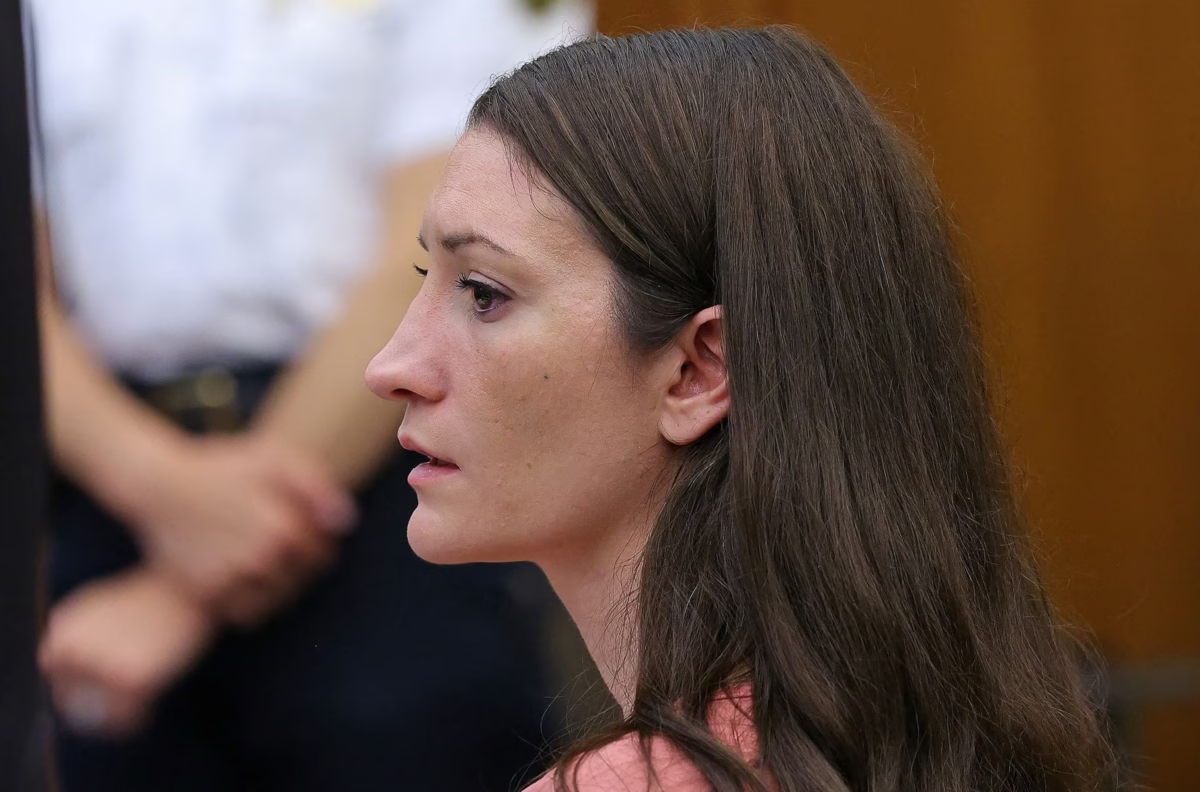
Lindsay Clancy attends her murder trial at Plymouth Superior Court, in Plymouth, Massachusetts, August 3, 2026. CREDIT: Greg Derr/Pool via Reuters
The Lindsay Clancy trial is entering its decisive stage as jurors prepare to weigh competing psychiatric testimony over whether the Massachusetts mother was legally responsible when her three children died in January 2023.
The case has centered on a critical question: did Clancy understand that her actions were wrong and have the ability to control her behavior, or was she experiencing postpartum psychosis and other severe mental health problems that made her unable to appreciate the consequences of what she was doing?
After weeks of testimony, the defense rested its case Friday with evidence from forensic psychiatrist Dr. Phillip Resnick. Prosecutors then presented rebuttal testimony as the trial moved closer to closing arguments and jury deliberations.
Lindsay Clancy Trial Focuses on Postpartum Psychosis
Clancy is accused of killing her three children, Cora, Dawson and Callan, in January 2023. Cora was five years old, Dawson was three and Callan was eight months old.
The defense has acknowledged the deaths but has disputed the prosecution’s interpretation of Clancy’s mental state. Her attorneys argue that she was suffering from postpartum psychosis, bipolar disorder and complications connected to psychiatric treatment.
The defense’s case has focused heavily on whether Clancy had lost contact with reality at the time of the killings.
That issue could prove decisive because the jury must consider not only what happened but also whether Clancy was legally capable of understanding the wrongfulness of her actions under Massachusetts law.
Witnesses Describe Alleged Voices and Hallucinations
One of the most significant developments this week came from testimony about an alleged voice that Clancy said she heard around the time of the killings.
Hospital chaplain Sheila Cavanaugh testified that she met Clancy after the deaths of the children and her alleged suicide attempt. According to Cavanaugh, Clancy described hearing a persistent male voice.
The chaplain said Clancy told her the voice commanded her to kill her children and warned that she and the children would not be safe if she refused.
Cavanaugh also described Clancy’s emotional state while receiving treatment at Brigham and Women’s Hospital as unusually neutral, with what she characterized as a flat affect.
The testimony has become an important part of the defense argument that Clancy was experiencing symptoms consistent with severe psychosis.
Defense Expert Says Clancy Was Psychotic
Forensic psychologist Paul Zeizel, who met with Clancy numerous times and reviewed her medical records, also testified about her reported experiences.
Zeizel recalled Clancy describing a male voice that allegedly told her she had no choice but to kill her children and then herself.
He testified that Clancy had been unable to conform her behavior to the requirements of the law and lacked an appreciation of the wrongfulness of her actions.
Zeizel also pointed to psychological testing conducted by a government doctor, saying the testing did not show evidence that Clancy was deliberately manufacturing or exaggerating psychiatric symptoms.
His testimony was presented as support for the defense’s argument that Clancy’s mental state went beyond depression and involved a severe break from reality.
Dr. Phillip Resnick Testifies About Postpartum Psychosis
The defense’s final witness was Dr. Phillip Resnick, a forensic psychiatrist who specializes in postpartum disorders.
Resnick testified that he believed Clancy was experiencing postpartum psychosis on the day her children died. He described her as being severely psychotic and said she experienced command hallucinations.
He also testified about what he called a “delusion of influence,” in which Clancy believed an external force had taken control of her body.
Resnick’s testimony could be particularly important because postpartum psychosis is at the heart of the defense’s explanation of Clancy’s behavior.
The defense has argued that the condition affected Clancy’s ability to understand reality and recognize the wrongfulness of her actions.
READ ALSO
Prosecutors Challenge Insanity Defense
Prosecutors have presented a different picture of Clancy’s mental condition.
They argue that she acted deliberately and retained the ability to understand that her conduct was wrong. Their case challenges the defense’s claim that postpartum psychosis made her legally incapable of being held responsible.
Prosecutors recalled psychiatrist Dr. Avram Mack to testify during the rebuttal phase of the trial.
Mack said Clancy suffered a major depressive episode during 2022 and 2023. However, his testimony challenged the conclusion that she was experiencing a level of psychosis that removed her criminal responsibility.
He described Clancy as generally friendly and cooperative during his meetings with her following the deaths, although she appeared distressed at certain points.
Massachusetts Law and Criminal Responsibility
A central issue for the jury is Massachusetts’ legal standard for determining whether someone can be held criminally responsible because of mental illness.
The prosecution must establish that Clancy did not suffer from a mental disease or defect that prevented criminal responsibility, or that she nevertheless retained substantial capacity to understand the wrongfulness or criminality of her conduct and to follow the law.
That distinction makes the expert testimony especially significant.
The jury is not simply being asked whether Clancy suffered from a mental illness. It must determine whether her mental condition met the legal threshold for an insanity defense at the time of the alleged killings.
Defense and Prosecution Disagree Over Her Condition
The competing testimony has produced sharply different interpretations of Clancy’s behavior.
The defense has portrayed her as a severely ill mother experiencing hallucinations, delusions and a loss of control associated with postpartum psychosis.
Prosecutors, meanwhile, have challenged whether the evidence demonstrates that Clancy lacked the capacity to understand that her actions were wrong.
The disagreement means the jury will have to assess medical records, witness accounts and expert opinions alongside the other evidence presented during the trial.
What Happens if Lindsay Clancy Is Found Not Guilty by Reason of Insanity?
An insanity verdict would not mean Clancy simply walks out of court.
According to the possible outcomes presented during the trial, a finding of not guilty by reason of insanity would result in Clancy being sent to a state psychiatric hospital. Her status would then be subject to periodic review concerning possible release.
If the jury instead finds in favor of the prosecution, the reported sentence would be life in prison without parole.
The difference between those outcomes makes the jury’s assessment of the psychiatric evidence crucial.
Closing Arguments Expected Next Week
The trial is now approaching closing arguments, which are expected next week.
Once the attorneys have made their final arguments, the judge will instruct the jury on the relevant legal standards before deliberations begin.
The jury’s decision will determine whether Clancy is found criminally responsible for the deaths of her three children or acquitted by reason of insanity.
The case has also generated broader discussion about postpartum mental health and maternal healthcare in the United States.
Hundreds of women gathered outside the courthouse during the trial in support of Clancy, with some wearing pink and displaying messages such as “She Needed Help.” Supporters have used the case to raise concerns about how women experiencing severe postpartum psychiatric symptoms are treated and whether warning signs receive adequate attention.
Whatever the jury decides, the legal issues surrounding the case may continue beyond the criminal trial. A separate civil case involving Clancy and her former husband remains pending against several mental healthcare providers, including individuals who treated or evaluated Clancy before the deaths.
FAQ
Who is Lindsay Clancy?
Lindsay Clancy is a Massachusetts mother accused of killing her three children in January 2023. Her trial has focused heavily on her mental state at the time of the killings and whether she should be held criminally responsible.
What happened to Lindsay Clancy’s children?
Clancy is accused of killing her three children, Cora, Dawson and Callan, in January 2023. Cora was five years old, Dawson was three, and Callan was eight months old at the time.
The prosecution and defense disagree over Clancy’s mental state and whether she understood the wrongfulness of her actions.
What is the Lindsay Clancy trial about?
The central issue in the trial is whether Clancy should be found guilty of murder or not guilty by reason of insanity.
The defense argues that Clancy was experiencing severe psychiatric problems, including postpartum psychosis, when her children died. Prosecutors dispute that characterization and argue that she retained the ability to understand that her actions were wrong and to follow the law.
Did Lindsay Clancy have postpartum psychosis?
The defense has presented expert testimony arguing that Clancy was experiencing postpartum psychosis following the birth of her third child.
Forensic psychiatrist Dr. Phillip Resnick testified that he believed Clancy was experiencing postpartum psychosis on the day of the killings. He said she experienced what he characterized as command hallucinations and a delusion involving an external force controlling her body.
The prosecution has challenged the defense’s interpretation of her mental state.
What did the defense experts say about Lindsay Clancy?
Defense witnesses provided testimony supporting the argument that Clancy was severely mentally ill when her children died.
Forensic psychologist Paul Zeizel testified that Clancy described hearing a male voice ordering her to kill her children and then herself. He also said she was unable to conform her behavior to the law and did not appreciate the wrongfulness of her actions.
Dr. Resnick similarly testified that he believed Clancy was “frankly psychotic” at the time of the killings.
What did the prosecution say about Lindsay Clancy’s mental state?
Prosecutors have argued that Clancy acted deliberately and retained the ability to understand the consequences and wrongfulness of her actions.
Psychiatrist Dr. Avram Mack testified that Clancy suffered a major depressive episode but challenged the defense’s claim that she was experiencing a psychotic disorder that eliminated her criminal responsibility.
The prosecution’s position is central to the question the jury must ultimately decide.
What is postpartum psychosis?
Postpartum psychosis is a rare but serious psychiatric condition that can occur after childbirth. It can involve symptoms such as hallucinations, delusions, severe confusion, mania or other significant changes in a person’s perception of reality.
In the Clancy trial, the condition is important because the defense argues that it affected her ability to understand reality and the wrongfulness of her conduct.
What does “not guilty by reason of insanity” mean?
A finding of not guilty by reason of insanity does not necessarily mean the person walks out of court.
Under the outcome described in the trial report, an insanity acquittal would result in Clancy being sent to a state psychiatric hospital, where her status could be reviewed periodically to determine whether she could eventually be released.
Could Lindsay Clancy go free if she is found not guilty by reason of insanity?
No. An insanity acquittal would not automatically mean immediate freedom.
According to the reported possible outcomes, Clancy would be committed to a state psychiatric hospital and would be subject to periodic reviews concerning her potential release.
What happens if Lindsay Clancy is found guilty?
If jurors find for the prosecution, the reported consequence is life imprisonment without parole.
The final outcome will depend on the jury’s decision after closing arguments and deliberations.
When will the Lindsay Clancy verdict happen?
The exact timing of the verdict is not yet known. Closing arguments are scheduled for the following week, after which the jury will receive instructions and begin deliberations.
The jury could reach a verdict quickly or take considerably longer, depending on how it evaluates the extensive testimony and evidence.
What evidence could decide the Lindsay Clancy trial?
Expert witness testimony could play a major role in the jury’s decision.
The defense has relied heavily on forensic psychology and psychiatry testimony to argue that Clancy was experiencing postpartum psychosis and could not appreciate the wrongfulness of her actions.
Prosecutors have presented opposing psychiatric evidence and questioned the basis for some of the defense’s conclusions.
What did the hospital chaplain say at the Lindsay Clancy trial?
Hospital chaplain Sheila Cavanaugh, who met with Clancy after the deaths of the children and Clancy’s alleged suicide attempt, testified that Clancy described hearing a male voice.
According to Cavanaugh’s testimony, Clancy said the voice told her that she and her children would not be safe if she did not follow its command.
Cavanaugh also described Clancy’s emotional state in the hospital as unusually neutral or flat.
What did Dr. Phillip Resnick say about Lindsay Clancy?
Dr. Phillip Resnick, a forensic psychiatrist specializing in postpartum disorders, testified for the defense.
He said he believed Clancy was experiencing postpartum psychosis when her children died. He also testified that she experienced command hallucinations and what he described as a delusion of influence.
Resnick has expertise in postpartum disorders and previously consulted on the case of Andrea Yates, a Texas woman who was found not guilty by reason of insanity after killing her five children.
What did the prosecution’s psychiatrist say?
Dr. Avram Mack testified that Clancy experienced a major depressive episode around 2022 and 2023.
Mack said Clancy was generally friendly and cooperative during his meetings with her after the killings, though she appeared distressed at points.
His testimony supported the prosecution’s challenge to the defense’s claim that Clancy was legally insane at the time of the killings.
Why has the Lindsay Clancy trial attracted national attention?
The case has attracted significant attention because it combines a triple child-murder prosecution with questions about postpartum psychosis, maternal mental health and the U.S. mental healthcare system.
The trial has also prompted public discussion about whether mothers experiencing severe psychiatric symptoms receive adequate treatment and whether warning signs are recognized before a crisis occurs.
What does the “She Needed Help” movement mean?
Supporters gathered outside the courthouse during the trial, with some wearing pink clothing and displaying messages including “She Needed Help.”
The demonstrations reflect concerns among supporters about maternal healthcare and whether women experiencing serious postpartum mental health problems receive sufficient support.
Is Lindsay Clancy’s case over after the verdict?
Not necessarily. The Guardian report notes that separate civil litigation involving Clancy and her former husband remains pending against several mental healthcare providers.
The criminal trial will determine Clancy’s criminal responsibility for the deaths, while the civil case involves separate legal claims concerning mental healthcare providers.
What happens after closing arguments in the Lindsay Clancy trial?
After closing arguments, the judge will instruct the jury on the relevant law. The jurors will then deliberate and determine whether the prosecution has established criminal responsibility under the applicable Massachusetts standard.
The jury’s decision will determine whether Clancy is convicted or found not guilty by reason of insanity.