

Trump Sets Iran War Deadline

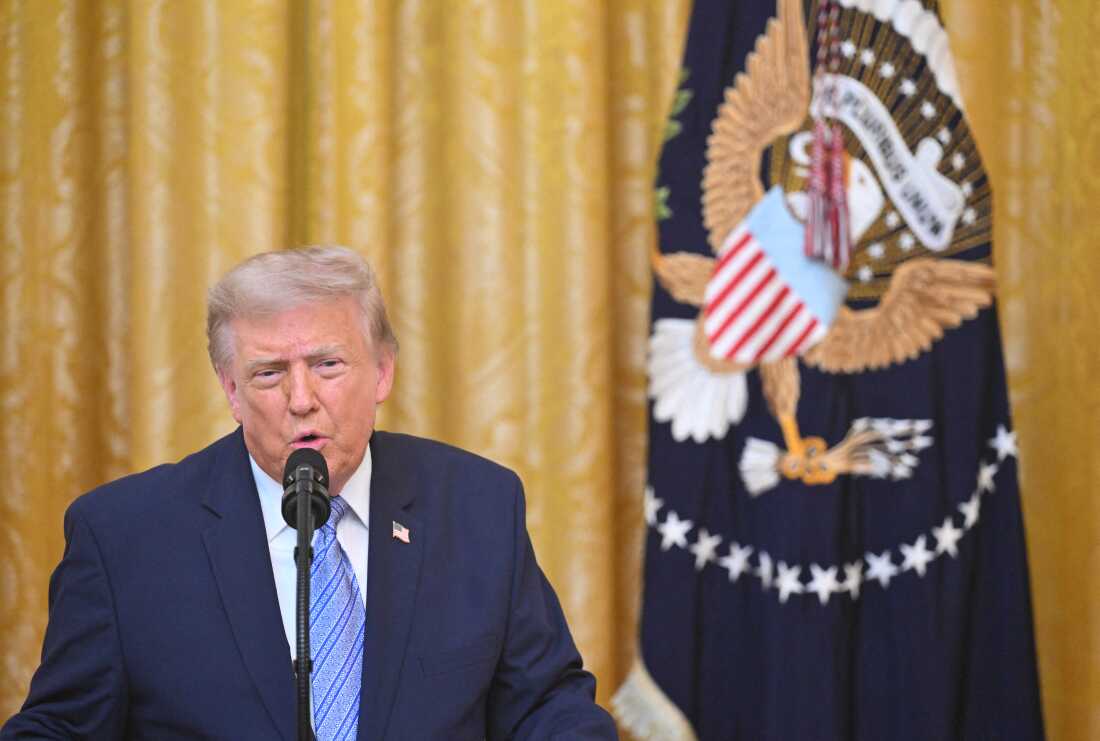
President Trump addresses the nation from the East Room of the White House. Image Credit: Saul Loeb/Pool/AFP via Getty Images
US President Donald Trump has predicted that the Iran war will end immediately after the country’s November midterm elections, raising questions about whether the conflict’s timeline is being shaped by military realities, political pressure or both.
Trump made the prediction on Wednesday as the conflict entered its seventh month and tensions between Washington and Tehran intensified again.
Speaking before travelling to Dallas for a Republican gathering, Trump said Iran could not withstand continued US economic pressure and accused Tehran of trying to influence the November 3 election.
“I think the war is going to end immediately after the election because they can’t hold out any longer,” Trump said, according to Reuters.
The timing of the prediction is significant because the war has become an increasingly difficult issue for Trump and his Republican Party as voters prepare to choose members of Congress.
Why the midterms matter
The November election will determine whether Republicans retain control of Congress, making it an important test of Trump’s presidency even though his name will not be on the ballot.
US midterm elections are often viewed as a referendum on the president’s performance. This time, the Iran conflict is unfolding alongside rising energy prices and concerns about the cost of living.
Brent crude moved above $100 per barrel this week as fighting disrupted energy shipments around the Strait of Hormuz. Reuters reported that the benchmark reached more than $102 on Thursday, while the waterway remains heavily constrained.
Trump has acknowledged that oil prices may remain high until after the election and has predicted that they will fall once the conflict ends.
That creates a politically important connection: the longer the war continues, the longer American consumers could face the economic consequences of higher energy prices.
Trump is promising an end, but fighting is escalating
Trump’s prediction comes at a time when there is little indication that the conflict is approaching an immediate settlement.
Iran recently attacked 10 ships near the Strait of Hormuz after the United States sank five Iranian oil tankers, according to Reuters. The latest escalation has further threatened one of the world’s most important energy routes.
Trump has also indicated that Washington is not currently prioritising a new diplomatic agreement with Tehran.
While he acknowledged that negotiations remain possible, he said they were not what his administration was seeking at the moment.
That leaves military and economic pressure as the main tools being used against Iran, even as the White House publicly predicts that the conflict could end after the election.
Why Pickaxe Mountain could complicate Trump’s prediction
Another development makes Trump’s proposed timeline even more uncertain.
The US president has renewed threats to strike Pickaxe Mountain, an underground complex near Iran’s Natanz nuclear facility.
Trump warned Tehran on Thursday against activity at the site and said the United States could attack if Iran continued what Washington considers provocative activity.
A recent analysis by the Center for Strategic and International Studies found increased construction activity at Pickaxe Mountain in 2026. However, the organisation said available satellite imagery could not confirm claims that Iran had moved uranium-enrichment centrifuges into the facility. It also assessed that the site may not yet be capable of enrichment operations.
The underground facility is therefore becoming another potential flashpoint between Washington and Tehran.
A US strike on the site before or after the midterms could create another escalation rather than the quick conclusion Trump has predicted.
Can the Iran war really end after the election?
Trump’s prediction is clear, but the path to achieving it remains uncertain.
The conflict has already lasted far longer than the short military operation Trump initially described. The continued fighting around the Strait of Hormuz, threats against Iran’s nuclear infrastructure and the absence of active diplomatic negotiations all suggest that an immediate settlement is far from guaranteed.
More importantly, some senior Trump advisers have reportedly considered the possibility that the conflict could continue much longer, potentially into the remainder of his presidency.
For Trump, however, November 3 represents a crucial political deadline.
If the war ends shortly after the midterms as he predicts, he could argue that his pressure campaign forced Tehran to back down. If the conflict continues while oil prices remain high, the war could instead become a major liability for Republicans at a time when voters are already worried about the cost of living.
For now, Trump’s prediction places the US election at the centre of the Iran conflict. Whether November brings the end of the war or another escalation may ultimately depend on what Tehran does next — and whether Washington chooses pressure, negotiation or another military strike.