

Labour Day in Canada Started With Handcuffs, Not Barbecues

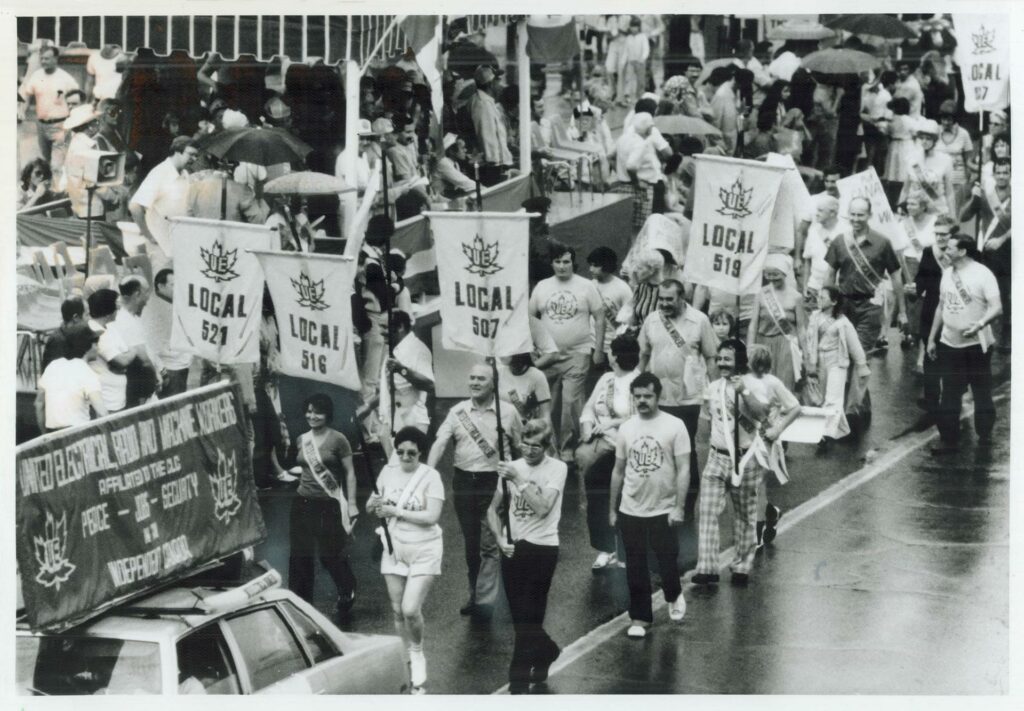
Original Toronto Star caption: Workers’ march: More than 16;000 trade unionists from 40 organizations marched in Metro’s Labor Day parade yesterday. The intermittent rain dampened marchers’ clothes but not their spirits and there were lots of onlookers as the parade made its way to the CNE. https://digitalarchive.tpl.ca/objects/372456/workers-march?ctx=eca6571b66167681e1f14dda8a536ae4cb324a9a&idx=27
Labour Day in Canada began as a demand from jailed union leaders and grew into a national holiday, but the movement that created it has been shrinking for decades. What today reads as a long weekend and a back-to-school marker started as an act of open defiance, back when simply belonging to a union could get a worker arrested.
How a Toronto Printers’ Strike Started Labour Day in Canada
The story starts in the winter of 1872, in the print shops of Toronto. Members of the Toronto Typographical Union had spent years asking publishers for a shorter work week, at a time when a 12-hour day and a six-day week were standard. When employers dismissed the request as unreasonable, the printers walked off the job on March 25, 1872.
Their strike paralyzed the city’s newspapers, including the Globe, whose publisher George Brown responded by pursuing criminal conspiracy charges against the strike committee. Under a law still on the books from 1792, union activity itself was technically illegal in Canada. Twenty-four workers were arrested.
Instead of ending the movement, the arrests galvanized it. On April 15, 1872, a parade in support of the printers drew roughly 10,000 people to Queen’s Park, a staggering number in a city of about 50,000 residents. A few months later, unions in Ottawa staged their own march past the residence of Prime Minister John A. Macdonald. Sensing where public opinion, and votes, were heading ahead of a federal election, Macdonald backed the workers and pushed through the Trade Union Act, decriminalizing unions across the country.
From Protest to Statutory Holiday
The printers never won their nine-hour day outright, but the parades they inspired became annual events in Toronto and Ottawa, then spread to other cities. Those “labour festivals” eventually pushed governments to formalize the tradition, and in 1894, Parliament made the first Monday in September an official statutory holiday. The date deliberately distanced the Canadian holiday from the more radical, internationally linked May Day observed elsewhere, giving Canada (and, that same decade, the United States) its own homegrown version rooted in the printers’ fight rather than in European labour politics.
How Labour Day in Canada Is Marked Today
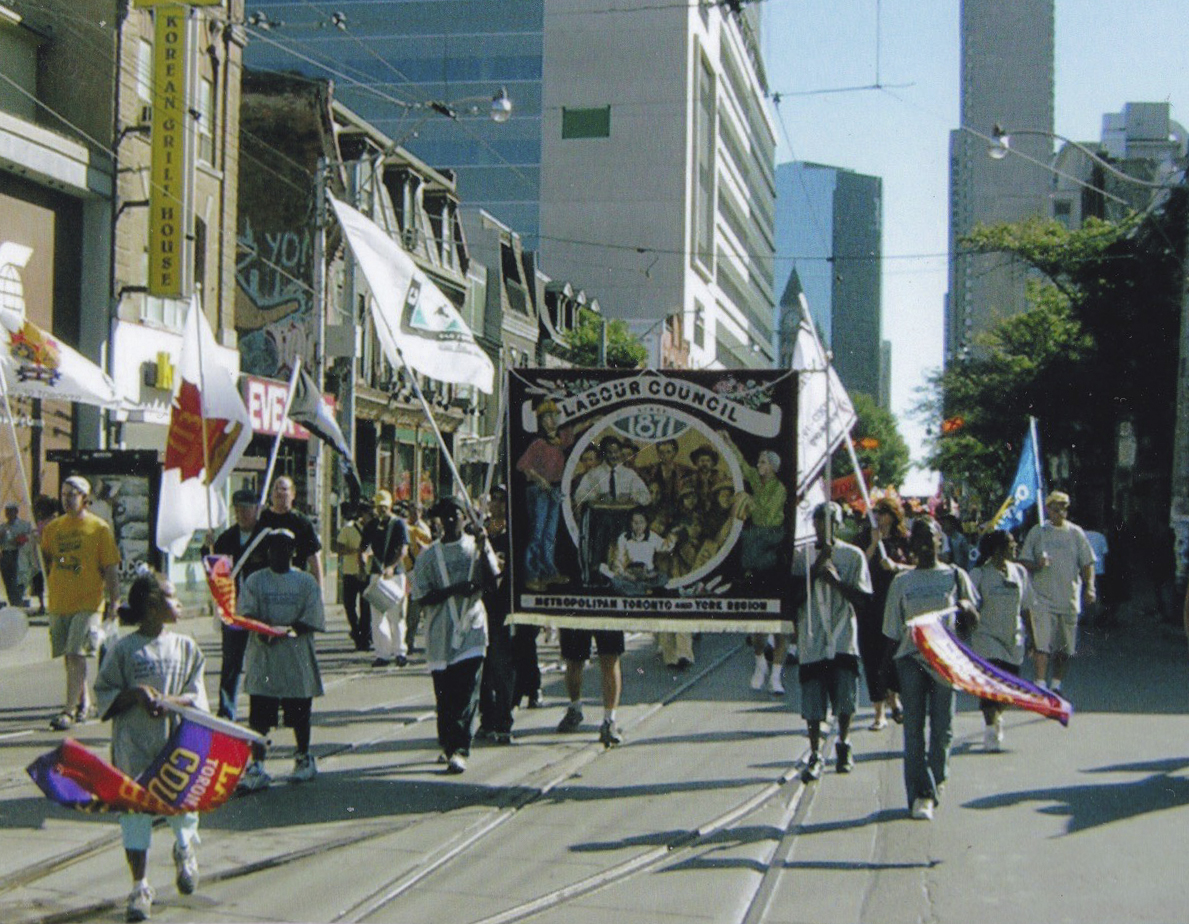
More than 150 years on, most Canadians experience Labour Day less as a protest anniversary and more as the unofficial closing of summer. It is the last long weekend before school resumes, a day for cottages, barbecues and, in cities that still hold them, union-organized marches through downtown cores.
The holiday also comes with real regulatory weight. In Quebec, provincial law requires most retail stores to close to the public on Labour Day, with narrow exceptions for pharmacies, convenience stores and a handful of other categories. Municipal offices, banks, schools and non-essential government services close nationwide, while services considered essential, such as curbside garbage collection in cities like Montreal, typically continue on their normal schedule since the holiday falls on a weekday.
The Shrinking Union Behind Labour Day in Canada
Here is the part rarely mentioned in the parade coverage: Labour Day in Canada was built by a labour movement that keeps getting smaller. Statistics Canada data shows the share of employees who belong to a union fell from 38 percent in 1981 to 29 percent in 2022, a decline concentrated almost entirely in the private sector, where fewer than one in five men are now unionized. Public-sector unionization has stayed remarkably stable near two-thirds over the same period, meaning the divide between a unionized public workforce and a largely non-union private one has only widened.
Layered on top of that decline is the rise of gig and contract work, which by some estimates now makes up roughly a fifth of Canada’s labour force. Gig platforms structure themselves as intermediaries rather than employers, which shifts costs and risks onto workers who have no union local to bargain on their behalf and often no clear employer to bargain with at all.
The result is a strange contradiction each September: a national holiday that exists because Canadian workers organized, fought and went to jail for the right to unionize, celebrated in an economy where union membership is less common than at almost any point since Confederation.
Frequently Asked Questions
Why is Labour Day in Canada in September instead of May 1?
Canada and the United States chose the first Monday in September to mark their own labour movements’ history, including the 1872 Toronto printers’ strike, rather than adopting May Day, which became linked internationally to more radical labour and socialist movements in Europe.
Is Labour Day a paid holiday in Canada?
Yes. Labour Day is a statutory holiday in every Canadian province and territory. Eligible employees are generally entitled to a day off with regular pay, or premium pay if they are required to work, under provincial employment standards.
What is closed on Labour Day in Canada?
Banks, government offices, Canada Post, schools and most municipal service counters close. In Quebec, most retail stores are legally required to close to the public, with limited exceptions. Services considered essential, including public transit (often on a reduced or weekend schedule) and garbage collection in many cities, typically continue.
Did Labour Day start in Canada or the United States?
Both countries claim roots in the same period, but Canada’s Labour Day tradition traces to the 1872 Toronto printers’ strike and the parades it inspired, predating the first U.S. Labor Day parade in New York in 1882. Canada made it a statutory holiday in 1894, the same year the United States did federally.
How many Canadian workers are still in a union?
About 29 percent of Canadian employees belonged to a union as of 2022, according to Statistics Canada, down from 38 percent in 1981. The decline has been sharpest among private-sector workers, particularly men in industries like manufacturing and construction.