
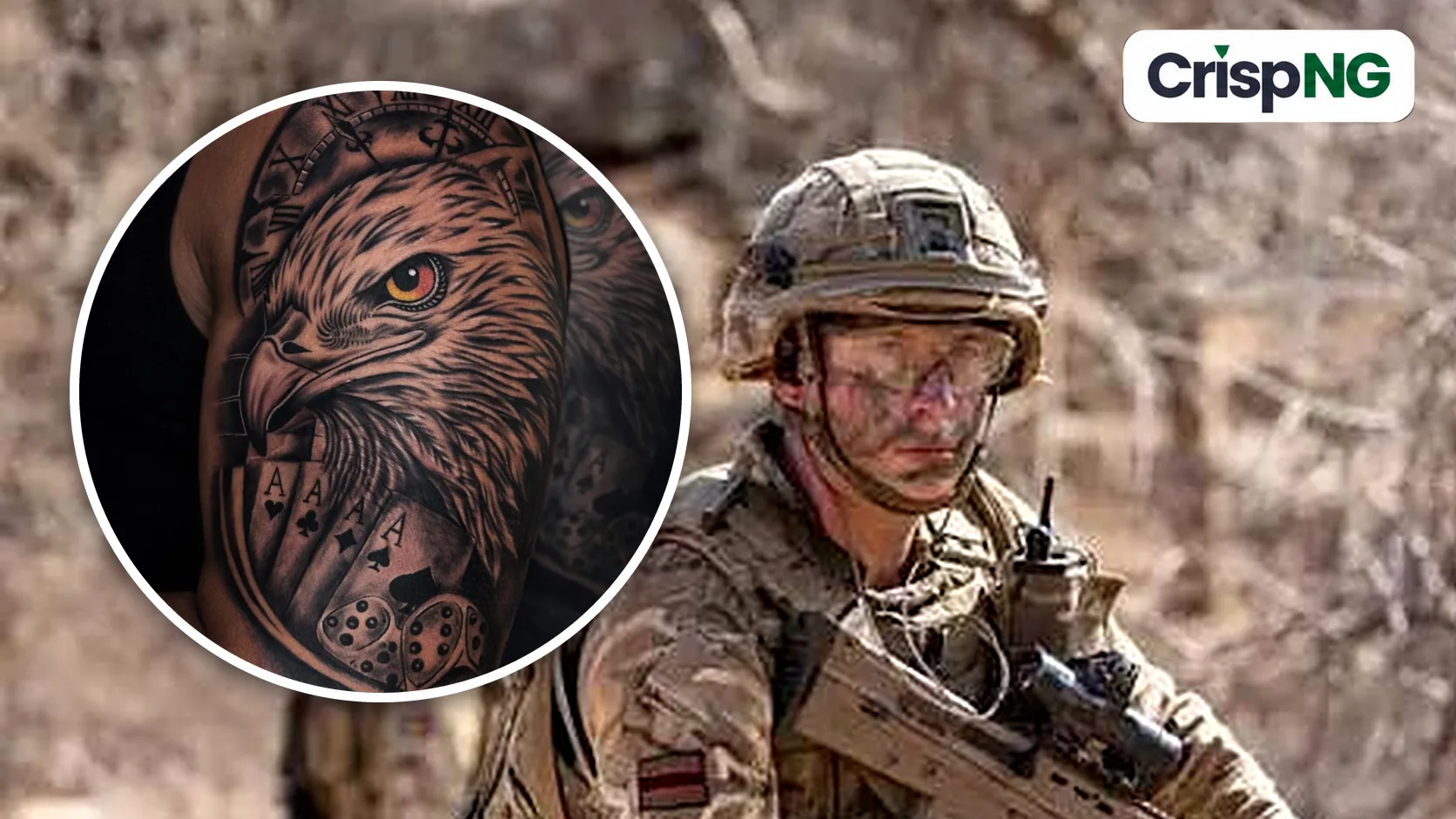
People hoping to join the British Army have been warned that certain tattoos could disqualify them from military service, although having body art does not automatically make someone ineligible.
The British Army has identified three categories of tattoos that can prevent prospective recruits from joining the military.
According to its official recruitment guidance, offensive, obscene and racist tattoos are unacceptable. The restrictions apply to applicants regardless of whether the tattoos are small or large.
The clarification is important for people considering a military career in the United Kingdom, particularly those who already have tattoos and are unsure whether they could affect their applications.
3 types of tattoos that can stop you joining the British Army
The British Army identifies three categories of tattoos that could prevent applicants from entering military service.
They include:
1. Offensive tattoos
Tattoos considered offensive can disqualify applicants from joining the British Army.
This category covers body art that contains abusive or insulting messages, symbols or images that could cause offence.
The Army assesses whether a tattoo is inappropriate rather than accepting every design as personal expression.
2. Obscene tattoos
The military also prohibits tattoos considered obscene.
Its recruitment guidance gives examples such as images depicting sexual acts, violence or illegal drugs.
Applicants with such tattoos could be rejected because the designs do not meet the Army’s standards for acceptable personal appearance.
3. Racist tattoos
Tattoos promoting racism or containing racist symbols are also prohibited.
This restriction covers body art that expresses racial hatred, discrimination or support for racist ideologies.
The Army does not permit applicants to join with tattoos falling into this category.
Can you join the British Army with ordinary tattoos?
Yes. Having a tattoo does not automatically disqualify someone from joining the British Army.
The military’s recruitment website explains that small tattoos that are not offensive are generally acceptable. However, their location and visibility can influence the assessment.
The Army has also revised its rules on visible tattoos.
In a written parliamentary response published on July 11, 2025, Defence Minister Luke Pollard confirmed that tattoos on the face and front of the ear would remain grounds for rejection, alongside offensive, obscene and racist tattoos.
The revised policy means tattoos on the hands and back of the neck are now permitted.
However, the Army’s guidance notes that the right hand, which soldiers use to salute, should ideally remain free of tattoos.
This represents a change from the earlier restrictions on visible body art and gives applicants with ordinary tattoos more opportunities to qualify.
What should applicants do before applying?
People who already have tattoos should check the Army’s official guidance before beginning their recruitment process.
The military also advises applicants who are uncertain about a particular tattoo to visit their nearest Army Careers Centre for clarification.
This is particularly important because the assessment considers both the content and placement of body art.
Prospective recruits should therefore avoid assuming that every visible tattoo will lead to automatic rejection.
For more information, applicants can consult the British Army’s official tattoo and piercing policy.