

Jechira not in Abuja: The constituency needs a representative, not placeholder

By Ernen Kaanti
It is high time to probe the quality of representation in Jechira and interrogate its future.
Politics in Nigeria has too often been reduced to the possession of a political ticket, the mobilisation of crowds and the distribution of election-season inducements. But beneath the noise of campaign posters, endorsements and political calculations lies a more consequential question: what exactly should a representative deliver to the people who send him to Abuja?
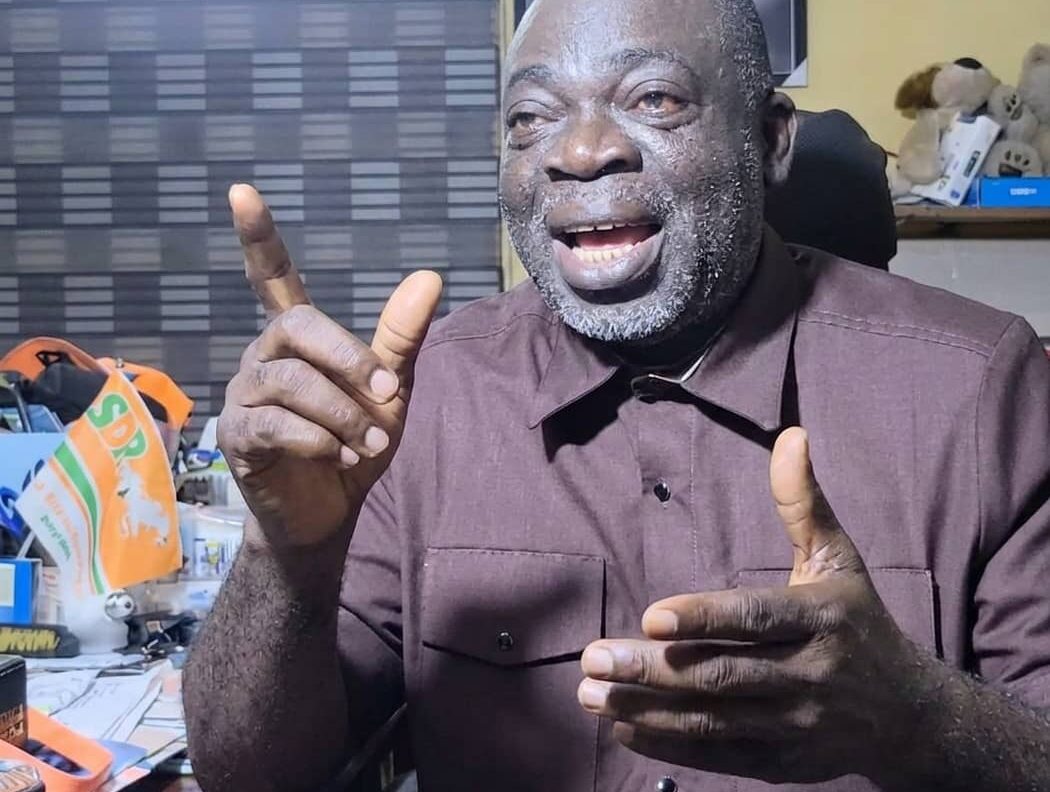
Discussions with Dr. Terver Zua Tule concerning his 2027 bid for the Jechira Federal Constituency seat under the Social Democratic Party (SDP) have given his ambition an unusual significance. Tule is not presenting himself merely as another aspirant in search of the legislative office. His proposition is that representation should be purposeful, consistent and development-oriented, and that the credibility of a representative should ultimately be measured by what he brings to the table, not simply by the political platform on which he contests.
That proposition deserves to be tested against the realities of Jechira.
Jechira does not exist in Abuja. Its problems are found in rural communities, on farm roads, in markets, schools, health facilities and households where electricity, infrastructure and access to opportunities remain everyday concerns.
One does not need a degree in political science to understand that for such communities, representation cannot remain an abstraction.
From a very fair point of view, I strongly believye Dr. Tule’s political adventure at this important time is significant partly because of where he is coming from. A medical doctor, public-health practitioner and healthcare administrator, he has spent a substantial part of his professional life operating in a sector where institutional failure has immediate consequences for ordinary people.
Medicine teaches a particularly unforgiving lesson: problems do not disappear because they are ignored. That is a lesson that is equally applicable to politics. A bad rural road does not become less important because Abuja has more impressive infrastructure. A farmer does not transport produce more easily because legislators have delivered speeches. A community without adequate electricity does not benefit merely because its representative has appeared at political events.
The challenge of representation, therefore, is to connect legislative power with the everyday realities of constituents.
And this is where Tule’s professional background becomes relevant. His experience in medicine, public health and healthcare administration has exposed him to questions of policy, institutions, service delivery and human welfare. His involvement in research works and community healthcare initiatives further provides evidence of engagement beyond the consulting room.
There is nothing particularly radical about demanding results from elected officials. What is remarkable is how frequently Nigerian politics lowers the standard.
A representative attends meetings. A representative speaks at ceremonies. A representative distributes materials. A representative issues statements.
But where is the legislation? Where is the oversight? Where is the sustained advocacy for roads, agriculture, electricity, education and healthcare? Where is the constituency development agenda?
These are the questions that should define the 2027 conversation. I find it quite striking that, in almost every political conversation, Dr. Tule constantly identifies rural infrastructure, agricultural development, electricity, post-harvest facilities, public policy and accountability as areas requiring attention. His references are particularly instructive. For a farming community, the road connecting the farm to the market is not a minor infrastructure project. It is part of the economic chain that determines whether agricultural production translates into income.
This is the kind of connection a representative must understand.
Development is not always announced with fanfare. Sometimes it begins with a road that allows a farmer to move produce to the market.
In a lesson in Tule’s transition from medicine to politics, Nigeria’s legislature needs people capable of understanding that public policy has consequences.
Healthcare policy determines whether hospitals function. Agricultural policy influences production and food security. Infrastructure policy affects commerce. Electricity policy affects businesses. Education policy shapes human capital.
We can agree that the boundaries between these sectors are therefore artificial when viewed from the perspective of the ordinary citizen.
A doctor who has spent years dealing with public-health challenges may approach legislation differently from someone whose entire professional life has existed within the political ecosystem.
Although that does not automatically make Dr. Tule a better legislator, it does make his experience relevant to the debate. And in an election, relevant experience deserves an examination.
Tule’s most important political argument may ultimately be his insistence that public office should be connected to purpose, he has spoken of the obligation of human beings to deploy their potentials in the world they inherit. That philosophy is particularly relevant to politics because public office magnifies individual capacity.
Two persons may use a community pot to fetch water and while one may use the water to irrigate his own farm, the other may use it to water the community farm. A person who enters the office without a clear sense of purpose can become absorbed by the privileges of the office. A person who enters with a defined public agenda can potentially use the same office as an instrument for institutional change. The difference is not in the title, but it is in what the occupant chooses to do with it.
For Tule, the stated ambition is to transform professional experience into broader public service. That is an argument Jechira voters are free to examine against his record, programme and capacity.
The most uncomfortable issue today is that Nigerian elections have increasingly created an environment in which immediate material inducements can overshadow questions of competence and long-term development, but the danger is obvious. When voters sell their political choices cheaply, the cost of governance can become extraordinarily expensive. The immediate benefit disappears after the election, while poor representation can endure for years. This is why Tule’s persistent call for voters to examine records, capacity and practical contributions deserves prominence in the meditation of Jechira voters.
This principle must apply to him too. His biography should not exempt him from scrutiny. His professional credentials should not replace accountability. His promises should be interrogated. His programme should be measurable. And if elected, his performance should be judged against the standards he is currently setting for himself.
That is the proper meaning of democratic accountability. Tule’s 2027 ambition should therefore not be interpreted simply as another politician seeking another seat. It presents an opportunity for Jechira to examine what it wants its representation to look like in the next political cycle.
The real contest is bigger than personalities. It is about whether representation will continue to be understood principally as access to political office or whether it will be demanded as an instrument of development, accountability and measurable public service.
If one listens to him, his argument is that professional experience, administrative knowledge and a defined legislative agenda can be converted into purposeful representation.
The electorate, ultimately, will determine how persuasive that proposition is.
But one thing is certain: the 2027 conversation should be about more than who can win a ticket, mobilise a crowd or make the loudest promises. It should be about what happens after the election.
Because when the campaign posters come down and the political rallies end, the roads will still be there, the farms will still need access to markets, communities will still demand electricity, children will still need schools, patients will still need healthcare, and constituents will still expect their voice to be heard in Abuja.
That is where representation is finally measured, and not on the campaign stage, but in the lives of the people represented.
Truly, if Dr. Terver Zua Tule is finally elected and does not deviate from his drive, Jechira would never remain the same because Dr. Tule once went to the House of Representatives.