

Is Iran losing control of the Strait of Hormuz? What the Omani route, US blockade and shipping data reveal

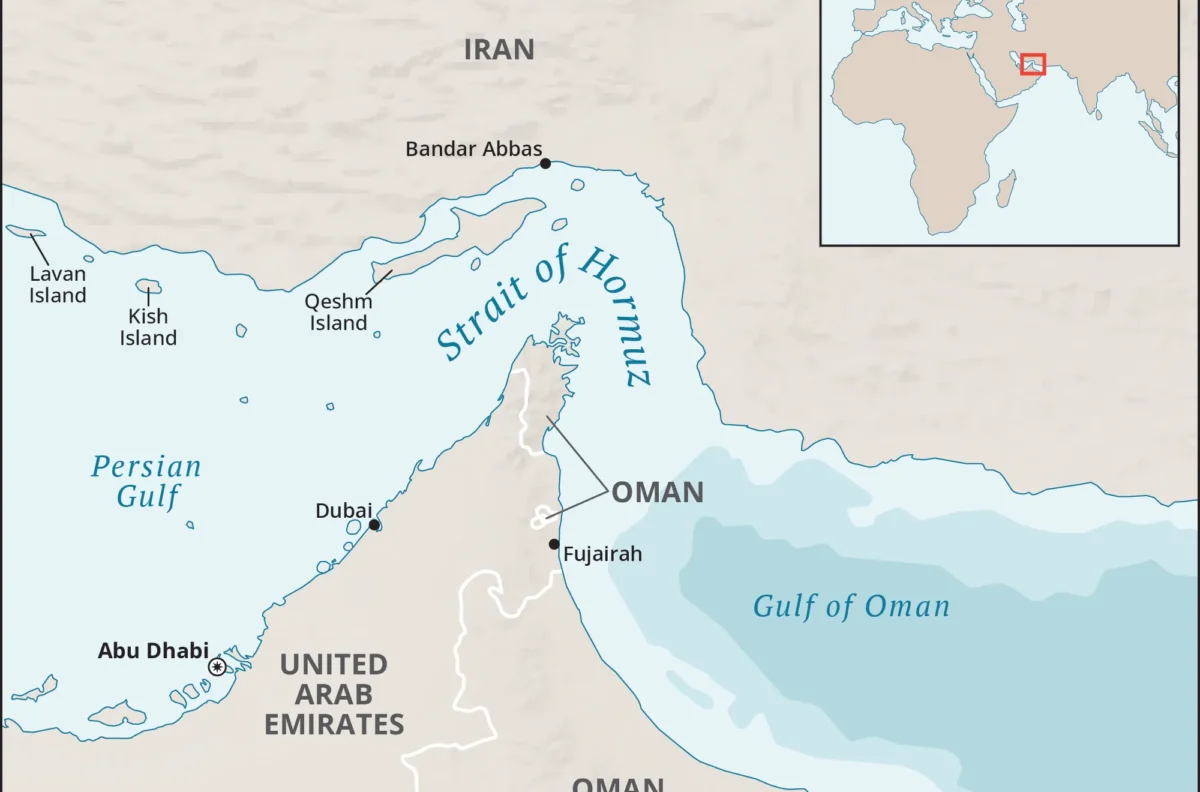
Iran’s grip on the Strait of Hormuz faces growing pressure
The Strait of Hormuz, one of the world’s most important energy chokepoints, is at the centre of an escalating confrontation between Iran and the United States. New maritime tracking data suggests that Tehran’s ability to dictate how commercial vessels move through the waterway may be weakening, even as Iran continues to insist that the strait remains under its control.
The latest shift is being driven by a growing number of ships using a route along the Omani side of the Strait of Hormuz, rather than Iran’s preferred channel. According to data cited by NDTV and other reports, more than 80% of vessel transits over the past two weeks used the Omani route.
The development is significant because the strait handles a huge share of the world’s energy trade. The US Energy Information Administration says about 20 million barrels of oil per day moved through Hormuz in 2024, equivalent to roughly one-fifth of global petroleum liquids consumption. Around one-fifth of global liquefied natural gas trade also passed through the waterway.
Does Iran Control the Strait of Hormuz?
Iran has long held a strategically powerful position on the Strait of Hormuz because its coastline borders the northern side of the waterway. However, that does not mean Tehran has uncontested legal ownership of the entire strait or unlimited authority over international shipping.
The waterway lies between Iran and Oman and connects the Persian Gulf with the Gulf of Oman and the Arabian Sea. Its strategic geography gives both countries an important role in maritime navigation. International maritime law also protects navigation through straits used for international shipping. The International Maritime Organization has repeatedly highlighted freedom of navigation and established maritime safety measures during the current crisis.
Oman has also worked with the International Maritime Organization to provide a temporary maritime corridor for vessels seeking to transit the waterway. Oman said the corridor was designed in accordance with international law and without imposing transit fees.
Why Ships Are Switching to the Omani Route
The biggest change in recent weeks has been the movement of commercial vessels toward the Omani route.
Kpler data cited in recent reports indicates that more than 80% of vessel transits during the past two weeks used the Omani side of the waterway. That is a dramatic shift from a month earlier, when there was virtually no traffic using the route.
The route has become attractive to shipping operators because it can allow vessels to avoid some of the restrictions and risks associated with Iran’s preferred passage. Ships have reportedly been willing to take the risk while operating under the expectation of US protection.
The change also has an economic dimension. Iran had sought to collect transit fees from ships using the waterway after an earlier US-Iran arrangement expired. A greater use of the Omani route could make it harder for Tehran to collect those fees.
Is the Strait of Hormuz Actually Open?
The answer depends on what is meant by “open.”
US President Donald Trump has claimed that the Strait of Hormuz is open and operating, while Iran maintains that the waterway remains closed or subject to its restrictions. Reuters reported on August 19 that commercial traffic remained significantly reduced despite Trump’s claim that the strait was open.
Kpler data showed only six commodity vessels passing through the strait on Tuesday, compared with nine the previous day and a recent average of about 11 daily transits. The figures underline the difference between a waterway being technically navigable and operating normally for commercial shipping.
That distinction is crucial for global energy markets. A limited number of vessels getting through does not mean that the world’s normal oil and gas supply chain has been restored.
How Much Oil Passes Through the Strait of Hormuz?
The Strait of Hormuz is critical because there are few practical alternatives capable of replacing its full capacity.
EIA data shows that oil flows through Hormuz averaged around 20.9 million barrels per day in the first half of 2025, representing about 20% of global petroleum liquids consumption and roughly one-quarter of global maritime oil trade.
There are some alternative pipelines. Saudi Arabia, the United Arab Emirates and Iran have infrastructure capable of bypassing part of the waterway. EIA estimates that Saudi Arabia’s East-West pipeline and the UAE’s Abu Dhabi pipeline together could provide roughly 4.7 million barrels per day of bypass capacity. That is substantial but far below the volumes normally transported through Hormuz.
This is why even a partial disruption can have consequences far beyond the Middle East.
READ ALSO
Will the Strait of Hormuz reopen? Trump signals major breakthrough with Iran
What Is Happening to Oil Shipping?
The conflict has forced energy companies and shipping operators to adopt unusual strategies to keep Gulf oil moving.
Oil-producing states including Saudi Arabia, Kuwait and the United Arab Emirates have reportedly used very large crude carriers to move oil through Hormuz and transfer cargoes outside the more dangerous areas in the Gulf of Oman.
Some vessels have also operated with their transponders switched off for extended periods, creating what the industry calls dark shipping. Such activity can make it harder for conventional vessel-tracking systems to determine exactly how much oil is moving through the region.
This means headline shipping figures may not capture the full scale of maritime activity. Recent US estimates have also suggested that combined oil shipments through Hormuz and rerouted flows reached levels closer to pre-war volumes, even though normal commercial traffic remains heavily disrupted.
Why the Strait of Hormuz Matters to Global Oil Prices
Any prolonged disruption to Hormuz could put pressure on global oil prices, fuel costs and shipping rates.
The reason is straightforward: a large portion of the world’s petroleum supply passes through a narrow waterway, while alternative routes cannot immediately replace the same volume.
The EIA has described Hormuz as one of the world’s most important oil chokepoints, noting that even temporary disruption can create supply delays, higher transportation costs and higher energy prices.
Asian economies are particularly exposed because a large share of Gulf oil exports ultimately goes to Asian markets. LNG supplies are also at risk, with Qatar among the major gas exporters using the route.
What the New Shipping Data Really Means
The latest figures do not necessarily mean that Iran has completely lost control of the Strait of Hormuz.
A more accurate interpretation is that Iran’s ability to enforce its preferred route and restrictions appears to be weakening as more commercial vessels use the Omani side and rely on international or US-backed security arrangements.
Marine traffic remains far below normal levels, according to Reuters, while Iran continues to claim authority over the waterway.
The situation is also fluid. Further attacks, changes in US naval policy, new agreements involving Oman or Iran, or a wider escalation of the conflict could quickly change shipping patterns.
What Happens If Iran Fully Closes the Strait of Hormuz?
A full closure would create a major shock for global energy markets.
Oil producers could use existing pipelines and alternative export routes, but those options have limited capacity. EIA data indicates that alternatives could move only a fraction of the oil normally transported through Hormuz.
A prolonged closure could lead to tighter oil supplies, higher tanker insurance costs, increased freight rates and potentially higher petrol and diesel prices in markets around the world.
The impact would extend beyond crude oil. Liquefied natural gas, petrochemicals and other commodities also depend heavily on the maritime corridor.
What to Watch Next in the Strait of Hormuz
The key indicators to monitor are daily vessel movements, tanker insurance costs, oil flows, the use of the Omani corridor and any changes to US naval operations.
The most important question is no longer simply whether Iran can physically disrupt the strait. It is whether commercial shipping can establish a sustainable alternative operating pattern that allows energy exports to continue despite the conflict.
For now, the evidence points to a divided and highly restricted waterway rather than a return to normal operations. Iran continues to claim control, while the growing use of the Omani route suggests that shipping companies are increasingly prepared to operate outside Tehran’s preferred framework.
With Hormuz responsible for such a large share of global energy flows, even a partial disruption remains a major risk for oil markets, gas supplies, shipping and the global economy.
FAQ: Strait of Hormuz and Iran’s Control
Does Iran control the Strait of Hormuz?
Iran has a strategically important position along the northern side of the Strait of Hormuz, but it does not have uncontested ownership of the entire waterway. Oman controls territory on the southern side, and international maritime law protects navigation through international straits.
Is Iran losing control of the Strait of Hormuz?
Recent shipping data suggests Iran’s ability to enforce its preferred route and restrictions may be weakening. A growing share of vessels has reportedly been using a route along the Omani side of the waterway, reducing Tehran’s ability to dictate shipping movements.
Is the Strait of Hormuz open or closed?
The situation remains complicated. The United States has said the Strait of Hormuz is open and operating, while commercial shipping remains significantly below normal levels. A waterway can be technically navigable without operating normally for international commercial traffic.
Why is the Strait of Hormuz so important?
The Strait of Hormuz connects the Persian Gulf with the Gulf of Oman and the Arabian Sea. It is one of the world’s most important energy chokepoints, with roughly one-fifth of global petroleum liquids consumption and a significant share of global LNG trade passing through it.
How much oil passes through the Strait of Hormuz?
Oil flows through Hormuz have historically reached around 20 million barrels per day, representing roughly one-fifth of global petroleum liquids consumption. The exact volume can change significantly during periods of conflict or disruption.
What is the Omani route through the Strait of Hormuz?
The Omani route refers to a shipping channel on the Oman-facing side of the Strait of Hormuz. Recent reports indicate that many vessels have increasingly used this route rather than Iran’s preferred passage.
Why are ships using the Omani route?
Shipping companies are using the Omani route to reduce exposure to Iranian restrictions and attacks while taking advantage of security arrangements involving the United States. The route also limits Iran’s ability to collect proposed transit fees.
Can Iran legally close the Strait of Hormuz?
Iran can attempt to restrict or disrupt shipping through military or other measures, but unilaterally closing an internationally used strait raises major international-law issues. Freedom of navigation through international straits is protected under the UN Convention on the Law of the Sea framework.
What happens if Iran completely closes the Strait of Hormuz?
A prolonged closure could cause a major global energy supply shock. Oil prices could rise sharply, tanker insurance and shipping costs could increase, and countries dependent on Gulf oil and gas could face supply disruptions.
Can Gulf countries export oil without using the Strait of Hormuz?
Some Gulf producers have alternative pipelines and export routes that bypass Hormuz. Saudi Arabia and the United Arab Emirates, for instance, have infrastructure capable of moving oil outside the waterway. However, alternative capacity is much smaller than normal Hormuz flows.
Which countries depend most on the Strait of Hormuz?
Major Asian economies are particularly exposed because large quantities of oil and gas exported through Hormuz are destined for China, India, Japan, South Korea and other Asian markets. European and global energy markets can also be affected because oil and gas prices are internationally connected.
Does the Strait of Hormuz affect petrol prices?
Yes. A serious disruption can push up global crude oil prices, which can eventually affect petrol, diesel, aviation fuel and other petroleum products. The size and speed of the impact depend on the duration of the disruption and the availability of alternative supplies.
What is “dark shipping” in the Strait of Hormuz?
Dark shipping generally refers to vessels that conceal or obscure their movements, often by switching off their automatic identification system (AIS) transponders. This can make maritime tracking more difficult and means publicly available vessel data may not capture every movement.
Is the US Navy protecting ships in the Strait of Hormuz?
The United States has maintained significant naval involvement in the region and has provided security assurances to some commercial shipping. The exact nature and scope of protection can change as the conflict develops.
Why does Iran want control over shipping through Hormuz?
Control over shipping gives Iran significant strategic and economic leverage. Tehran can potentially influence maritime traffic, pressure rival countries, affect energy markets and seek revenue from transit arrangements.
Could the Strait of Hormuz cause a global oil crisis?
Yes. A prolonged disruption could create a major global oil shock because the waterway carries such a large proportion of internationally traded energy. The severity would depend on how long the disruption lasts and how much supply can be rerouted.
Will oil prices rise if Hormuz remains disrupted?
A sustained disruption would generally put upward pressure on oil prices, particularly if alternative supplies and transportation routes cannot compensate for lost flows. Market expectations can also cause prices to move before an actual shortage develops.
What should happen next in the Strait of Hormuz?
The most important developments to watch are daily tanker movements, Iranian military activity, US naval operations, use of the Omani route, oil export volumes and diplomatic negotiations. Any change in these areas could quickly alter the shipping situation.