

Indonesia’s Haze Cases Are Falling, but 333,470 Reports Show Why the Crisis Is Not Over

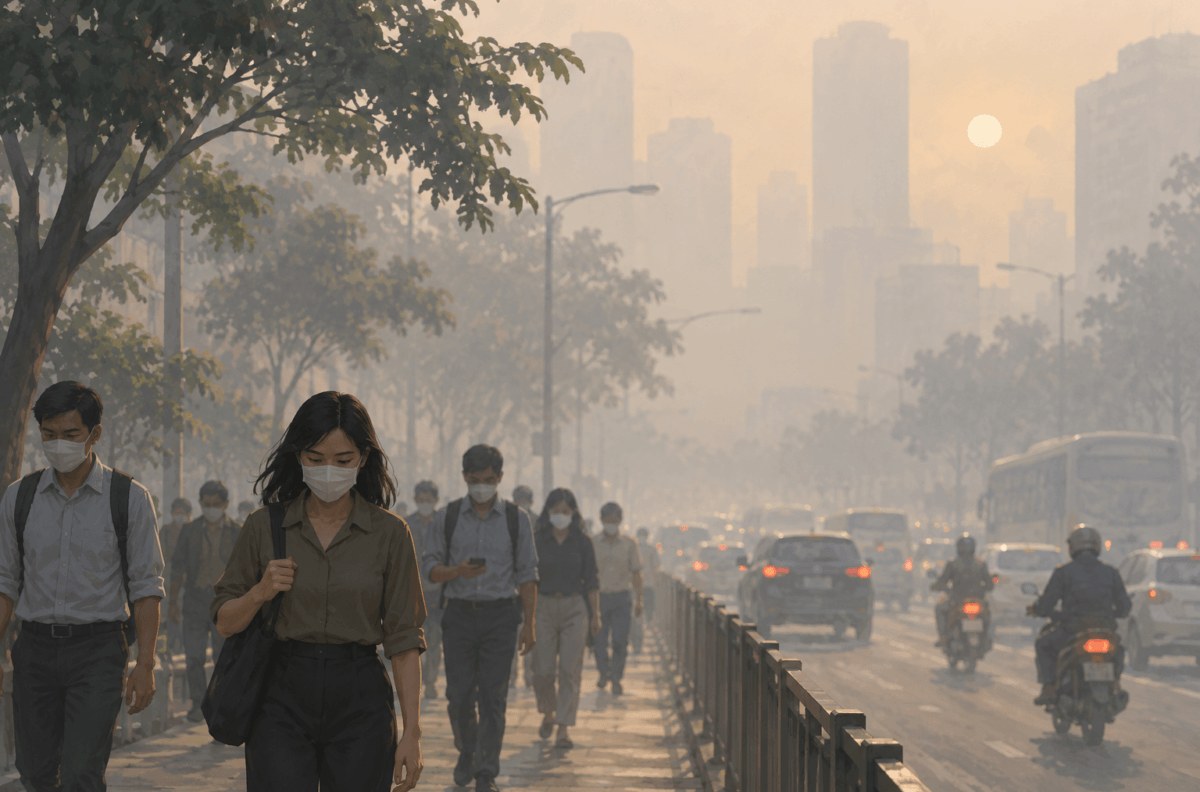
Illustrative image, not a photograph of a specific Indonesian city.
Haze-linked respiratory cases in Indonesia have dropped to about 3,000 a day from 10,000–15,000, the health minister says, but the country had recorded 333,470 cases by 22 October. The contrast answers a key question: the reported pace of illness has eased, yet the accumulated health burden and smoke across Southeast Asia mean the emergency is not over.
Haze-linked respiratory cases: what the daily fall does — and does not — show
The figures were reported by Indonesia’s state news agency ANTARA, citing Health Minister Budi Gunadi Sadikin. They are a government-reported tally of respiratory infections associated with fires, not an independent estimate proving that smoke caused every individual case.
A lower daily count of haze-linked respiratory cases is a useful sign of easing pressure, but it is not the same as a return to safe air. The cumulative figure includes cases recorded over time; it does not mean that all 333,470 people are currently ill. Nor does it tell readers how exposure is changing in each province. Those distinctions matter when judging whether the response can safely scale down.
Why the health response is still being expanded
Sadikin said the ministry needs 1.6 million masks and expects distribution to be completed the following week. He also said oxygen cylinders, tubing and concentrators were intended for affected regions over the next one to two weeks, with priority for areas rated red or black on Indonesia’s air-pollution index.
Those are announced plans and delivery targets, not confirmation that supplies have already reached every high-risk community. The practical test will be whether residents can access masks and respiratory treatment where monitoring shows the worst conditions.

The smoke is still a regional problem
The ASEAN Specialised Meteorological Centre (ASMC) has maintained Alert Level 3 for the southern ASEAN region. Its latest regional update describes moderate to dense transboundary haze over parts of Sumatra, Kalimantan, Singapore, Peninsular Malaysia and western Sarawak, with some monitoring stations reporting unhealthy or hazardous air.
ASMC’s seasonal outlook says below-normal rainfall and El Niño conditions could keep fire and haze activity elevated, while showers as the region moves into inter-monsoon conditions may bring some relief. Singapore’s Meteorological Service said winds expected from Sunday could reduce smoke transported to Singapore. These are forecasts, not guarantees that fires or exposure will end.
The regional picture also helps explain why the issue has drawn attention beyond Indonesia. The AP reported students across Indonesia have protested for days over the government’s response to toxic haze. The demonstrations show public concern; they do not by themselves establish what policy response will follow.
What Indonesia’s haze-linked respiratory cases show next
The clearest near-term indicators are whether Indonesia’s daily case reports continue to fall, whether the promised masks and oxygen equipment arrive in the regions identified by officials, and whether ASMC’s hotspot and haze alerts ease. For background on the health risks from wildfire smoke, read CrispNG’s explainer on smoke, air quality and health.
For now, the reported decline offers evidence of improvement in one measure. It does not yet show that the wider health and cross-border haze crisis has run its course.