
Buying medicine from a pharmacy or patent medicine store does not automatically guarantee that the product is genuine. Counterfeit, substandard and expired drugs remain a public health concern in Nigeria, making it important for consumers to know how to verify the medicines they buy before using them.
One way to do this is through the National Agency for Food and Drug Administration and Control (NAFDAC), which regulates drugs and other products sold in the country.
NAFDAC provides an online platform where members of the public can check whether a medicine has been registered. The process is straightforward and can be completed using a smartphone or computer.
Here is how to check if a drug is genuine and what to look out for before buying or taking one.
How to Check If a Drug Is Registered With NAFDAC
The first step is to confirm that the medicine has a valid NAFDAC registration number.
Drug manufacturers are required to display this number on their product packaging. However, seeing a NAFDAC number on a medicine does not automatically prove that the product is genuine. Some counterfeit manufacturers copy registration numbers from legitimate products.
You can verify the number through NAFDAC’s online registration portal.
Follow these steps:
- Visit the NAFDAC registration portal at https://registration.nafdac.gov.ng/.
- Locate the product verification section on the homepage.
- Find the NAFDAC registration number printed on the medicine’s package.
- Enter the number exactly as it appears on the pack.
- Select the verification option to submit your search.
- Check the information returned by the platform.
- Compare the result with the details printed on the medicine.
The portal allows users to verify a product or certificate using its registration number. NAFDAC advises consumers to compare the details displayed with the information on the product packaging.
If the registration number returns a different product or the details do not match, do not assume the medicine is genuine.
How to Use the NAFDAC Greenbook to Check a Drug
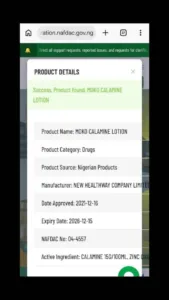
Another option is the NAFDAC Greenbook, an online database of registered medical products in Nigeria.
The platform allows users to search for medicines using information such as the product name, brand name or NAFDAC registration number.
To use it:
- Visit https://greenbook.nafdac.gov.ng/.
- Select the appropriate product category, such as drugs.
- Enter the medicine’s name or NAFDAC registration number.
- Search for the product in the database.
- Open the matching result and review its registration details.
- Compare the information with the medicine you intend to purchase.
Pay attention to the product name, manufacturer, strength, dosage form and registration number.
If the information in the database does not correspond with the details on the package, avoid purchasing or using the medicine until its status has been clarified with NAFDAC or a qualified pharmacist.
7 Things to Check on a Drug Before Buying It
Verifying a NAFDAC registration number is important, but consumers should also inspect the medicine itself.
Here are seven things to check:
1. NAFDAC Registration Number
Look for the NAFDAC registration number on the medicine’s packaging. Confirm that the number is valid through the official verification platform.
Do not rely solely on the presence of the number because counterfeit manufacturers may reproduce a legitimate registration number on fake products.
2. Expiry Date
Check the expiry date before purchasing or taking any medicine.
Avoid drugs that have expired or whose expiry dates have been erased, altered or covered with another label.
An expired medicine may lose its effectiveness, while some products may become unsafe to use.
3. Batch Number
A batch number identifies a particular production batch of a medicine.
Check that the batch number is clearly printed on the packaging. Be cautious if it appears altered, missing or suspiciously covered.
This information can also help manufacturers and regulators trace products when quality concerns arise.
4. Manufacturing and Expiry Dates
Check the manufacturing date and expiry date to understand how long the medicine can be used.
The dates should be legible and consistent with the information on the packaging. Avoid products with suspicious alterations or missing date information.
READ ALSO
6 Online Banking Frauds That Could Put Your Money at Risk
5. Manufacturer’s Information
A properly labelled medicine should provide the manufacturer’s name and address.
Compare these details with the information returned during your NAFDAC verification. A mismatch between the manufacturer listed in the official record and the one printed on the pack is a reason to investigate further.
6. Packaging and Appearance
Inspect the medicine’s packaging before making a purchase.
Look out for broken seals, damaged containers, spelling errors, poorly printed labels, unusual packaging or signs that the product has been opened or tampered with.
Also check the medicine itself. Tablets or capsules with unusual discolouration, crumbling, strange odours or visible changes should raise concern.
However, appearance alone cannot confirm whether a drug is genuine. Some counterfeit medicines are packaged to look almost identical to the original products.
7. Storage Conditions
Some medicines require specific storage conditions to maintain their quality and effectiveness.
Check the storage instructions on the package. Medicines that require refrigeration, protection from sunlight or storage in a cool, dry place should be handled accordingly.
Avoid buying medicines that appear to have been exposed to excessive heat, moisture or unsuitable storage conditions.
Can a Drug Have a NAFDAC Number and Still Be Fake?
Yes. A counterfeit medicine may carry a NAFDAC registration number copied from a genuine product.
This is why checking whether a number exists is not enough. You must confirm that the registration details match the exact medicine you are buying.
Compare the product name, manufacturer, strength, dosage form and registration number. Also inspect the packaging, batch number and expiry date.
If the information does not match, do not use the product until its authenticity has been confirmed.
What Should You Do If a Drug Fails NAFDAC Verification?
If a medicine cannot be verified, or its registration details do not match the information on the package, avoid purchasing or using it.
You can take the following steps:
- Do not consume or administer the medicine.
- Keep the packaging and purchase receipt where possible.
- Take clear photographs of the product, including its NAFDAC number, batch number and expiry date.
- Contact NAFDAC through its official channels to seek clarification.
- Report suspected fake, substandard or unregistered medicines through NAFDAC’s reporting platforms.
- Consult a registered pharmacist or healthcare professional if you have already taken the medicine.
You can also use NAFDAC’s Greenbook platform to search for registered medical products and report suspected falsified or substandard products.
Does NAFDAC Registration Mean a Drug Will Work for Everyone?
No. NAFDAC registration is an important way to confirm that a medicine has been registered by the regulatory agency, but it does not mean the drug is appropriate for every person or medical condition.
A medicine can be genuine and still cause side effects, interact with another medication or be unsuitable for someone with a particular health condition.
Its effectiveness also depends on factors such as the illness being treated, the correct dosage, how it is taken and whether the patient follows the prescribed instructions.
Speak with a qualified healthcare professional before using prescription medicines or taking medication for an illness you have not had properly assessed.
Checking a drug’s NAFDAC registration, expiry date, manufacturer and packaging can help you make safer purchasing decisions. When in doubt, ask a registered pharmacist or contact NAFDAC rather than taking a risk with an unverified medicine.