

Why Erling Haaland’s only Manchester derby winner goal was allowed—and why & how VAR got it wrong

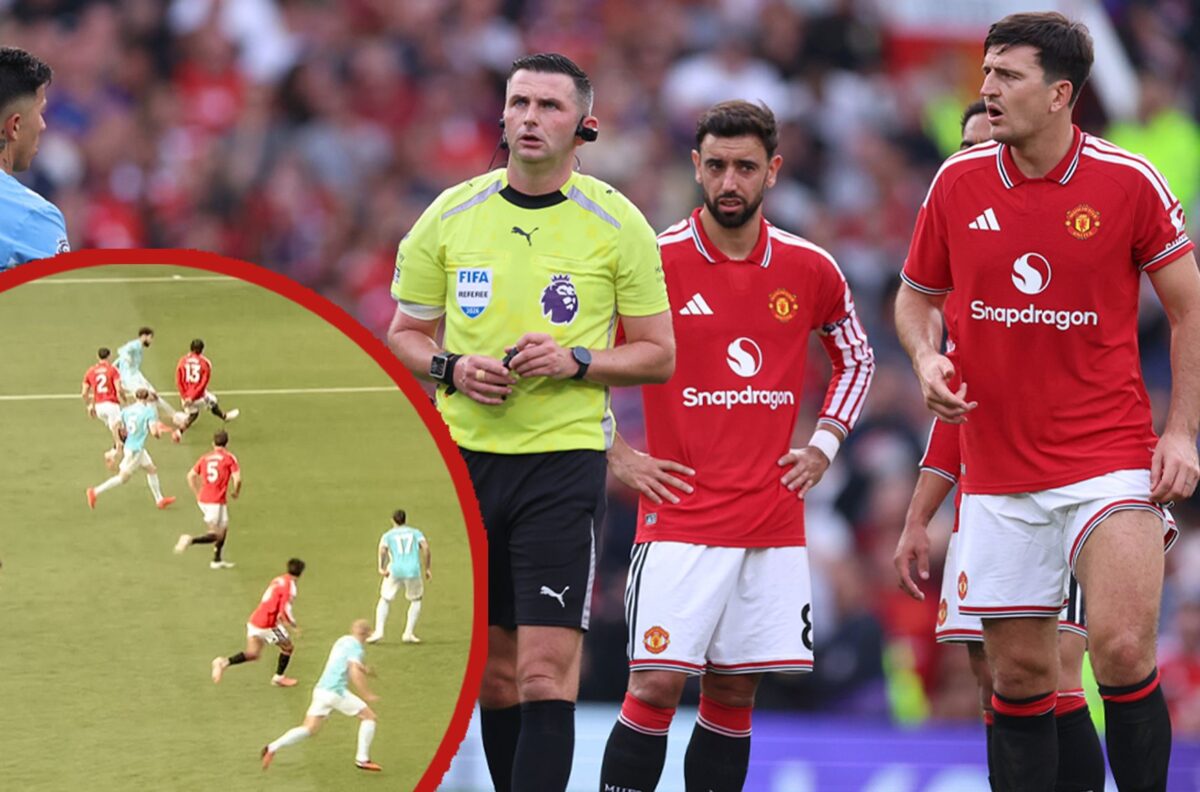
Manchester City’s 1-0 win over Manchester United at Old Trafford was decided by Erling Haaland’s controversial goal. Pro Ref later admitted the award was an “error of judgment,” but several questions remain over the VAR process.
Manchester City left Old Trafford with a narrow Manchester derby victory, but the result was overshadowed by a major refereeing controversy involving Erling Haaland’s winning goal.
The striker’s effort, scored after 59 minutes, was initially ruled out for offside by referee Michael Oliver. However, VAR intervened and overturned the decision, judging that Haaland had been played onside by Manchester United defender Patrick Dorgu.
The review did not end the controversy. City midfielder Enzo Fernandez was also in an offside position and appeared to move toward the ball as Haaland prepared to score. Pro Ref, the professional refereeing body, later admitted that the goal should not have stood.
Its statement described the decision as an “error of judgment”, saying the VAR failed to recognise the likely impact of Fernandez’s position. That explanation, however, has left more questions than answers.
Why was Haaland’s goal initially disallowed?
The first on-field decision was that Haaland had strayed offside before receiving the ball. Replays later showed that Manchester United defender Patrick Dorgu had kept the City forward onside.
Because the original decision was against Haaland, VAR could not simply replace it with a different offside offence without involving the referee. That procedural issue became central to the review.
Was Enzo Fernandez offside?
Yes. Fernandez was in an offside position as the ball travelled across the six-yard area.
The key question was whether he became involved in active play. Under the offside laws, a player does not have to touch the ball to be penalised. An offside player can still interfere with an opponent or challenge for the ball.
Fernandez moved toward the cross and appeared to make a diving attempt to head it. His movement also affected Lisandro Martinez, who reacted to his presence before Haaland finished.
Did VAR focus too much on whether Fernandez touched the ball?
That appears to be the most likely explanation.
During the review, the VAR team reportedly concentrated on whether Fernandez had made contact with the ball. Match Centre also explained that Fernandez had not played it.
But that was not the only relevant issue. The offside law also considers whether a player has interfered with an opponent or challenged for the ball. Fernandez’s position between Martinez and the goal created a potential impact, even if he did not make contact.
The mistake, therefore, may have been a narrow interpretation of the incident. VAR appears to have answered the question of whether Fernandez touched the ball while failing to fully assess his influence on the defenders.
Why should the referee have been sent to the monitor?
Pro Ref said the VAR should have recommended an on-field review.
The reason is that the original decision involved Haaland, who was later shown to be onside. VAR could identify Fernandez’s offside position, but deciding whether Fernandez had interfered with an opponent involved a subjective judgment.
That decision should have been made by Michael Oliver after reviewing the footage. Instead, the goal was overturned on the basis that Haaland was not offside, while Fernandez’s potential involvement was not properly resolved.
Did Fernandez affect Manchester United’s defenders?
There is evidence that he did.
Martinez moved toward Fernandez because the City midfielder was positioned directly in front of him. Manchester United goalkeeper Senne Lammens also appeared to react to Fernandez’s attempted header before Haaland struck the ball.
Martinez later told Sky Sports that Fernandez’s position was obvious.
READ ALSO:
EPL GW 31: Manchester Derby preview, team news, predictions
“He was there. I went to him because he was in front of me. That’s why Haaland was free at the back.”
Even if Lammens was not ultimately judged to have been distracted, Martinez’s movement provided a strong basis for an offside offence.
Who was the VAR official?
Matt Donohue was the VAR at Old Trafford, assisted by Blake Antrobus.
Although Donohue has refereed only a limited number of Premier League matches, he has significant experience operating as a VAR. The referee for the match was Michael Oliver, with Stuart Burt and Tim Wood as assistant referees. Paul Tierney served as fourth official.
Why were no traditional offside lines shown?
The Premier League is using semi-automated offside technology this season. Instead of manually drawn lines and crosshairs, the system provides a kick-point graphic to assist reviews.
That technology can help determine whether a player is in an offside position. It does not, however, decide whether an offside player has interfered with an opponent. That remains a matter of interpretation.
Was the added time also questioned?
The length of the VAR review has raised another issue.
Haaland scored at 59 minutes and 24 seconds, while play did not restart until 63 minutes and 15 seconds. Despite the delay and other stoppages, only five minutes were added at the end of the second half.
READ ALSO:
Pro Ref Admits VAR Error Over Haaland Goal — What Happens Now?
It remains unclear whether the full review period was included in the calculation. The issue has received less attention than the goal itself but adds to concerns about the officiating process.
What happens next?
The result is unlikely to change, but Pro Ref’s admission places renewed pressure on the Premier League’s VAR procedures.
The incident demonstrates that technology can correctly identify an offside position while still producing the wrong outcome if the wider footballing context is missed.
The central lesson is that VAR must assess not only whether a player touched the ball, but also whether their position affected an opponent or challenged for play.