

Why Fuel Prices are Soaring in Canada Amid Middle East Tensions

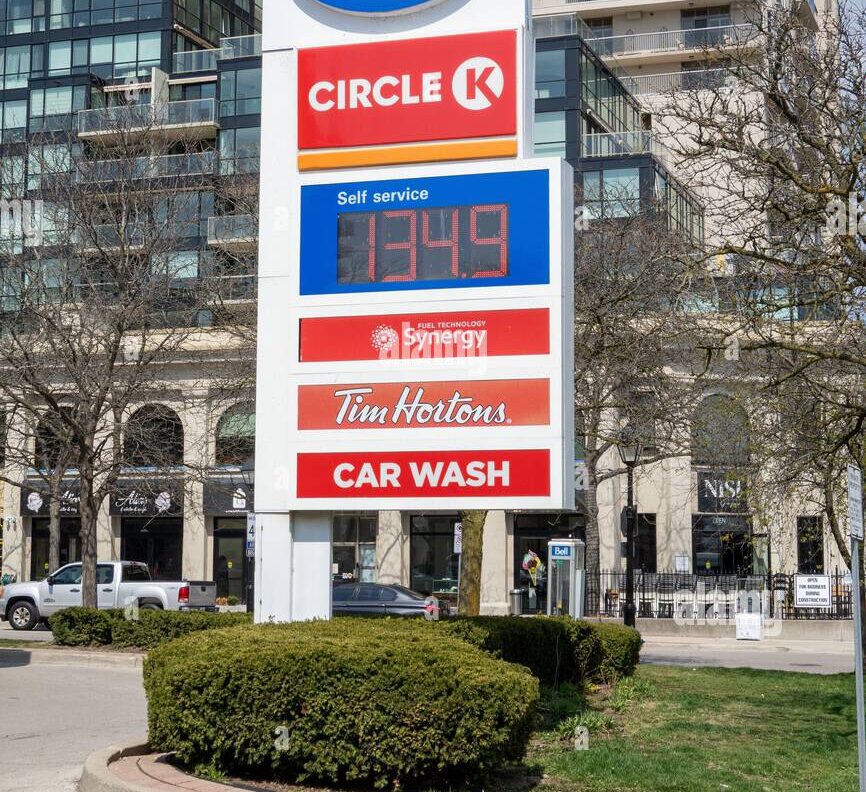
Fuel prices are rising again in parts of Canada, with motorists in Newfoundland and Labrador now paying significantly more than they did a year ago as renewed turmoil in the Middle East pushes global oil prices higher.
The latest increase has brought the price of regular gasoline on Newfoundland’s Avalon Peninsula to about C$2.15 per litre, its highest level since 2022. The province raised gasoline prices by more than eight cents per litre on September 12, while diesel increased by about 11 cents.
The development offers another example of how events thousands of kilometres away from consumers can quickly affect what they pay at the pump.
Why are fuel prices rising?
The immediate issue is the renewed pressure on global oil supplies.
Oil prices have climbed sharply in recent days as the conflict in the Middle East threatens production and transportation infrastructure. On September 14, Brent crude rose above $108 a barrel after drone attacks forced Saudi Arabia to shut down its East-West oil pipeline, an important route that allows crude exports to bypass the Strait of Hormuz.
The attacks have added to existing concerns over shipping through the region.
The Bab el-Mandeb Strait and the Strait of Hormuz are important routes for global energy supplies. Continued instability around the waterways has increased the risk that oil and refined petroleum products could face further delays or disruptions.
Markets respond to those risks even before a physical shortage occurs.
When traders expect that less oil could be available in the future, crude prices can rise immediately. Higher crude prices then feed into the cost of producing, transporting and selling petrol and diesel.
How much have prices increased?
The impact is already visible in Newfoundland and Labrador.
The provincial government reported that gasoline prices were 30.9% higher in July 2026 than in July 2025. Prices for fuel oil and other fuels increased by an even larger 41.8%, while the overall energy index rose 19.4%.
The government said higher oil prices were a major reason for the increase. Brent crude averaged US$83.76 a barrel in July, up 17.9% from the same month in 2025.
That was before the latest escalation pushed Brent back above $100.
The province’s fuel prices have also been unusually volatile. The Public Utilities Board has moved to daily fuel-price adjustments because of market volatility, rather than relying on the more predictable pricing pattern consumers may normally expect.
The result is that motorists can see substantial changes at filling stations within a short period.
Why does the Middle East affect fuel prices elsewhere?
Oil is traded on a global market, meaning the price paid by consumers is not determined only by how much crude is produced in their own country.
Newfoundland and Labrador is itself an oil-producing region. The province produced 8.1 million barrels of offshore oil in July, 15.7% more than a year earlier. Yet local production does not shield consumers from international price movements.
Crude produced in one part of the world competes in a global market. When a major producing region becomes more difficult to access, buyers compete for alternative supplies.
That can push benchmark prices higher even in countries that are not directly affected by the physical disruption.
The same principle applies to refined products such as gasoline and diesel. Refineries, shipping companies and fuel distributors also face higher costs when crude, transportation and insurance become more expensive.
Why the latest spike matters
The concern is not simply that motorists will pay more to fill their cars.
Fuel is an input into almost every part of the economy.
Higher petrol and diesel prices can increase the cost of transporting food, manufactured goods and other products. Businesses that rely heavily on vehicles and machinery can also face higher operating expenses.
Those costs can eventually be passed on to consumers.
Newfoundland and Labrador is already experiencing the effect. In July, the province’s transportation index rose 8.6% year-on-year, driven largely by higher fuel prices. Overall consumer prices were 4.2% higher than a year earlier.
That means an oil-price shock can become a broader cost-of-living problem.
Could fuel prices rise further?
That will depend heavily on what happens to oil supplies and shipping routes in the Middle East.
The International Energy Agency has warned that global oil supply in 2026 could decline by 5.7 million barrels per day, or about 6%, because of ongoing conflict and disruptions in the Gulf. It also reported that refined fuel inventories have been falling rapidly, adding pressure to diesel markets.
The latest attacks on Saudi infrastructure have added another layer of uncertainty.
If disruptions remain temporary and major shipping routes reopen, oil prices could eventually ease. But a prolonged disruption would put further pressure on crude and refined fuel prices.
For consumers, the key issue is therefore not just what happened at the pump today, but whether the geopolitical problems driving the increase continue.
The Newfoundland experience shows how quickly global oil-market tensions can become a household issue: a conflict thousands of kilometres away can translate into a more expensive trip to the filling station, higher transport costs and, eventually, pressure on the prices of everyday goods.