

How to Spot a Fake Political Headline Like the Viral Atiku ‘Rent-Free’ Story

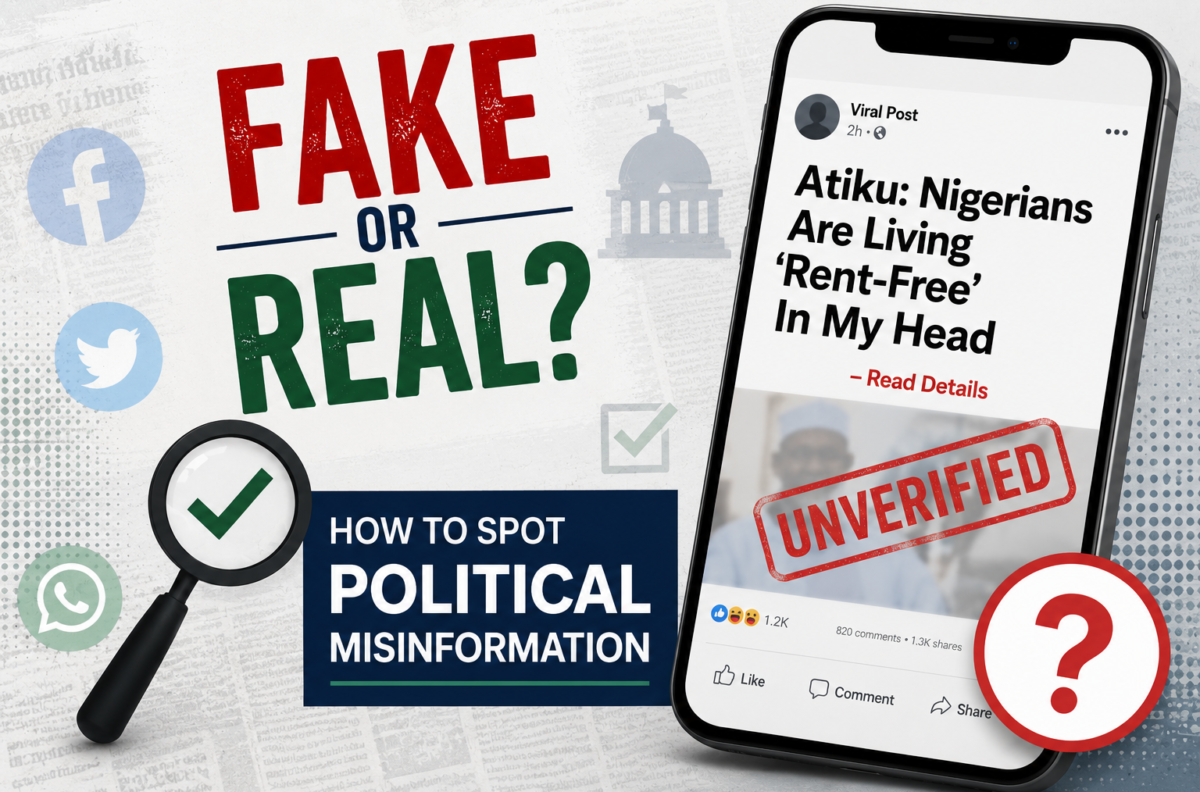
A fabricated newspaper front page claiming former Vice President Atiku Abubakar had pledged to make house rent illegal for Nigerians went viral this week — and it’s a useful case study for what AI-generated political disinformation looks like as Nigeria heads toward a January 2027 election that’s now less than five months away.
The image, shared by a verified account under the name “High Chief Lawrence Igbins Okoro,” presented itself as the front page of “The Daily Tribune,” dated Tuesday, September 1, 2026. It carried the headline “Atiku: No Nigerian will pay house rent when I become President,” with sub-claims that he would jail landlords who collect rent for 10 years and force his government to build free housing nationwide.
Atiku’s media office moved quickly to deny it. His aide, Abdul Rasheeth, called the claim entirely false and urged Nigerians to rely only on official channels for the former vice president’s actual policy positions. A summary compiled from posts on X reported that the image had been assessed as roughly 99% likely AI-generated, and that no newspaper called “The Daily Tribune” matching that masthead exists in Nigeria.
The Tells That Gave It Away
A handful of details are consistently worth checking whenever a screenshot like this circulates:
- Does the outlet actually exist? “The Daily Tribune” is not a real Nigerian newspaper — a quick search for the exact name, the masthead style, or the claimed website is often enough to unravel a fabrication like this one.
- Do other outlets have the story? A genuine “breaking” front-page claim about a leading presidential candidate would be picked up immediately by real Nigerian outlets. If a search turns up nothing but reposts of the same single image, that’s a warning sign.
- Is there a named source responding? In this case, Atiku’s own media office denied the claim directly and by name — official denials, when available, are one of the fastest ways to check a viral claim.
- Look closely at the image itself. AI-generated front pages often carry subtle artifacts: text that looks slightly warped on close inspection, inconsistent fonts or spacing between headline and body text, or design details (mastheads, page numbers, contact information) that don’t match a real publication’s established look.
- Who’s posting it, and how? Verified accounts sharing sensational, unsourced claims about political figures — especially ones framed as “BREAKING” — deserve more scrutiny, not less, simply because a check mark doesn’t verify the content of a specific post.
Why This Matters More Right Now
Nigeria’s presidential election was moved up to January 16, 2027, putting the vote under five months away. Political disinformation tends to intensify as elections approach, and Atiku has already been targeted by more than one fabricated story this election cycle — including an earlier claim, also denied by his camp, that he intended to quit active politics altogether. Fabricated content aimed at leading candidates is likely to keep surfacing between now and January, making a basic verification habit worth building before the volume increases.
What To Do Before Sharing a Political Story Like This
The simplest check is usually the fastest: search the exact headline or claim, see whether credible outlets are reporting it independently, and check whether the candidate’s own campaign or spokesperson has responded. If none of that turns up corroboration, the safest move is to wait rather than share.