

Everything we know about FIFA World Cup 2030: Hosts, dates, format and final venue fight

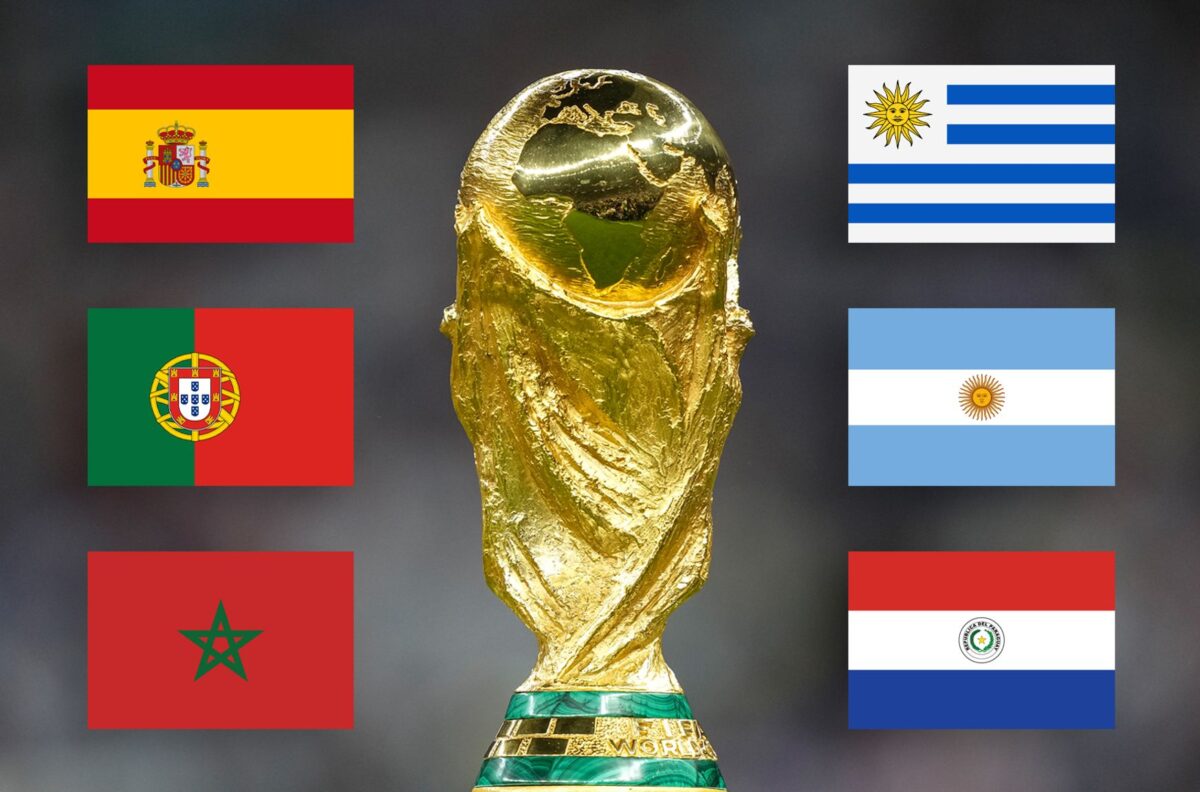
World Cup 2030 becomes the first tournament across three continents. Image Credit: Sky News
The FIFA World Cup is preparing for its most ambitious edition yet. After the conclusion of the 2026 tournament in North America, attention is already shifting toward World Cup 2030, a competition that will celebrate the centenary of football’s biggest event.
For the first time in history, the men’s FIFA World Cup will be played across six countries and three continents, creating an unprecedented global spectacle. While Spain, Portugal and Morocco will serve as the primary hosts, Uruguay, Argentina and Paraguay will stage opening matches to commemorate the tournament’s 100-year anniversary.
At the same time, an intense political and sporting battle is emerging over one crucial question: Which country will host the World Cup final?
World Cup 2030 Hosts Confirmed
FIFA has confirmed that Spain, Portugal and Morocco will jointly host the majority of the competition.
Meanwhile, Uruguay, Argentina and Paraguay have each been awarded one opening match in recognition of the tournament’s historical roots.
Uruguay hosted the inaugural World Cup in 1930 and became football’s first world champion after defeating Argentina in Montevideo. FIFA’s decision ensures the centenary edition pays tribute to the birthplace of the tournament.
The arrangement makes World Cup 2030 the first tournament in history to span:
- Europe
- Africa
- South America
This unique format highlights FIFA’s efforts to showcase football’s global reach.
When Will the 2030 FIFA World Cup Take Place?
According to FIFA’s proposed schedule, centenary matches in South America are expected to take place on June 8 and June 9, 2030.
The main tournament in Morocco, Portugal and Spain is expected to begin on June 13 and June 14, while the final could be played on July 21, 2030, although FIFA has yet to officially release the complete fixture list.
Teams involved in the South American opening games will receive additional travel and recovery time before continuing their group-stage campaigns.
Spain and Morocco Locked in Battle for World Cup Final
One of the biggest talking points surrounding World Cup 2030 is the race to host the final.
Spain believes its football infrastructure and experience make it the natural choice. The country has two major options:
- Santiago Bernabéu Stadium (Madrid) – capacity of approximately 83,000.
- Camp Nou (Barcelona) – expected capacity of around 105,000 after renovations.
Morocco, however, is making a strong push.
The North African nation is constructing the $12 billion Hassan II Stadium near Casablanca, a massive 115,000-seat arena that would become the largest football stadium in the world.
Moroccan officials are lobbying heavily behind the scenes, hoping to secure what would become only the second World Cup final ever played in Africa, following Johannesburg’s hosting in 2010.
FIFA has not yet announced where the final will take place.
READ ALSO
Will the Tournament Expand to 64 Teams?
World Cup 2030 is currently scheduled to feature 48 teams, continuing the expanded format introduced in 2026.
However, FIFA President Gianni Infantino has indicated that discussions regarding a possible expansion to 64 teams may take place.
Supporters argue that a larger tournament would provide opportunities for more nations to participate and accelerate football’s global growth.
Critics, however, warn that further expansion could lead to scheduling challenges and increase the burden on players.
At present, FIFA has not approved any changes.
Automatic Qualification and Remaining Spots
Six countries have already secured their places through automatic qualification:
- Spain
- Portugal
- Morocco
- Uruguay
- Argentina
- Paraguay
The remaining 42 spots will be decided through continental qualification tournaments over the coming years.
Major football nations, including Brazil, France, England and Germany, are expected to begin qualification campaigns soon.
A Tournament Designed for History
World Cup 2030 represents far more than another football tournament. It marks 100 years since the inaugural FIFA World Cup, celebrating the sport’s extraordinary transformation from a 13-team competition in Uruguay to a global event watched by billions.
The tournament’s historic structure, combined with the growing rivalry over the final venue, guarantees that preparations will remain in the global spotlight for years.
Following World Cup 2030, attention will then shift toward Saudi Arabia, which is set to host the 2034 FIFA World Cup.
FAQ
When is the 2030 FIFA World Cup?
The 2030 FIFA World Cup is expected to begin in June 2030, with the final potentially taking place on July 21, 2030.
Which countries will host World Cup 2030?
Spain, Portugal and Morocco are the primary hosts, while Uruguay, Argentina and Paraguay will each host one opening match.
Why are six countries hosting the World Cup?
The arrangement celebrates the tournament’s 100th anniversary by honoring Uruguay, where the first World Cup was held in 1930.
Where will the World Cup 2030 final be played?
FIFA has not made a final decision. Spain and Morocco are currently competing to host the championship match.
What is the Hassan II Stadium?
The Hassan II Stadium is a planned 115,000-seat stadium near Casablanca, Morocco. It is expected to become the world’s largest football stadium.
Will World Cup 2030 feature 64 teams?
Currently, the tournament will include 48 teams. FIFA may discuss expanding to 64 teams, but no decision has been made.
Which teams have already qualified?
The six host nations – Spain, Portugal, Morocco, Uruguay, Argentina and Paraguay – have automatically qualified.
Why is World Cup 2030 historic?
It will become the first FIFA World Cup to be played across three continents and six countries while also commemorating the competition’s centenary.
What happens after World Cup 2030?
The next men’s FIFA World Cup will take place in Saudi Arabia in 2034.
How many teams played in the first World Cup?
The inaugural tournament in 1930 featured only 13 teams, compared to the 48-team format planned for 2030.