

Why Trump cannot Pardon Mother Accused of Killing three Children

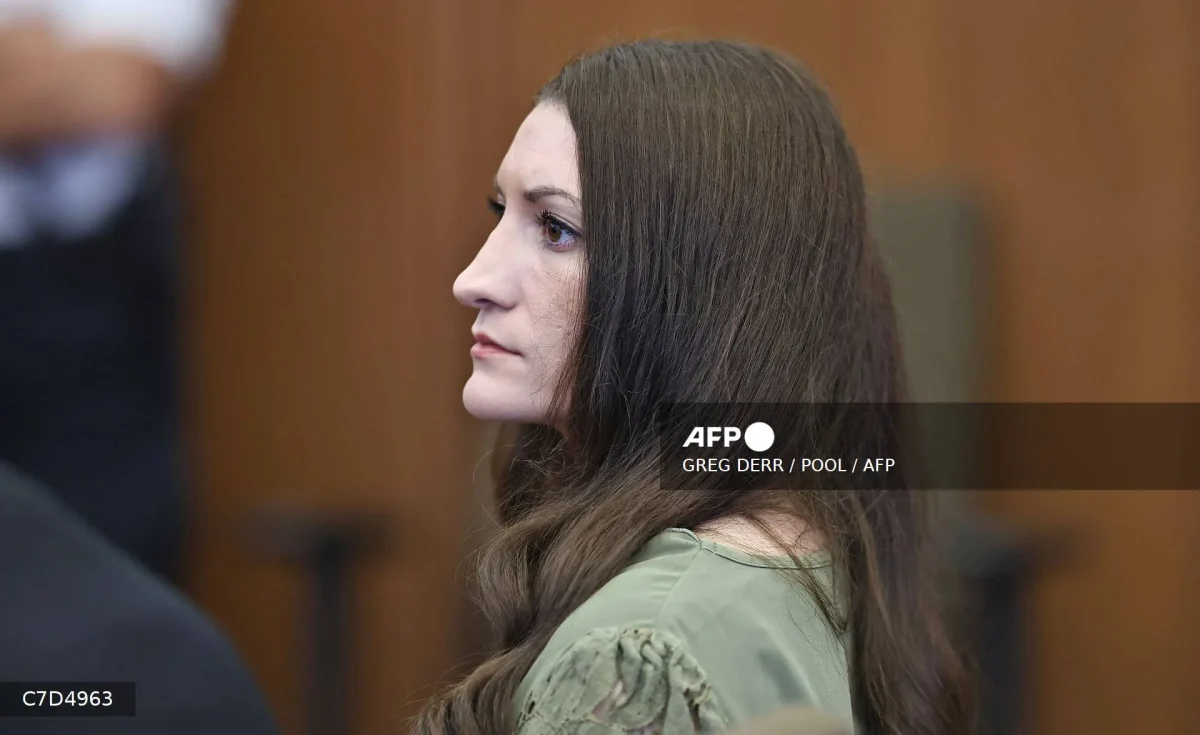
US President Donald Trump has declined to intervene in the case of Lindsay Clancy, a Massachusetts woman accused of killing her three children, after her lawyer appealed to him for a pardon.
But the case raises a bigger legal question: Can the US president pardon someone accused of a crime prosecuted under state law?
In Clancy’s case, the answer is no.
Clancy, 36, is facing murder charges in Massachusetts over the deaths of her three children — five-year-old Cora, three-year-old Dawson and eight-month-old Callan — in January 2023.
Her first trial ended in a mistrial earlier this month after jurors failed to reach a unanimous verdict. Prosecutors now have to decide whether to retry the case.
Following the mistrial, Clancy’s defence lawyer, Kevin Reddington, publicly appealed to Trump to pardon his client.
Reddington acknowledged that Trump does not have direct legal authority over the Massachusetts case but argued that the president could use his influence to help bring the case to an end.
Trump, however, has now indicated that he will not intervene, describing the matter as a state issue.
Why Trump cannot pardon Clancy
The US Constitution gives the president the power to grant pardons and other forms of clemency for offences against the United States.
That means the presidential pardon power applies to federal crimes, not crimes prosecuted under the laws of individual states.
Clancy’s case is being prosecuted by Massachusetts authorities, making it a state criminal case rather than a federal prosecution.
As a result, Trump does not have the constitutional authority to simply pardon Clancy or erase the Massachusetts charges against her.
Legal experts have also pointed out that the case has not resulted in a conviction. The first trial ended without a verdict because the jury was deadlocked.
This further complicates any discussion of a pardon because Clancy remains accused of the crimes and has not been convicted.
Why did her lawyer ask Trump anyway?
Reddington’s appeal was not based solely on the belief that Trump could legally erase the charges.
The lawyer has argued that Trump could potentially use his political influence to encourage a resolution of the case, particularly as prosecutors consider whether to hold another trial.
Reddington has focused heavily on Clancy’s mental state, arguing that she suffered from severe postpartum psychosis when her children died.
During the trial, her defence presented evidence about her mental health and argued that she was not criminally responsible for the killings.
Prosecutors, however, maintained that Clancy was responsible for the deaths and presented a different account of what happened.
The disagreement over her mental state was central to the case.
What happened at the first trial?
Clancy was accused of killing her three children at the family’s home in Duxbury, Massachusetts, in January 2023.
She was also seriously injured after attempting to take her own life and has since been paralysed.
At her trial, prosecutors accused her of deliberately killing the children, while the defence argued that she was suffering from postpartum psychosis and therefore should not be held criminally responsible.
The jury deliberated for more than 38 hours but could not reach the required unanimous decision.
The resulting mistrial means the case has not been resolved.
Prosecutors can seek to try Clancy again, although they have not yet announced whether they will pursue a retrial. Clancy is expected back in court later this month as the next stage of the case is considered.
Who can grant clemency in a state case?
Because Clancy’s case falls under Massachusetts law, any clemency authority would have to come from the state rather than the White House.
Massachusetts has its own legal mechanisms for pardons and commutations, although those powers are subject to state law and procedures.
The state’s governor, Maura Healey, has also indicated that the case is not currently at a stage where a pardon could simply be granted, particularly because Clancy has not been convicted.
This is why Trump’s response is significant despite his lack of direct authority over the case.
His refusal does not end Clancy’s legal battle. It simply means that the president will not use his position to intervene in a case that remains within the Massachusetts criminal justice system.
For now, the central question is whether prosecutors will bring Clancy before another jury.
If they do, the dispute over whether she was suffering from postpartum psychosis and whether that condition made her legally responsible for the deaths of her children is likely to remain at the centre of the case.
The case therefore remains unresolved, with Clancy still facing the possibility of another trial in Massachusetts.