

Why CAF Wanted AFCON Every Four Years Before Changing Its Mind

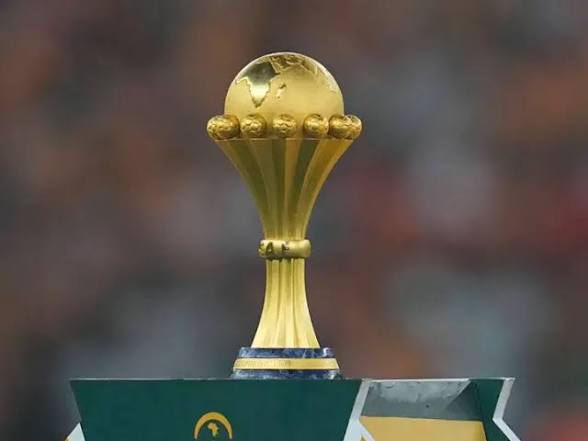
The Africa Cup of Nations (AFCON) has undergone several changes since its introduction in 1957, growing from a small competition involving three countries into one of the biggest international football tournaments.
However, beyond the expansion of participating teams, the competition’s schedule has also been a subject of debate, with the Confederation of African Football (CAF) recently reversing its decision to move the tournament from a two-year to a four-year cycle.
The latest decision followed concerns about the financial implications of the proposed change and the ability of a replacement competition to sustain African football.
How AFCON started
The first edition of AFCON took place in Sudan in 1957, with only three participating countries: Egypt, Sudan and Ethiopia. South Africa was initially expected to participate but was excluded because of its apartheid policy.
Egypt emerged as the first champion after defeating Ethiopia in the final.
The tournament gradually expanded as more African countries gained independence and joined CAF.
By 1968, the competition had grown to eight teams. It later expanded to 12 teams in 1992 before reaching 16 participating countries in 1996.
In 2019, CAF increased the number of teams to 24, introducing a larger competition with more countries competing for the continental title.
Throughout these changes, AFCON maintained its traditional two-year schedule.
Why CAF wanted a four-year AFCON
In December 2025, CAF president Patrice Motsepe announced that AFCON would move to a four-year cycle after the 2028 edition.
The decision was part of a wider restructuring of African football competitions.
One of the major reasons was the international football calendar, particularly the difficulties created when AFCON takes place during the European football season.
Several African players represent clubs in Europe, where their absence for the tournament often creates problems for managers.
The four-year arrangement was expected to reduce these scheduling conflicts and bring AFCON closer to the international football calendar.
CAF also planned to introduce an Africa Nations League in 2029. The competition was expected to provide regular international football and generate revenue between AFCON editions.
Why CAF changed its mind
The proposed arrangement, however, faced uncertainty over its financial implications.
On October 29, 2026, CAF announced that its executive committee had unanimously decided to restore AFCON’s traditional two-year schedule.
According to Motsepe, the proposed Africa Nations League would require several years before generating the substantial financial resources needed to support CAF competitions and football development across the continent.
The governing body was concerned that extending the gap between AFCON tournaments could leave a financial gap that the new competition would not immediately fill.
CAF also cited the interests of its 54 member associations and African players competing for clubs outside the continent.
When is the next AFCON?
The next edition will take place in 2027 in Kenya, Tanzania and Uganda, which will jointly host the tournament.
Another edition will follow in 2028, with subsequent competitions scheduled for 2031 and 2033.
There will be no AFCON in 2030 because it is a FIFA World Cup year.
The latest decision means African football will retain its traditional continental championship schedule, despite CAF’s earlier attempt to restructure the competition.