

What happens if Nigerian workers begin a strike on October 2?

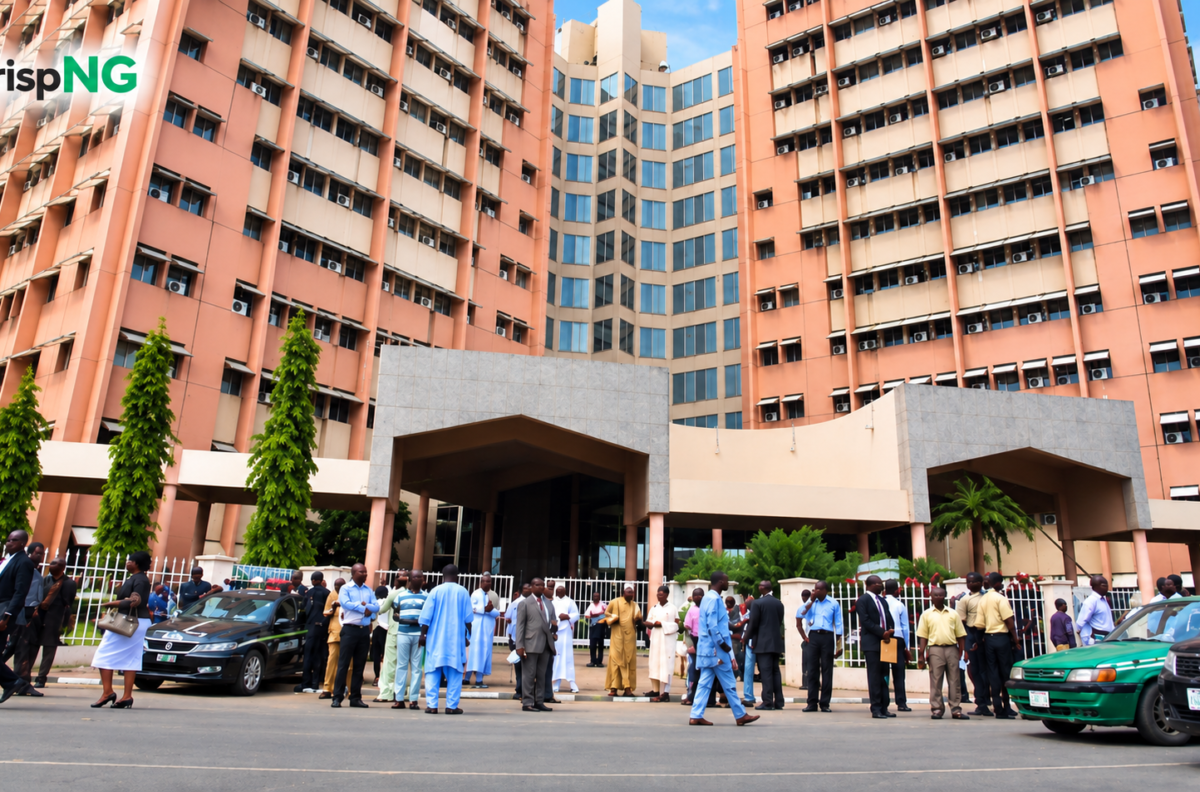
Nigerian public servants have threatened to begin a three-day warning strike on Friday, October 2, 2026, if the Federal Government fails to address their concerns over petrol prices, wage relief and preparations for a new national minimum wage.
The warning was issued by the Joint National Public Service Negotiating Council (JNPSNC), which represents eight public sector unions.
The council had given the Federal Government until Wednesday, September 30, to respond to its demands. It has now reaffirmed that deadline, putting October 2 forward as the start date for the proposed industrial action.
The development means public services could face disruptions if the unions proceed with the warning strike.
Why are Nigerian workers threatening a strike?
The dispute centres on three major demands: a reduction in petrol prices, an immediate wage award and the commencement of negotiations for a new national minimum wage.
The JNPSNC wants the Federal Government to take steps to bring the pump price of petrol down to N500 per litre.
The council argued that the rising cost of petrol has increased the financial pressure on workers and their dependants, with prices reportedly ranging from about N1,450 to N2,000 per litre and reaching as high as N2,500 in some locations.
The unions proposed an intervention fund to address landing costs and support operators in the oil and gas sector.
They also called on the Federal Government to make crude oil available to the Dangote Refinery and modular refinery operators on appropriate terms, arguing that increased domestic refining could help reduce the cost of petroleum products.
What is the wage award demand?
The public servants are also asking the Federal Government to approve an immediate wage award.
A wage award is a temporary financial intervention intended to provide workers with additional income during periods of economic pressure. The unions say such a payment would help cushion the impact of rising living costs on workers and vulnerable Nigerians.
The demand comes amid continued concerns over the purchasing power of workers as the cost of transportation, food and other essential goods remains linked to higher energy costs.
The JNPSNC said urgent action on the wage award would provide relief while allowing public servants to continue their duties under the prevailing economic conditions.
What does the new minimum wage have to do with the strike?
The third demand concerns preparations for another national minimum wage.
The JNPSNC wants the Federal Government to immediately constitute a tripartite committee to begin preparations and negotiations for a new national minimum wage expected to become due in 2027.
The unions said starting the process early would help prevent administrative delays between negotiations, the eventual passage of the necessary legislation and implementation of a new wage framework.
The council had also previously called for negotiations around a minimum wage of not less than N500,000 from 2027.
Which workers could participate?
The JNPSNC is made up of eight public sector unions.
They include the Nigerian Civil Service Union, Medical and Health Workers Union, Association of Senior Civil Servants of Nigeria and National Association of Nigerian Nurses and Midwives.
The other unions are the Amalgamated Union of Public Corporations, Civil Service Technical and Recreational Employees; Nigeria Union of Public Service, Reportorial, Secretarial, Data Processors and Allied Workers; National Union of Printing, Publishing and Paper Products Workers; and National Union of Agriculture and Allied Employees.
The planned action is therefore directed at public-sector workers represented by these unions, rather than being a general declaration that every Nigerian worker will automatically stop working.
When would the strike begin?
According to the council, the proposed warning strike would begin on Friday, October 2, and last for three days.
The unions’ September 30 deadline is the immediate trigger. They have said that failure by the Federal Government to address their demands by that date would leave them with no option but to proceed with the industrial action.
The council also wants President Bola Tinubu to address the issues in his Independence Day broadcast on October 1.
That means the government’s response before or during the October 1 address could be significant in determining whether the proposed warning strike proceeds.
What could happen if the strike begins?
If the unions proceed with the three-day warning strike, government offices and public services involving participating workers could experience disruptions.
The exact effect would depend on the level of compliance by workers and the extent to which individual unions and their members participate.
The action is described by the JNPSNC as a warning strike, meaning the immediate objective is to pressure the Federal Government to respond to the demands rather than announce an indefinite shutdown.
The Nigeria Labour Congress (NLC) has also backed the public servants’ demands, adding broader labour support to the dispute.
However, the proposed strike is not yet the same thing as an indefinite nationwide shutdown. The current notice specifically concerns a three-day warning strike beginning October 2 if the September 30 deadline passes without the requested government action.
For Nigerians, the key dates to watch are therefore September 30, when the unions’ deadline expires; October 1, when President Tinubu is expected to deliver his Independence Day address; and October 2, the date fixed for the proposed three-day warning strike.
The outcome will depend on whether the Federal Government addresses the unions’ demands or reaches an agreement with the workers before the proposed industrial action begins.