

Will Reeve’s cancer battle: The warning sign he nearly ignored and the lesson from his parents

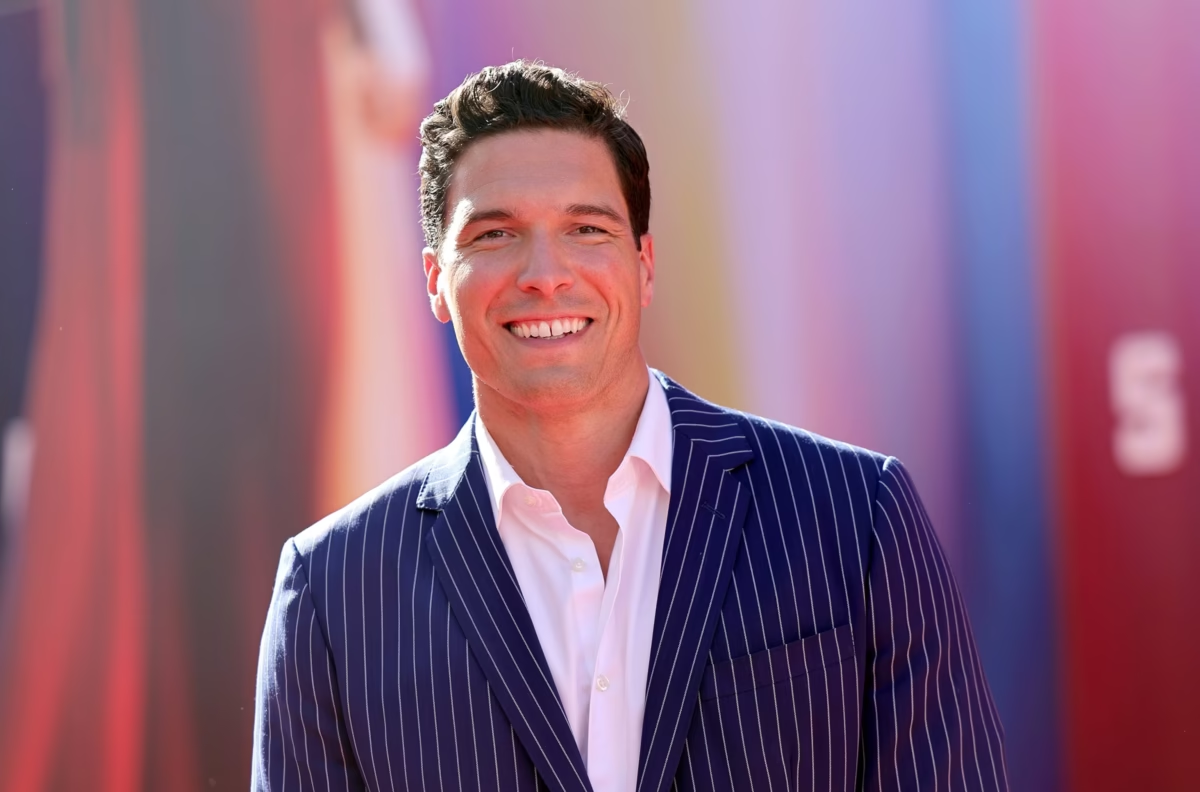
Will Reeve hits ‘Superman’ red carpet premiere. Credit: Maya Dehlin Spach/Getty Images
Will Reeve has revealed that he was diagnosed with testicular cancer earlier this year, opening up about a deeply personal health battle that came just months after his marriage and forced him to confront some of the same realities of illness and caregiving that shaped his childhood.
The 34-year-old ABC News national correspondent, who is also the son of late actor Christopher Reeve and Dana Reeve, said he is now cancer-free following surgery and chemotherapy. He shared his diagnosis publicly for the first time in an interview with PEOPLE published September 29, 2026.
His story has drawn attention not only because of his family’s history with serious illness, but also because of how quickly a symptom he initially dismissed led to a cancer diagnosis.
Will Reeve noticed a lump before his cancer diagnosis
Reeve said he first noticed a tender lump on one of his testicles while showering in April.
At first, he assumed it was nothing serious and expected it to disappear. His wife, Amanda Dubin Reeve, encouraged him to get an ultrasound, asking what might happen if the lump turned out to be something more serious.
The scan ultimately led to his diagnosis.
The American Cancer Society says a lump, swelling or enlargement of a testicle is among the most common warning signs of testicular cancer. Pain or an ache can also occur, although many testicular cancers do not cause pain.
That makes Reeve’s account particularly notable: the symptom he nearly ignored became the reason his cancer was discovered.
Reeve underwent surgery and chemotherapy
Following the diagnosis, Reeve underwent an orchiectomy in May to remove the affected testicle. Surgery to remove a cancerous testicle is a standard part of treatment for testicular cancer, according to the American Cancer Society.
Further testing showed that 95% of the cancer was embryonal carcinoma, an aggressive form of testicular cancer. Doctors also found cancer in three of the lymph nodes removed during a six-hour abdominal operation in June.
The findings meant Reeve needed two rounds of chemotherapy.
He completed his second round on July 31 and took time away from his work at ABC News to recover. Despite the intensity of the treatment, Reeve said doctors repeatedly used the word “cure” when discussing his prospects.
As of a September 8 checkup, he said he was cancer-free. He will continue to undergo scans and bloodwork several times a year to monitor for any signs of recurrence.
How Christopher and Dana Reeve shaped his response
For Reeve, the cancer diagnosis carried an emotional weight that went beyond his own treatment.
His father, Christopher Reeve, became paralysed from the neck down following a horse-riding accident when Will was two years old. Christopher and Dana Reeve subsequently became prominent advocates for spinal cord injury research and awareness and helped establish the Christopher & Dana Reeve Foundation.
Christopher Reeve died in 2004 at 52. Dana Reeve died of lung cancer in 2006 at the age of 44.
Will was 13 when his mother died.
He has said that watching his parents turn some of the most difficult circumstances of their lives into advocacy and support for others influenced the way he approaches adversity.
That lesson became especially significant during his own cancer treatment.
“Watching my parents up close take the adversity they faced in their lives and repurpose it into something hopeful” had a major influence on how he tries to live, Reeve told PEOPLE.
He also said he was raised to share personal struggles if doing so could help other people.
That is part of the reason he chose to discuss his diagnosis publicly.
READ ALSO
His cancer treatment brought his parents’ experiences closer
Reeve described an unusual emotional connection between his own treatment and his mother’s final years.
His mother had received treatment for lung cancer at Memorial Sloan Kettering Cancer Center. Twenty years later, Reeve found himself being treated for cancer in the same institution.
At the same time, his experience gave him a different perspective on his father’s years living with paralysis.
As a child, Reeve had watched his mother and family care for Christopher. During his own illness, he experienced something similar from the patient’s side, with his wife helping him through treatment.
He said the experience gave him a deeper understanding of what both of his parents had gone through.
His wife played an important role in getting him checked
Reeve has credited Amanda with pushing him to seek medical attention when he might otherwise have waited.
The couple married in January 2026, only months before his diagnosis.
After doctors confirmed the cancer, they also moved quickly to preserve his fertility. Reeve said he banked sperm because he and Amanda hope to have children. PEOPLE later reported that the couple plans to pursue IVF.
His experience highlights an issue that can become important during treatment for testicular cancer: fertility preservation.
Treatment decisions can affect fertility differently depending on the disease and treatment plan, which is why doctors may discuss sperm banking before treatment begins.
Reeve says early action changed his cancer journey
One of the clearest messages from Reeve’s story is his warning against ignoring changes in the body.
He said he was fortunate that the problem was identified early and urged people to pay attention to symptoms rather than assuming they will disappear.
The American Cancer Society notes that most testicular cancers can be found at an early stage, although some may not produce noticeable symptoms until they have spread.
The organisation also says finding cancer early can provide more treatment options.
Reeve’s experience does not mean every lump is cancer. Many conditions can cause swelling, tenderness or changes in the testicle. But persistent or concerning symptoms warrant medical evaluation rather than self-diagnosis.
What Will Reeve says he learned from the experience
Reeve said the experience has changed how he approaches everyday life.
He plans to live more intentionally and pay closer attention to what matters, while leaning on the people around him.
That support began with Amanda but extended to his siblings, family, friends and colleagues at ABC News.
For someone who spent much of his childhood watching his parents navigate devastating health challenges, his own diagnosis created a new perspective on illness.
Yet Reeve’s decision to speak publicly is not simply about revisiting his family’s history. It is also about encouraging people, particularly young men, to take changes in their bodies seriously.
His cancer journey began with a symptom he initially thought was probably nothing. A medical check changed that assumption, leading to treatment and, as of his September 8 checkup, a cancer-free status.
Frequently Asked Questions About Will Reeve’s Cancer Diagnosis
What type of cancer did Will Reeve have?
Will Reeve was diagnosed with testicular cancer in spring 2026. Further testing showed that 95% of the cancer was embryonal carcinoma, an aggressive type of testicular cancer.
Is Will Reeve cancer-free?
Reeve said he was cancer-free following treatment, with his latest reported checkup taking place on September 8, 2026. He is continuing with regular scans and bloodwork to monitor his health.
What was the first sign of Will Reeve’s cancer?
Reeve said he noticed a tender lump on one of his testicles while showering in April. His wife encouraged him to have the symptom checked, leading to an ultrasound and diagnosis.
What treatment did Will Reeve receive?
Reeve underwent surgery to remove the affected testicle, followed by surgery to remove abdominal lymph nodes after cancer was found in three of them. He subsequently received two rounds of chemotherapy.
Who is Will Reeve’s wife?
Will Reeve is married to Amanda Dubin Reeve. The couple married in January 2026, shortly before his cancer diagnosis. She encouraged him to seek medical attention after he noticed the lump.
Did Will Reeve’s cancer affect his fertility?
Reeve said he banked sperm after his diagnosis because he and Amanda want to have children. He has also discussed the couple’s plans to use IVF.
What are the early signs of testicular cancer?
A lump or swelling in a testicle is a common warning sign. Other possible symptoms include enlargement, heaviness or an ache in the lower abdomen or scrotum. Many lumps are caused by conditions other than cancer, so symptoms should be evaluated by a healthcare professional.
Can testicular cancer be treated successfully?
Testicular cancer is generally highly treatable, although outcomes vary according to the type and extent of the disease and other factors. The American Cancer Society’s current SEER-based figures report five-year relative survival rates of 99% for localized disease, 96% for regional disease and 72% for distant disease. These figures are population statistics and cannot predict an individual’s outcome.
Why did Will Reeve decide to talk about his cancer?
Reeve said his parents influenced his decision to share his experience. He grew up watching Christopher and Dana Reeve respond to serious health challenges by advocating for others, and he wanted his own experience to potentially help people pay closer attention to their health.