

What caused the deadly Nepal-Tibet flash floods? Glacier collapse sparks fears of more disaster

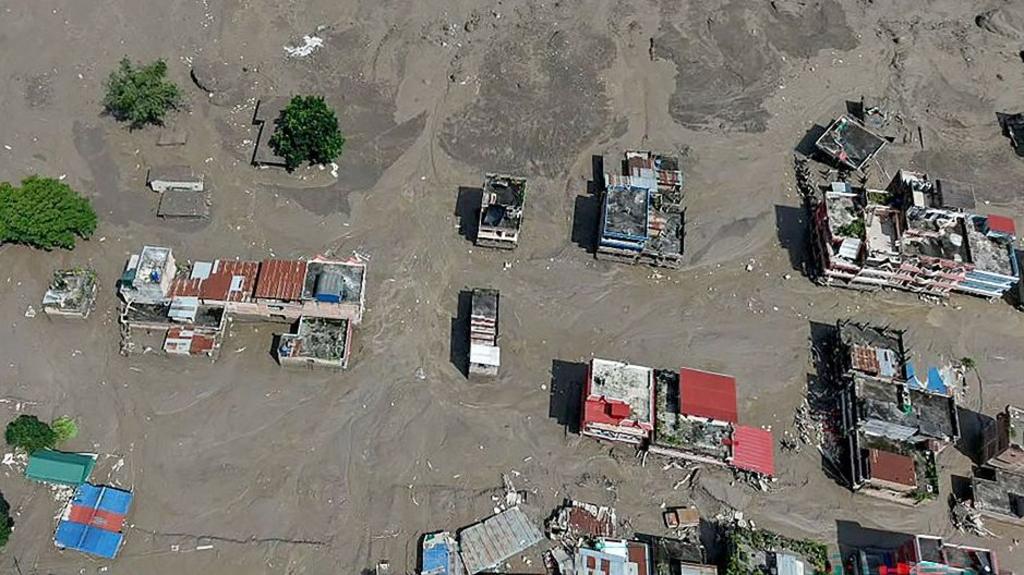
Nepal flash floods leave 95 dead and hundreds missing. CREDIT: BBC
A catastrophic glacier collapse and debris flow is being blamed for the devastating flash floods that swept through communities near the Nepal-Tibet border, leaving hundreds dead, hundreds more missing and raising fears that further flooding could still occur.
The disaster has destroyed homes, roads and bridges, while rescue teams struggle to reach isolated communities buried beneath mud and debris. Authorities in Nepal reported a rapidly rising death toll, while hundreds of people, including foreign tourists and pilgrims, remained out of contact.
Scientific assessments cited by the BBC indicate that the disaster was not simply the result of heavy rainfall. The United States Geological Survey (USGS) said a glacial collapse and debris flow triggered the catastrophic flooding downstream.
With unstable debris still affecting waterways and concerns about a barrier lake upstream, the immediate emergency is now accompanied by a troubling question: could another wave of flooding follow?
What Caused the Deadly Flash Floods in Nepal and Tibet?
The flash floods were triggered by what scientists have described as a glacial collapse followed by a massive debris flow.
Satellite imagery examined by researchers reportedly showed that part of a glacier near the affected region had disappeared. Scientists believe a huge mass of ice and debris broke away and crashed into the valley below, generating an enormous surge of water, mud, rocks and other material.
The force of the collapse sent destructive floodwaters rushing through river valleys and communities downstream.
Unlike conventional flooding that develops gradually during prolonged rainfall, this event was extremely rapid. Survivors and witnesses described an explosive wall of water and mud moving through valleys with little time for people to escape.
The scale of the disaster has led experts to examine several possible environmental factors, including the instability of high mountain environments.
How Could Climate Change Be Linked to Glacier Collapse?
Scientists have cautioned that further investigation will be needed to determine the precise role of climate change in the disaster. However, experts say warming temperatures may be increasing the instability of glaciers and mountain slopes in parts of the Himalayas.
One major concern is the thawing of permafrost, which can help hold mountain rocks and ice in place. As temperatures rise and frozen ground weakens, mountain environments can become more unstable.
This may increase the risk of:
- Glacier collapses
- Ice avalanches
- Landslides
- Debris flows
- Glacial lake outburst floods
- Sudden flooding downstream
Scientists have observed similar high-mountain disasters in recent years in regions including the Himalayas and parts of Europe. The Nepal-Tibet disaster has renewed concerns about how rapidly changing mountain environments could expose communities, tourists and infrastructure to increasingly dangerous hazards.
Why Were the Flash Floods So Destructive?
The geography of the Himalayan region played a major role in the disaster’s destructive power.
Mountain valleys can act like channels, concentrating enormous volumes of water and debris into narrow areas. When a glacier or mountain slope collapses, the material can rapidly accelerate downhill.
The combination of water, ice, rocks, soil and mud can create a powerful debris flow capable of destroying almost everything in its path.
In the affected Nepalese communities, roads and bridges were swept away, cutting off access to some areas. Entire settlements and marketplaces were reportedly destroyed or buried in mud.
The damage has also complicated rescue efforts, with helicopters becoming one of the few ways to reach isolated communities.
Hundreds Dead and More Than 800 Missing in Nepal
Nepal’s authorities reported that the death toll continued to rise as rescue workers recovered more bodies from affected areas.
Hundreds of people remained missing, including large numbers of tourists and pilgrims travelling through the region.
The affected area includes routes used by travellers heading towards Mount Kailash and the Kailash Mansarovar pilgrimage route, as well as areas popular with trekkers.
Foreign nationals from several countries were among those reported missing or out of contact, increasing the international dimension of the emergency.
Search and rescue operations have been complicated by damaged infrastructure, difficult terrain, unstable weather conditions and widespread communication failures.
READ ALSO
Nepal flash floods explained: What triggered the deadly disaster on the Tibet border?
What Happens Next? Experts Fear Secondary Flooding
The greatest immediate concern is the possibility of secondary flooding.
Experts monitoring the disaster have warned that debris blocking rivers could create temporary lakes upstream. These are sometimes referred to as barrier lakes.
If water continues to build up behind debris and the blockage suddenly fails, another powerful surge of water could move downstream.
Rescue teams in China have reportedly been working to assess and stabilise an upstream barrier lake, while scientists continue monitoring mountain slopes and waterways.
A disaster studies expert also warned of possible “second and third waves,” although the exact timing and likelihood of further events remain uncertain.
Even without major rainfall, unstable mountain slopes could still trigger landslides, potentially adding more debris to already damaged river systems.
Rescue Operations Face Major Challenges
Thousands of emergency personnel have been deployed as Nepal and neighbouring authorities continue searching for survivors.
Helicopters have played a critical role because roads and bridges in some areas have been destroyed. Rescue teams are also using ground operations, sniffer dogs and aerial searches to locate survivors.
Hospitals and healthcare centres have been treating injured victims, while families continue waiting for information about relatives who remain missing.
International assistance has also been offered as authorities confront what humanitarian organisations have described as an extreme situation.
Beyond the immediate search for survivors, officials will eventually face the enormous challenge of restoring roads, bridges, power infrastructure and communities devastated by the floods.
Nepal-Tibet Flash Floods Could Have Major Economic Consequences
The disaster is expected to have consequences beyond the immediate humanitarian crisis.
Flooding has damaged infrastructure along an important trade corridor between Nepal and China. Disrupted roads and border routes could affect the movement of goods and people between the two countries.
Tourism may also be affected, particularly because the disaster struck areas connected to trekking routes and religious pilgrimages.
For Nepal, which has previously suffered major economic losses from earthquakes, landslides and floods, rebuilding damaged infrastructure could require significant financial resources.
The Bigger Warning From the Himalayan Disaster
The devastating flash floods have become another reminder of the risks facing communities living near unstable glaciers and mountain systems.
Scientists are increasingly monitoring Himalayan glaciers, high-altitude lakes and mountain slopes for signs of instability. Early-warning systems, satellite monitoring and improved evacuation planning could become increasingly important as mountain hazards evolve.
For now, the priority remains finding survivors and preventing further loss of life.
Yet with debris still affecting waterways and fears of additional flooding, the disaster is far from over. The glacier collapse may have triggered the first catastrophic wave, but the next major threat could come from what the collapse has left behind.
FAQ: Nepal-Tibet Flash Floods and Glacier Collapse
What caused the flash floods in Nepal and Tibet?
The devastating flash floods were linked to a glacial collapse and debris flow, according to scientific assessments cited by authorities and the BBC. A large amount of ice and debris appears to have collapsed from a glacier into the valley, triggering a powerful surge of water and debris downstream.
Did heavy rainfall cause the Nepal flash floods?
Rain may have contributed to difficult conditions in the region, but the reported scientific assessment identified a glacial collapse and debris flow as the main trigger of the catastrophic flooding. The disaster was therefore different from a conventional flood caused only by prolonged rainfall.
What is a glacier collapse?
A glacier collapse occurs when a large mass of ice suddenly breaks away and moves rapidly downhill. In mountainous regions, the collapsing ice can mix with rocks, soil and water, creating a destructive avalanche or debris flow.
How can a glacier collapse cause a flash flood?
When a large volume of ice and debris crashes into a valley or river system, it can displace water and create a powerful downstream surge. The collapse may also block rivers, creating temporary lakes that can later burst and cause additional flooding.
How many people died in the Nepal-Tibet flash floods?
The death toll was continuing to rise as rescue teams recovered bodies from affected communities. Authorities also reported hundreds of people missing, meaning the final number of deaths could change as search operations continue.
How many people are missing after the Nepal floods?
Authorities reported hundreds of people missing in Nepal, while large numbers were also reported missing on the Tibetan side of the border. The figures included tourists and foreign nationals, although authorities were still working to establish whether some reports overlapped.
Are foreign tourists missing in Nepal?
Yes. Foreign tourists from several countries were reported missing or out of contact following the disaster. The affected region includes popular trekking areas and routes used by people travelling towards Mount Kailash and the Kailash Mansarovar pilgrimage.
Why is the Nepal-Tibet border region vulnerable to flash floods?
The region contains steep mountains, glaciers, narrow valleys and powerful river systems. These conditions can amplify the impact of glacier collapses, landslides and sudden releases of water.
Could climate change have caused the glacier collapse?
Scientists have not established climate change as the sole cause of the specific collapse. However, warming temperatures may contribute to the destabilisation of glaciers, permafrost and mountain slopes, potentially increasing the risk of glacier-related disasters.
What is permafrost and why does it matter?
Permafrost is ground that remains frozen for long periods. In high mountain regions, frozen ground can help stabilise rocks and slopes. When permafrost thaws, mountain environments may become less stable, increasing the risk of landslides and collapses.
What is a debris flow?
A debris flow is a fast-moving mixture of water, mud, rocks, soil and other material. In mountain disasters, debris flows can travel rapidly downhill and cause extensive destruction.
What is a barrier lake?
A barrier lake forms when a landslide, glacier collapse or other debris blocks a river. Water builds up behind the blockage. If the natural barrier fails suddenly, a large amount of water can be released downstream.
Is there a risk of another flash flood in Nepal?
Experts have warned that secondary flooding remains a concern because debris may be blocking parts of river systems. Authorities are monitoring unstable waterways and upstream barrier lakes for signs of additional danger.
Why are rescue operations so difficult?
Many roads and bridges have been destroyed, while remote mountain geography makes ground access extremely difficult. Communication and power outages have created additional challenges, forcing rescuers to rely heavily on helicopters.
What happens after a major glacier collapse?
Authorities must search for survivors, assess unstable slopes and rivers, monitor possible barrier lakes and restore damaged infrastructure. Scientists may also study satellite imagery and geological data to understand whether further collapses or floods are possible.
How will the Nepal flash floods affect tourism?
The disaster may affect tourism and pilgrimage travel because it struck areas connected to trekking routes and journeys towards Mount Kailash. Recovery will depend on the restoration of roads, bridges, accommodation and other essential infrastructure.
What can communities do to prepare for future Himalayan flash floods?
Early-warning systems, satellite monitoring, hazard mapping, evacuation plans and stronger infrastructure can help reduce risks. Communities near glaciers, unstable slopes and mountain rivers may require improved monitoring as environmental conditions continue to change.
Are Himalayan glacier disasters becoming more common?
Scientists are closely monitoring increasing hazards across high mountain regions. While every disaster has specific causes, warming temperatures and environmental changes may contribute to greater instability in glaciers, permafrost and mountain slopes in some locations.