

Vote Buying in Nigeria: How Cheap Political Support Makes Citizens Pay More Later

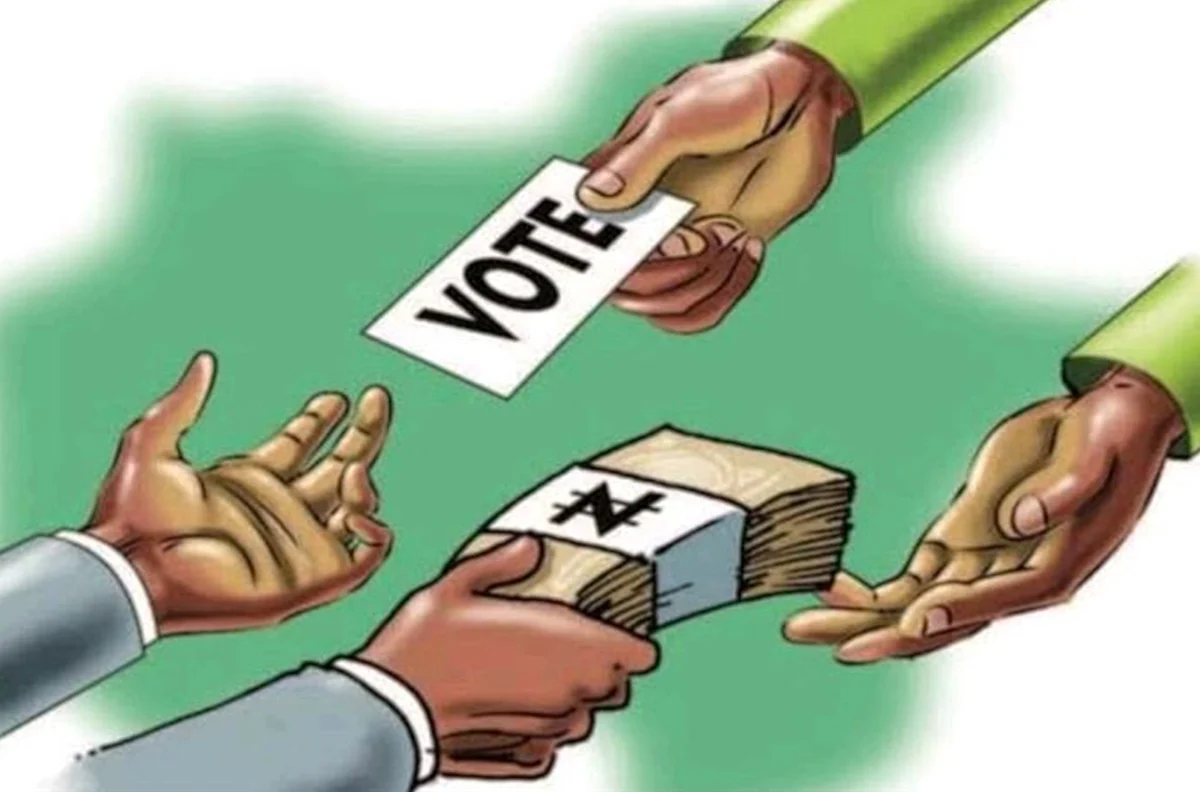
Vote buying in Nigeria is often discussed as an election-day offence, but its consequences begin long before voters enter polling units. The recent controversy over an alleged ₦3,000 payment to some attendees of an APC mobilisation event in Kano offers a glimpse into a deeper problem: what happens when citizens become accustomed to exchanging political support for immediate cash?
Some Kano residents who attended the APC event reportedly complained that they received ₦3,000 after participating, with one attendee saying some people had borrowed transport money to get to the venue. The complaint followed a major APC gathering at the Sani Abacha Stadium on September 5, where the party intensified its mobilisation ahead of the 2027 elections.
The allegation does not establish that the attendees were paid to vote for the party. But the reaction is revealing. If political attendance can be treated as a paid service, the distance between campaign mobilisation and electoral inducement becomes uncomfortably short.
Vote Buying in Nigeria Turns Citizens Into Political Customers
The first thing that changes when political support becomes a transaction is the relationship between the voter and the politician.
A voter who should be asking what a candidate will do about unemployment, insecurity, education, healthcare or the cost of living may instead begin by asking what the candidate is offering immediately.
Research by Chatham House found that 78.4 per cent of surveyed Nigerian households believed people should not receive money or gifts for their votes. Yet the same research found that many respondents believed vote-selling was widespread around them. Economic hardship was identified as an important factor pushing vulnerable voters towards such transactions.
That contradiction helps explain why the practice survives. People may know that selling their votes is harmful, but immediate needs can make a small payment difficult to reject.
Vote Buying in Nigeria Creates a Dangerous Political Cycle
The problem becomes more serious after the election.
A politician who spends money to secure political support may regard that money as an investment rather than a gift. The incentive then becomes winning and maintaining political power, not necessarily delivering measurable results to citizens.
This can produce a cycle in which poverty makes voters vulnerable to inducement, inducement helps politicians secure office, and weak accountability allows the conditions that created the vulnerability to continue.
Chatham House has warned that vote-trading can undermine democracy, weaken accountability and encourage relationships in which citizens remain dependent on politicians for short-term benefits. Its research also found that vote-selling can help reinforce a political system in which corrupt politicians are elected rather than voted out.
What Happens When Vote Buying in Nigeria Becomes Normal?
The most dangerous consequence is not the money itself. It is what politicians learn from it.
If citizens repeatedly demonstrate that their support can be secured with cash, political parties have less reason to compete through ideas, policies and records. The campaign becomes a marketplace, and the electorate becomes a collection of transactions.
That is why the Kano episode should not be reduced to jokes about whether ₦3,000 was enough.
Nigeria’s electoral framework prohibits vote buying and related forms of electoral bribery, and INEC provides channels for reporting election offences. But enforcement alone cannot eliminate a practice sustained by economic desperation and political opportunism.
Citizens also have to recognise what is being exchanged.
The money received at a rally or polling unit may solve a problem for a day. The person elected with that transaction can influence taxation, security, jobs, infrastructure and public spending for four years or more.
That is the real danger of vote buying in Nigeria.
When citizens sell political power cheaply, politicians learn that accountability can also be bought cheaply.
And once politicians know the price of the people, the people may discover too late that they have paid far more than they received.