

US Lists Nigeria Over Child Soldiers, Threatens Military Aid Cuts

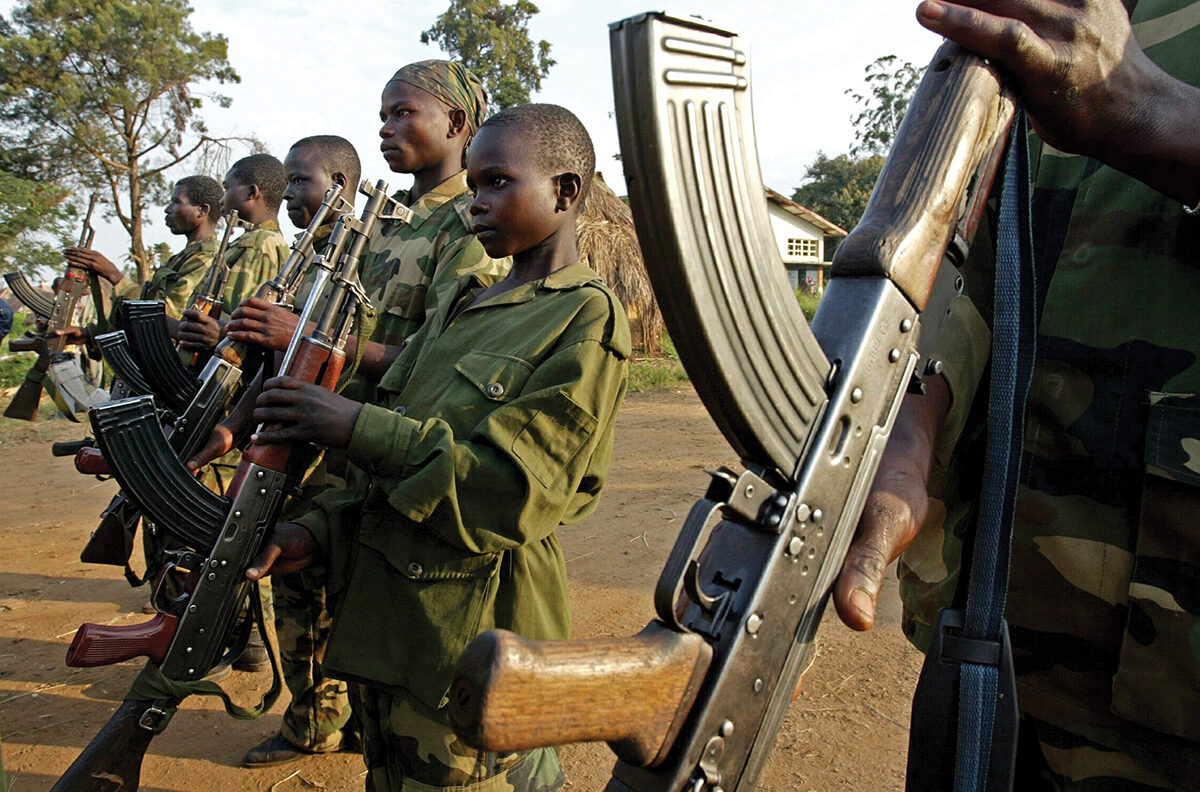
The United States has placed Nigeria on its Child Soldiers Prevention Act blacklist, a move that could restrict military assistance, weapons sales and defence cooperation with the country.
The decision followed allegations that armed groups, including Boko Haram and the Islamic State West Africa Province (ISWAP), continue to recruit and use children in armed conflicts.
According to a report by The PUNCH on Tuesday, October 13, 2026, the US government’s decision could affect Nigeria’s access to military training, foreign military financing and other forms of security assistance.
The restrictions could take effect from October 1, 2026, unless US President Donald Trump grants a waiver or an applicable exception allows the assistance to continue.
Why the US is threatening to cut military aid to Nigeria
The decision followed the US State Department’s 2026 Trafficking in Persons Report, published on October 11.
The report covered the period from April 1, 2025, to March 31, 2026. It identified Nigeria among 14 countries linked to the recruitment or use of child soldiers.
Other countries on the list include Russia, Iran, Somalia and South Sudan.
The report specifically identified Boko Haram and ISWAP as groups recruiting, abducting and using children in Nigeria and other countries in the Lake Chad region.
According to the report, these groups use children for various activities. These include cooking, carrying supplies, spying, guarding checkpoints and fighting as armed combatants.
Some children also face sexual abuse, forced drug use and other forms of exploitation.
The designation concerns the recruitment and use of child soldiers by armed groups operating in Nigeria. It should not be interpreted as proof that the Nigerian Army itself recruited the children cited in this particular report.
What the US military aid restrictions could mean for Nigeria
The designation could affect several areas of military cooperation between Nigeria and the United States.
Under the Child Soldiers Prevention Act of 2008, the US can restrict certain forms of security assistance to governments identified for recruiting or using child soldiers.
The affected areas include International Military Education and Training, Foreign Military Financing and the supply of surplus defence equipment.
The restrictions can also affect licences for the commercial sale of military equipment.
These measures could complicate Nigeria’s efforts to obtain certain forms of American military support as it continues to confront terrorism and insurgency.
However, the restrictions do not automatically mean that every form of US security assistance to Nigeria will stop. Presidential waivers and other legal exceptions may allow some assistance to continue.
The decision also comes amid an existing security partnership between both countries.
According to The PUNCH, the two countries have continued to cooperate on counterterrorism operations and defence matters.
Nigeria’s anti-trafficking record raises further concerns
Beyond the child soldier designation, the US report raised concerns about Nigeria’s broader efforts to combat human trafficking.
It said Nigeria had failed to meet the minimum standards for eliminating trafficking for the 15th consecutive year.
The report also highlighted concerns about the alleged involvement of some government and security officials in trafficking crimes.
It noted that Nigerian authorities investigated 1,341 trafficking cases during the reporting period. These cases involved 1,367 suspects.
However, the report recorded 94 prosecutions and 97 convictions.
It also found a sharp decline in the number of trafficking victims who received government-supported assistance.
According to the report, 675 victims received such assistance during the period, compared with 2,058 in the preceding reporting period.
The findings raise questions about victim protection, accountability and the effectiveness of existing anti-trafficking measures.
What happens next?
The possible restrictions place additional pressure on Nigeria to address concerns surrounding child recruitment and human trafficking.
The Nigerian government will also need to consider the potential implications for its security cooperation with the United States.
However, the full impact will depend on how the US government implements the restrictions and whether President Trump grants a waiver.
When contacted by The PUNCH, the National Agency for the Prohibition of Trafficking in Persons (NAPTIP) said it would make its response to the report public.
The newspaper also reported that the Presidency had not responded to its request for comments as of the time of publication.
For now, Nigeria faces the possibility of restrictions on some forms of US military assistance while concerns over child recruitment and human trafficking remain under scrutiny.