

Record-breaking UK heatwave sparks fresh climate fears as experts warns more extreme heat is still to come

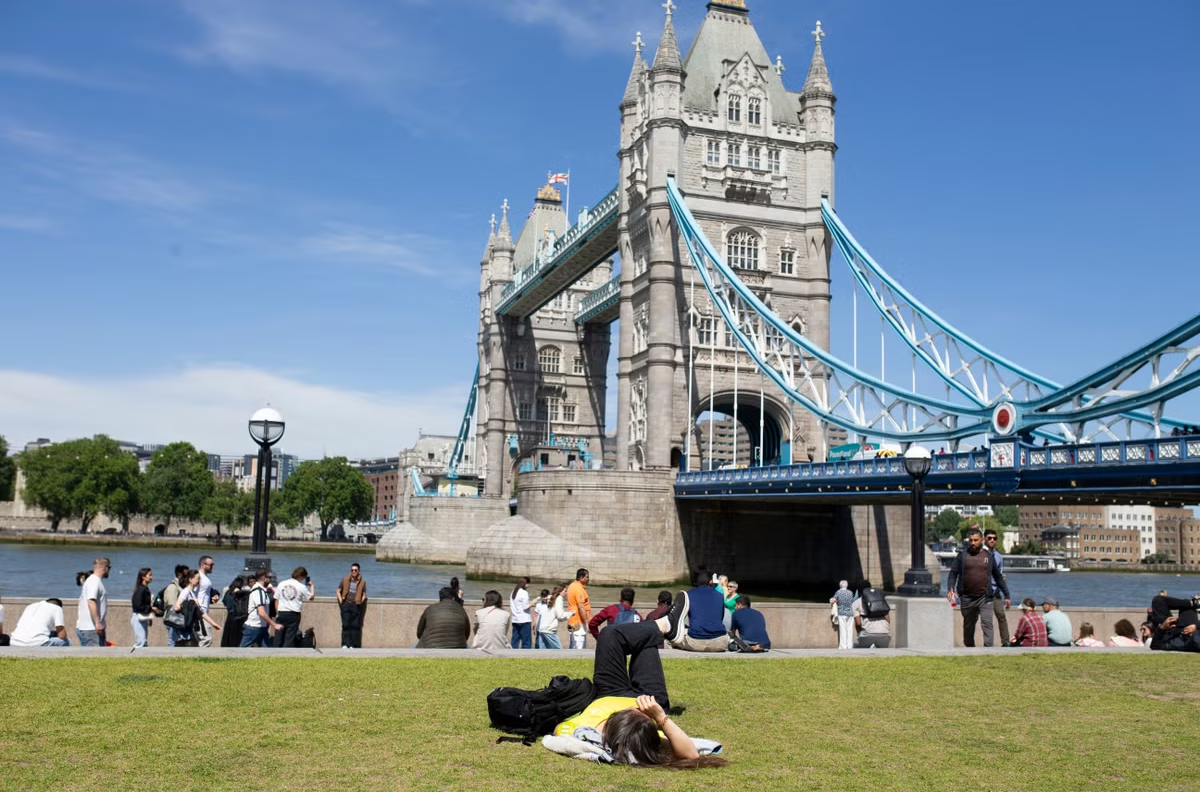
UK shatters June heat records as experts warn more heatwaves ahead. Image Credit: Charlotte Coney/PA Wire
The United Kingdom is facing renewed calls to strengthen its climate resilience after a record-breaking June heatwave pushed temperatures to unprecedented levels, disrupted public services and prompted experts to warn that even more extreme weather could arrive later this summer.
As thermometers climbed to a provisional 37.3°C (99.1°F) in Suffolk, the country recorded its highest-ever June temperature for the third consecutive day, highlighting what scientists say is an unmistakable sign of a warming climate. The scorching conditions affected schools, hospitals, transport systems and workplaces while reigniting debate over whether Britain is adequately prepared for increasingly frequent heatwaves.
UK Shatters June Temperature Records
The latest heatwave has rewritten the UK’s weather history. After previous June records were broken earlier in the week, temperatures reached a new provisional high of 37.3°C in Santon Downham, Suffolk, surpassing Thursday’s peak of 36.7°C recorded in Somerset.
Meteorologists say the prolonged spell of intense sunshine and exceptionally high temperatures was driven by a persistent area of high pressure, commonly known as a “heat dome,” which trapped hot air across much of the country.
The record-breaking temperatures follow another unusually hot period in May, making 2026 one of the most remarkable years for early-summer heat since modern weather observations began.
Government Faces Pressure Over Climate Preparedness
The unprecedented weather has intensified pressure on the UK government to improve climate adaptation measures as experts warn that rising temperatures are becoming the new reality.
Lawmakers and environmental specialists argue that the country remains poorly equipped for prolonged periods of extreme heat. They say homes, schools, hospitals and public infrastructure were largely designed for a cooler climate and are increasingly struggling to cope.
The chair of Parliament’s Environmental Audit Committee warned that the nation remains “far short of what is needed” to protect people from worsening heatwaves, urging ministers to accelerate plans aimed at improving building standards, workplace protections and public health responses.
Climate advisers have repeatedly cautioned that millions of existing homes are at risk of overheating in the coming decades unless significant upgrades are made.
Hospitals, Schools and Transport Under Pressure
The heatwave has placed enormous strain on essential public services across England.
Hospitals reported increased emergency admissions linked to heat-related illnesses while some healthcare facilities declared critical incidents after high temperatures affected medical equipment, IT systems and working conditions for staff.
Schools were also heavily impacted. More than 1,000 schools either closed or reduced operations as classrooms became dangerously hot, raising concerns about student safety and learning conditions.
Transport networks experienced delays as rail infrastructure expanded under extreme heat, while businesses reported declining productivity as employees struggled to work safely in soaring temperatures.
Scientists Say Climate Change Is Fueling More Frequent Heatwaves
Climate researchers say the growing frequency and intensity of heatwaves are consistent with long-term global warming trends.
According to weather experts, human-caused climate change has shifted average temperatures upward, making record-breaking heat significantly more likely than it was just a few decades ago.
Recent scientific analyses concluded that heat events of this magnitude across Western Europe would have been virtually impossible without climate change. The warming atmosphere is increasing both the likelihood and severity of prolonged periods of extreme heat.
Researchers also warn that if greenhouse gas emissions continue at current levels, temperatures above 40°C could become increasingly common in the UK within the coming decades.
More Heatwaves Could Arrive Later This Summer
Although temperatures are expected to ease temporarily over the coming days, forecasters say the risk of additional heatwaves remains elevated throughout July and August.
Seasonal outlooks from weather agencies indicate above-average temperatures across much of the UK, with further “significant bursts” of extreme heat considered increasingly likely.
Meteorologists note that Britain’s hottest period traditionally occurs later in the summer, suggesting that June’s records may not necessarily represent the highest temperatures of 2026.
READ ALSO
Economic and Public Health Concerns Grow
Beyond discomfort, experts warn that prolonged extreme heat carries substantial economic and health consequences.
Heatwaves can reduce workplace productivity, increase electricity demand, damage transport infrastructure and place enormous pressure on healthcare systems. Older adults, young children and individuals with chronic health conditions remain particularly vulnerable to heat-related illnesses such as dehydration, heat exhaustion and heatstroke.
Environmental groups also stress that adapting infrastructure now will ultimately prove less costly than responding to increasingly severe climate emergencies in the future.
How to Stay Safe During Extreme Heat
Health authorities continue to advise the public to take precautions whenever temperatures reach dangerous levels.
People are encouraged to drink plenty of water, avoid strenuous outdoor activity during the hottest part of the day, wear lightweight clothing and remain in shaded or air-conditioned spaces whenever possible. Checking on elderly relatives, neighbours and vulnerable individuals can also help reduce the risk of heat-related illness.
Officials also remind people never to leave children or pets inside parked vehicles, where temperatures can rise rapidly even on relatively mild days.
A Warning of Summers to Come
The June 2026 heatwave is being viewed by scientists as more than just an isolated weather event. Instead, it reflects a broader trend toward hotter, longer and more frequent periods of extreme heat linked to climate change.
While cooler conditions may provide temporary relief, experts say the latest records should serve as a warning that Britain must adapt more quickly to a climate that is changing faster than many communities and public services were designed to handle.
With forecasts suggesting additional heatwaves are possible before summer ends, policymakers, businesses and households alike are facing growing pressure to prepare for a future where extreme heat is no longer an exception, but an increasingly regular feature of the UK’s climate.
FAQ
What caused the UK’s record-breaking heatwave?
Meteorologists say the heatwave was driven by persistent high-pressure systems, often referred to as a “heat dome,” combined with long-term climate warming. Scientists say climate change has made extreme temperatures significantly more likely and more intense.
How hot did the UK get during the June 2026 heatwave?
The UK provisionally recorded 37.3°C (99.1°F) in Santon Downham, Suffolk, setting a new June temperature record after previous records were broken on consecutive days.
Is climate change responsible for the extreme heat?
Scientists overwhelmingly agree that climate change is increasing the frequency, intensity and duration of heatwaves. Research indicates that such extreme June temperatures would have been highly unlikely without human-caused global warming.
Will there be more heatwaves this summer?
Yes. Forecasts from the Met Office and other weather agencies indicate above-average temperatures for much of July and August, with additional heatwaves considered likely.
Why are experts calling for urgent government action?
Environmental experts warn that homes, schools, hospitals and transport infrastructure were largely designed for cooler climates. They argue that adaptation measures have not kept pace with increasingly frequent extreme heat.
Why were schools closed during the UK heatwave?
Many schools experienced indoor temperatures exceeding safe learning conditions. Buildings lacking adequate ventilation or cooling systems became unsafe for students and staff.
How did the heatwave affect hospitals?
Hospitals reported increased emergency admissions, overheating wards, IT disruptions, medical equipment failures and significant strain on healthcare workers during the extreme temperatures.
What health risks do heatwaves pose?
Extreme heat can lead to:
- Heat exhaustion
- Heatstroke
- Severe dehydration
- Heart complications
- Respiratory problems
- Increased mortality among elderly and vulnerable people
How can people stay safe during a heatwave?
Health experts recommend:
- Drinking plenty of water
- Staying indoors during peak afternoon heat
- Wearing loose, light clothing
- Keeping homes cool with blinds and ventilation
- Avoiding strenuous outdoor activities
- Checking on elderly relatives and vulnerable neighbours
What is a heat dome?
A heat dome is a weather pattern where high atmospheric pressure traps hot air over a region, causing temperatures to rise dramatically over several days.
What is the Met Office predicting for Summer 2026?
The Met Office expects above-average temperatures throughout much of the summer, with an increased likelihood of further heatwaves and extreme weather events.
Are UK heatwaves becoming more common?
Yes. Climate scientists say heatwaves are becoming more frequent, lasting longer and reaching higher temperatures than in previous decades.
Could the UK reach 40°C again?
Scientists believe temperatures exceeding 40°C are becoming increasingly possible as global temperatures continue to rise. The UK’s all-time record remains 40.3°C, set in July 2022.
How does extreme heat affect infrastructure?
Heat can damage:
- Railway tracks
- Roads
- Power grids
- Internet and IT systems
- Hospitals
- Water supplies
- Schools
leading to widespread disruption.
What role does climate adaptation play?
Climate adaptation includes upgrading buildings, transport systems, schools and healthcare facilities to better withstand rising temperatures and extreme weather while reducing future climate risks.
Is Europe also experiencing extreme heat?
Yes. Large parts of Western Europe have experienced record-breaking temperatures alongside the UK, with scientists linking the widespread heat to ongoing climate change.
Why is the June 2026 heatwave considered historic?
The June 2026 event broke national temperature records on three consecutive days and became one of the most significant early-summer heat events ever recorded in the UK.
What should employers do during extreme heat?
Employers are encouraged to provide drinking water, improve ventilation, allow flexible working hours where possible, reduce physically demanding tasks and protect workers from prolonged sun exposure.
Can homes in the UK cope with rising temperatures?
Many experts say no. Most UK homes were designed to retain heat rather than dissipate it, increasing the risk of overheating during future summers.
Why is this heatwave important beyond the weather?
The event highlights growing concerns about public health, infrastructure resilience, climate policy, economic productivity and the long-term effects of global warming across the UK and Europe.