

What Uganda’s 21-day Ebola quarantine means — and what remains unknown

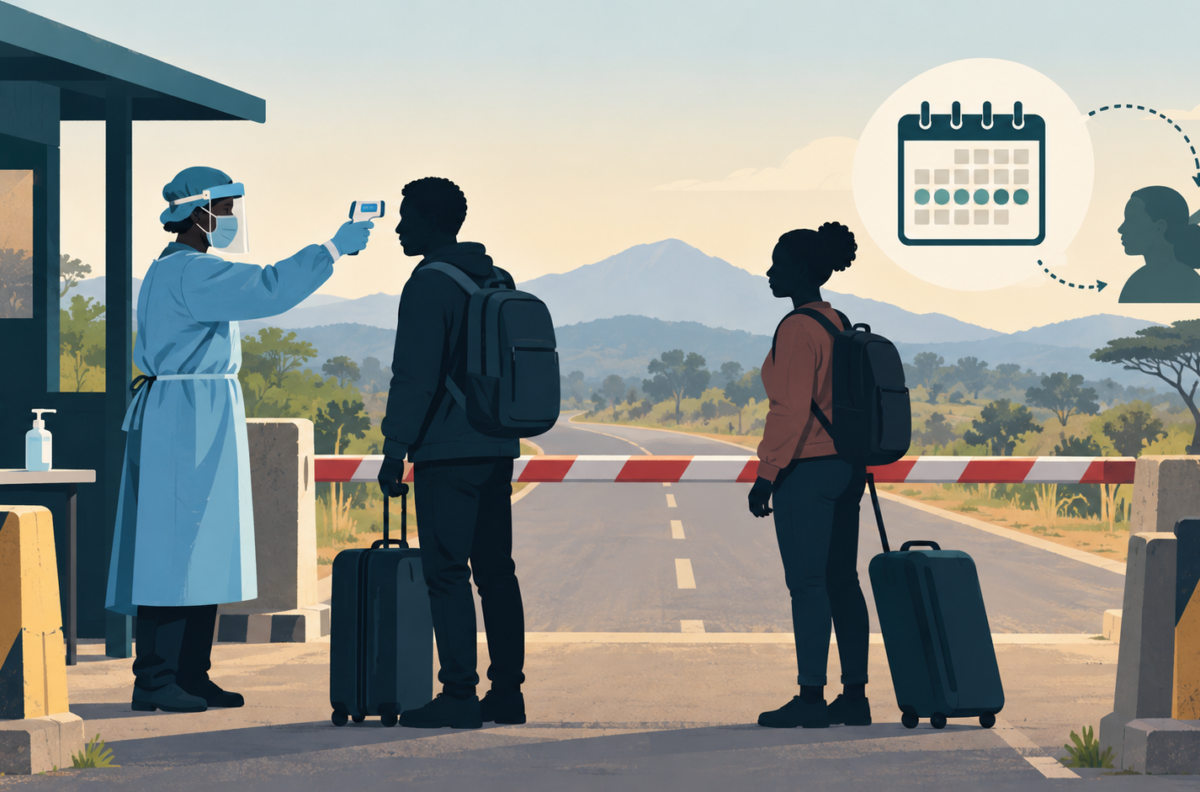
Illustration: a conceptual border-health screening scene, not a photograph of an actual Uganda–DRC checkpoint or affected travellers. Generated for CrispNG.
Uganda’s new 21-day Ebola quarantine applies to citizens returning from the Democratic Republic of Congo (DRC) with a history of travel there, who must bear the cost. The measure is part of a wider border response, introduced while officials investigate how Nigeria’s first confirmed Bundibugyo Ebola case became infected. The travel trail is still being checked; it does not, by itself, establish where the infection happened.
The 21-day Ebola quarantine is a targeted precaution, not a declaration of a new Ugandan outbreak.
What Uganda’s new measures require
Uganda’s health minister said returnees with recent DRC travel will be quarantined for 21 days at their own expense. The government has also stepped up screening at Entebbe airport and land crossings, requires incoming travellers to provide locator information, and says non-essential Congolese travellers will be returned through the nearest border crossing at their own cost. Travellers with a DRC travel history are barred from transiting through Uganda, including on charter flights, according to the ministry’s announcement.
The rules sit alongside Uganda’s earlier restrictions on cross-border movement, which the government says limit travel to essential categories such as humanitarian workers and truck drivers. The measures are not evidence that Uganda has a current Ebola case.
Why officials are tracing the route
Nigeria’s Centre for Disease Control confirmed one Bundibugyo Ebola case on 20 October. Its 24 October situation report says the patient, a 42-year-old woman, returned from Uganda through Addis Ababa to Abuja on 3 October. By 24 October, Nigeria had identified 53 contacts; the patient was in isolation and had improved, the report said.
Uganda says it has recorded no confirmed case since declaring its own outbreak over in July. But the Nigerian patient’s travel through Uganda has prompted a cross-border investigation. Uganda’s minister said investigators were reviewing her movements and contacts with Nigerian officials and international partners. The precise place and route of exposure remain unresolved in the information released so far. A flight connection is not proof of transmission at the airport or in the country visited.
21-day Ebola quarantine: why the three-week window matters
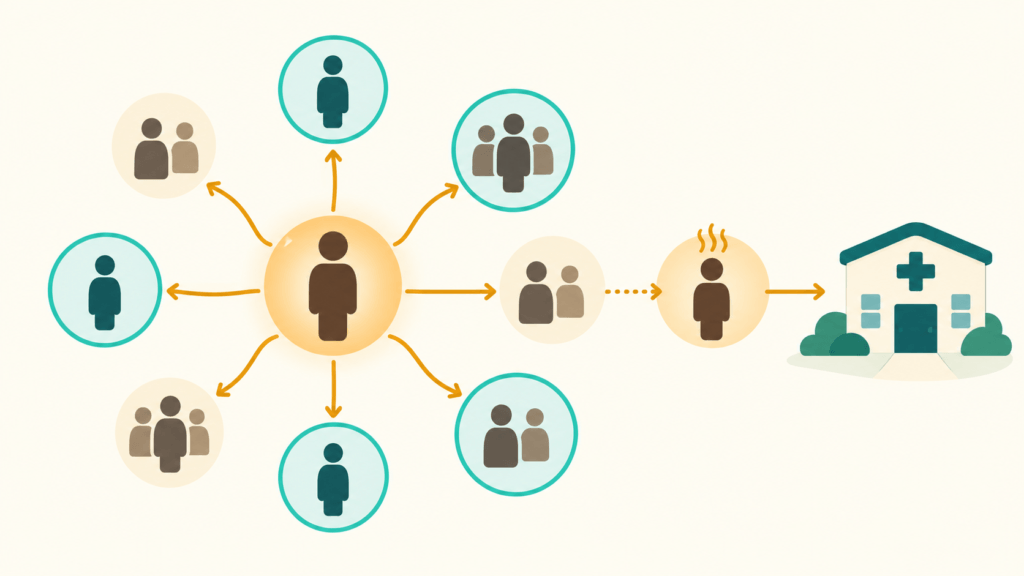
Public-health authorities use 21 days as the follow-up period for Ebola contacts because it covers the recognised maximum incubation period. The World Health Organization says Uganda ended its Bundibugyo outbreak after 42 days without a new confirmed case—twice that upper limit—following the discharge of its last patient in July. That milestone explains why the new restrictions are precautionary measures in a region where infections have crossed borders, not a reversal of Uganda’s earlier outbreak declaration.
The DRC outbreak remains a substantial regional concern. WHO’s latest external situation report available before this announcement described continuing transmission across multiple health zones and new geographic expansion. Border measures may reduce exposure risk, but they cannot replace case detection, contact tracing, safe clinical care and cooperation across countries.
What remains unclear about the 21-day Ebola quarantine
Several practical questions matter to returning travellers: how quarantine sites will be selected, how costs will be calculated, what exemptions apply, and how authorities will handle people who cannot afford the required stay. Uganda’s public announcement also does not settle the investigation into the Nigerian case. Officials have said they are checking travel histories, contacts and laboratory findings; until that work is reported, claims assigning the source to a particular country or airport should be treated as unconfirmed.
For background, see our explainer on how Ebola entered Nigeria again in 2026. The key point is that the confirmed case and the travel itinerary are established facts, while the infection source remains under investigation.
Sources
- Uganda Media Centre: Health Ministry briefing on Ebola preparedness and border measures
- Nigeria Centre for Disease Control: Ebola situation report, 24 October 2026
- World Health Organization: Uganda’s outbreak declaration and 42-day benchmark
- WHO: Ebola incubation period and 21-day contact monitoring
- WHO: Bundibugyo Ebola situation in the Democratic Republic of the Congo
- Associated Press: Uganda’s quarantine and border measures