

Trump’s Supreme Court ‘mulligan’: Why the President’s bold bid to end birthright citizenship is doomed to fail

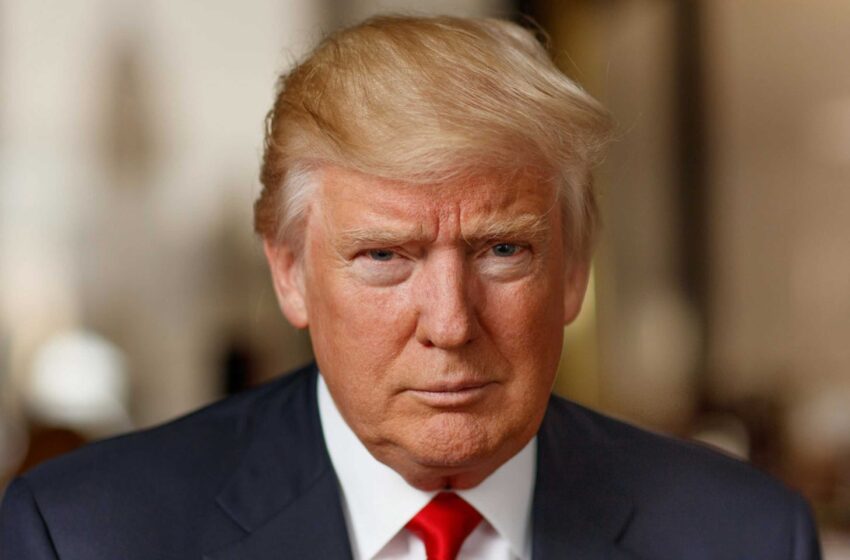
Donald Trump. Picture: David Hume Kennerly/Getty Images
Following a stinging defeat at the nation’s highest court, President Donald Trump has announced an aggressive, convention-shattering legal campaign. On July 8, 2026, Trump vowed to file an “IMMEDIATE” petition for a rehearing after the US Supreme Court struck down his executive order attempting to end automatic birthright citizenship.
However, constitutional scholars and legal experts are unified in their assessment: the president is chasing a legal mirage. The high court historically grants such do-overs “once in a blue moon”, and practically never on a case that has already received a full merit ruling. Trump’s public crusade is being widely characterized by experts as a political stunt rather than a viable path to legal reversal.
The Birthright Citizenship Supreme Court Ruling Explained
The current firestorm stems from a landmark 6-3 Supreme Court decision handed down on June 30, 2026. The justices officially invalidated an executive order Trump signed on the first day of his second term, which sought to deny automatic citizenship to children born in the United States to undocumented and temporary immigrants.
The administration’s legal team argued that the 14th Amendment’s phrase “subject to the jurisdiction thereof” excludes the children of non-citizens. The Supreme Court soundly rejected this interpretation, preserving over a century of legal precedent.
A five-justice majority ruled that the executive order explicitly violated the Citizenship Clause of the 14th Amendment. A sixth justice, Brett Kavanaugh, concurred with the outcome but reasoned that the order was independently barred by existing federal immigration statutes. The stinging defeat prompted immediate outrage from the White House and congressional allies, including House Speaker Mike Johnson, who expressed deep disappointment with the ruling.
Why a Supreme Court Rehearing Is ‘Exceedingly Unlikely’
While Supreme Court rules technically allow losing parties to petition for a rehearing within 25 days of a decision, the threshold for approval is astronomically high.
“I’d be pretty shocked if either of these requests succeed, especially the birthright citizenship one,” Stephen Vladeck, a law professor at Georgetown University Law Center, stated. He noted that the last time the Supreme Court granted a rehearing on an argued case on the merits was more than 60 years ago, in 1965.
Legal experts emphasize that the court does not grant rehearings simply because a litigant disagrees with the outcome. Aaron-Andrew P. Bruhl, a professor at William & Mary Law School, noted that after full briefings, amicus curiae submissions, oral arguments, and weeks of internal deliberations, a sudden change of heart by the justices has “close to zero” odds. For a petition to succeed, a member of the majority opinion would have to completely change their mind, typically prompted by an extraordinary, intervening factual development—a circumstance entirely absent in this constitutional dispute.
READ ALSO
US Supreme Court blocks Trump’s birthright citizenship order in landmark 6-3 ruling: What it means
A Dual Legal Strategy Facing Steep Hurdles
The birthright citizenship petition is actually one of two longshot “do-overs” the president is currently pursuing. Simultaneously, Trump’s legal defense team has petitioned the justices to reconsider their recent denial of certiorari regarding a $5 million sexual abuse and defamation judgment awarded to writer E. Jean Carroll.
Legal experts point out that these two maneuvers face distinctly different procedural hurdles:
-
The Birthright Citizenship Case: A petition for rehearing following a full, binding merits decision. This is virtually unprecedented in modern judicial history.
-
The E. Jean Carroll Case: A request to reconsider a denial of certiorari (a refusal to hear the case).
While still incredibly rare, the court reconsiders cert denials slightly more often than merit decisions if there is a profound conflict in lower appellate courts. However, Trump’s immediate prospects in the Carroll matter are already crumbling; a federal judge recently denied a stay of execution on the judgment, ordering the immediate release of the $5 million to Carroll. Trump’s subsequent emergency appeal was swiftly blocked by a federal appellate court.
A Sitting President Redefining Judicial Norms
What makes this legal strategy unique is not the filing of the petitions themselves, but the highly public, political nature of the campaign.
Fred Smith, a constitutional law professor at Stanford Law School, observed that while private litigants occasionally file hail-mary petitions, it is unprecedented for a sitting president to publicly campaign for a Supreme Court rehearing as if it were a legitimate, standard political option.
With legal avenues effectively closed, Trump’s aggressive rhetoric appears designed to signal defiance to his political base, even as the independent judicial branch firmly reinforces the structural guardrails of American constitutional law.
FAQ
What did the Supreme Court decide about birthright citizenship?
On June 30, 2026, the Supreme Court ruled 6-3 against President Trump’s executive order, holding that the 14th Amendment guarantees automatic citizenship to children born on US soil, regardless of their parents’ immigration status.
Can a President overturn a Supreme Court ruling with an executive order?
No. Under the US Constitution’s separation of powers, the Supreme Court is the ultimate arbiter of constitutional interpretation. An executive order cannot override a Supreme Court ruling or alter the text of the 14th Amendment.
What is a petition for rehearing at the Supreme Court?
A petition for rehearing is a formal request asking the Supreme Court to reconsider a decision it has just made. Rules allow parties to file this within 25 days of a ruling, but it is almost never granted unless vital, transformative information comes to light that the court was previously unaware of.
When was the last time the Supreme Court granted a rehearing?
The last time the Supreme Court granted a rehearing on a case decided on the merits was in 1965 (Maryland v. US). The only time the court reheard a merits case and completely reversed its own prior ruling occurred in the 1950s regarding overseas military court-martials.
What is the difference between birthright citizenship and the E. Jean Carroll appeal?
The birthright citizenship case was fully argued and decided on its constitutional merits. The E. Jean Carroll case involves a petition to reconsider the court’s refusal to hear an appeal (denial of certiorari). While both of Trump’s rehearing requests face astronomical odds, a reconsideration of a cert denial is statistically slightly more common than a merit reversal.