

US Supreme Court blocks Trump’s birthright citizenship order in landmark 6-3 ruling: What it means

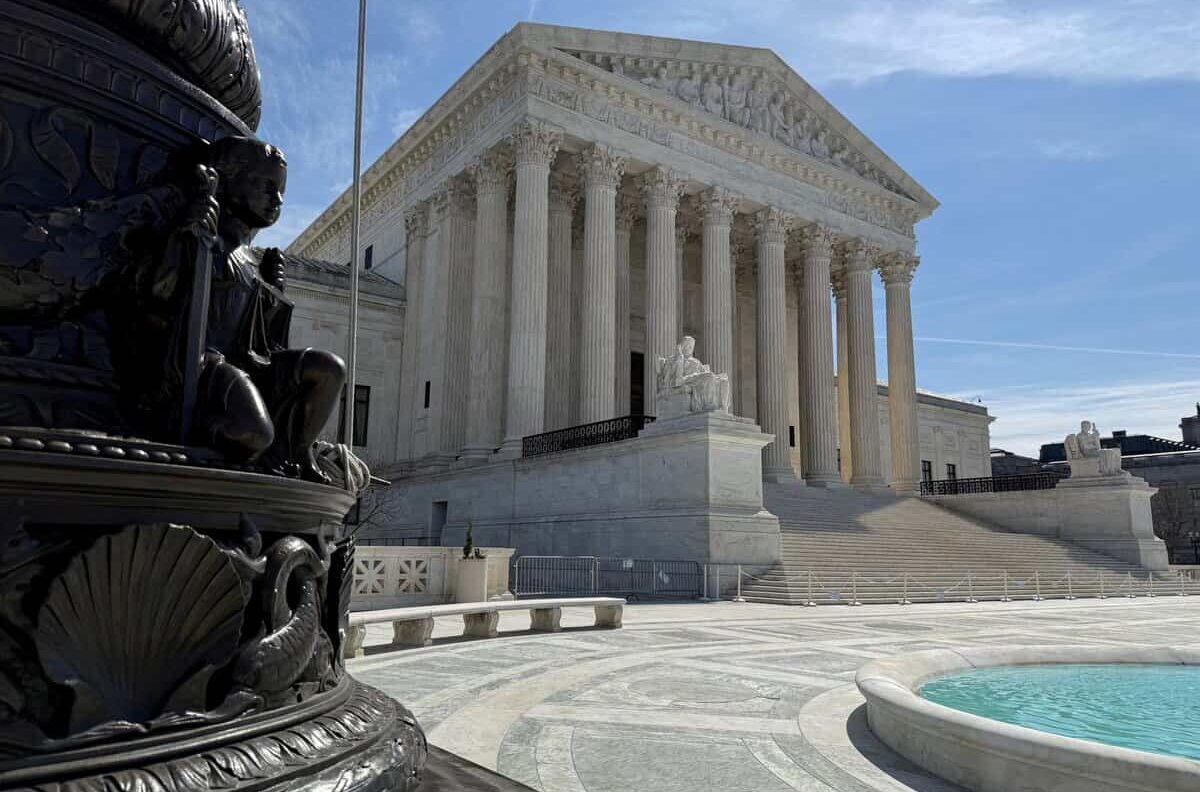
Supreme Court prepares to decide Trump’s birthright citizenship case.
The United States Supreme Court has delivered one of its most consequential constitutional decisions in decades, voting 6-3 to uphold birthright citizenship and striking down President Donald Trump’s executive order aimed at ending automatic citizenship for certain children born on American soil.
The ruling reinforces more than 150 years of constitutional precedent, confirming that children born in the United States are citizens regardless of whether their parents are undocumented immigrants or temporary visa holders, with only limited historical exceptions.
The decision represents one of the most significant judicial defeats of Trump’s second presidential term and effectively blocks his administration’s effort to reshape American citizenship through executive action.
Supreme Court Reaffirms the 14th Amendment
At the heart of the case was the 14th Amendment to the US Constitution, adopted after the Civil War, which states that all persons born or naturalised in the United States and subject to its jurisdiction are American citizens.
Writing for the majority, Chief Justice John Roberts concluded that Trump’s executive order conflicted with both the Constitution and long-established federal law.
The Court relied heavily on more than a century of legal precedent, including historic interpretations that have consistently recognized birthright citizenship as a constitutional guarantee.
The majority opinion makes clear that any attempt to fundamentally change birthright citizenship would require a constitutional amendment rather than a presidential executive order.
Trump’s Executive Order Challenged Longstanding Constitutional Practice
President Trump signed the executive order on his first day back in office, arguing that children born to parents who entered the United States illegally or who were temporarily present should not automatically receive American citizenship.
The administration claimed the phrase “subject to the jurisdiction thereof” in the 14th Amendment should exclude such children.
However, the Supreme Court rejected that interpretation, maintaining the long-established understanding that nearly everyone born in the United States qualifies for citizenship except for a few narrowly defined categories, such as children of foreign diplomats or occupying military forces.
The ruling permanently blocks the executive order from taking effect.
How the Justices Voted
The Court split 6-3 in favor of preserving birthright citizenship.
The majority included:
- Chief Justice John Roberts
- Justice Brett Kavanaugh
- Justice Amy Coney Barrett
- Justice Sonia Sotomayor
- Justice Elena Kagan
- Justice Ketanji Brown Jackson
The dissenting justices were:
- Justice Clarence Thomas
- Justice Samuel Alito
- Justice Neil Gorsuch
Justice Kavanaugh agreed that Trump’s executive order could not stand, although he wrote separately to argue that Congress, not the president, would have authority to legislate on the issue if it chose to do so.
READ ALSO
Trump Responds to the Court’s Decision
Shortly after the ruling, President Trump criticized the decision on social media, calling it “too bad for our Country.”
He argued that Congress could still pass legislation ending birthright citizenship without requiring a constitutional amendment and urged lawmakers to begin work immediately.
Legal experts, however, noted that the Court’s opinion strongly indicates that changing birthright citizenship would require altering the Constitution itself, an extremely difficult process requiring broad national support.
Political Leaders React Across Party Lines
Democratic leaders quickly celebrated the ruling.
House Minority Leader Hakeem Jeffries described the decision as an affirmation that “all persons born in the United States are American citizens.”
Senate Minority Leader Chuck Schumer said the ruling reaffirmed one of America’s most fundamental constitutional promises.
Immigrant advocacy organizations also welcomed the decision, saying it protects millions of future children from uncertainty over their citizenship status.
Meanwhile, several Republican lawmakers expressed disappointment.
House Speaker Mike Johnson criticized the ruling and argued that birthright citizenship has been widely abused, while White House Deputy Chief of Staff Stephen Miller called it one of the most damaging Supreme Court decisions in American history.
Why the Birthright Citizenship Ruling Matters
Legal scholars describe the decision as one of the defining constitutional rulings of recent years.
By preserving birthright citizenship, the Court protects a constitutional principle that has existed since the ratification of the 14th Amendment in 1868.
The ruling ensures that citizenship rules remain unchanged for millions of families living in the United States and removes immediate legal uncertainty surrounding children born on American soil.
Experts also say the decision reinforces the limits of presidential executive power, emphasising that constitutional rights cannot be altered through executive orders alone.
What Happens Next?
Although President Trump has urged Congress to pursue legislation addressing birthright citizenship, constitutional experts believe such efforts would almost certainly face immediate legal challenges.
Given the Supreme Court’s clear reliance on the Constitution, any lasting change would likely require a constitutional amendment, a process requiring approval by two-thirds of Congress and ratification by three-fourths of US states.
For now, the Court’s ruling preserves the existing interpretation of the Constitution and effectively ends the legal battle over Trump’s executive order.
FAQ
What is birthright citizenship?
Birthright citizenship is the constitutional principle that almost every child born in the United States automatically becomes a US citizen, regardless of the immigration status of their parents, with only limited exceptions.
What did the Supreme Court decide about birthright citizenship?
The Supreme Court voted 6-3 to strike down President Donald Trump’s executive order and reaffirmed that birthright citizenship remains protected under the 14th Amendment.
Why did Trump want to end birthright citizenship?
Trump argued that children born to undocumented immigrants or parents temporarily in the US should not automatically receive American citizenship, claiming the Constitution permits a narrower interpretation.
Why did the Court reject Trump’s executive order?
The Court found that the order conflicted with the 14th Amendment and over 150 years of constitutional precedent recognizing automatic citizenship for those born in the United States.
Can a president end birthright citizenship by executive order?
No. The Supreme Court ruled that a president cannot override constitutional protections through executive action.
Can Congress eliminate birthright citizenship?
The Court’s ruling suggests that a constitutional amendment—not ordinary legislation—is the appropriate path to fundamentally change birthright citizenship, making such changes extremely difficult.
Who voted to uphold birthright citizenship?
Chief Justice John Roberts, Justices Brett Kavanaugh, Amy Coney Barrett, Sonia Sotomayor, Elena Kagan, and Ketanji Brown Jackson formed the majority.
Who dissented in the case?
Justices Clarence Thomas, Samuel Alito, and Neil Gorsuch dissented.
Does the ruling affect children already born in the US?
No. The ruling preserves existing constitutional protections, meaning children born in the United States continue to receive citizenship under current law.
What does the 14th Amendment say about citizenship?
The amendment states that all persons born or naturalized in the United States and subject to its jurisdiction are citizens of the United States and the state where they reside.
Does this ruling impact immigration policy?
The decision specifically addresses citizenship at birth. While it does not change broader immigration enforcement policies, it limits executive authority to alter constitutional citizenship rights.
Why is this Supreme Court ruling significant?
It reaffirms one of the longest-standing constitutional protections in US law, reinforces limits on presidential executive power, and settles a major legal challenge over birthright citizenship.