

Trump administration faces scrutiny after court filing on $7.5 Billion Federal Grant cancellations

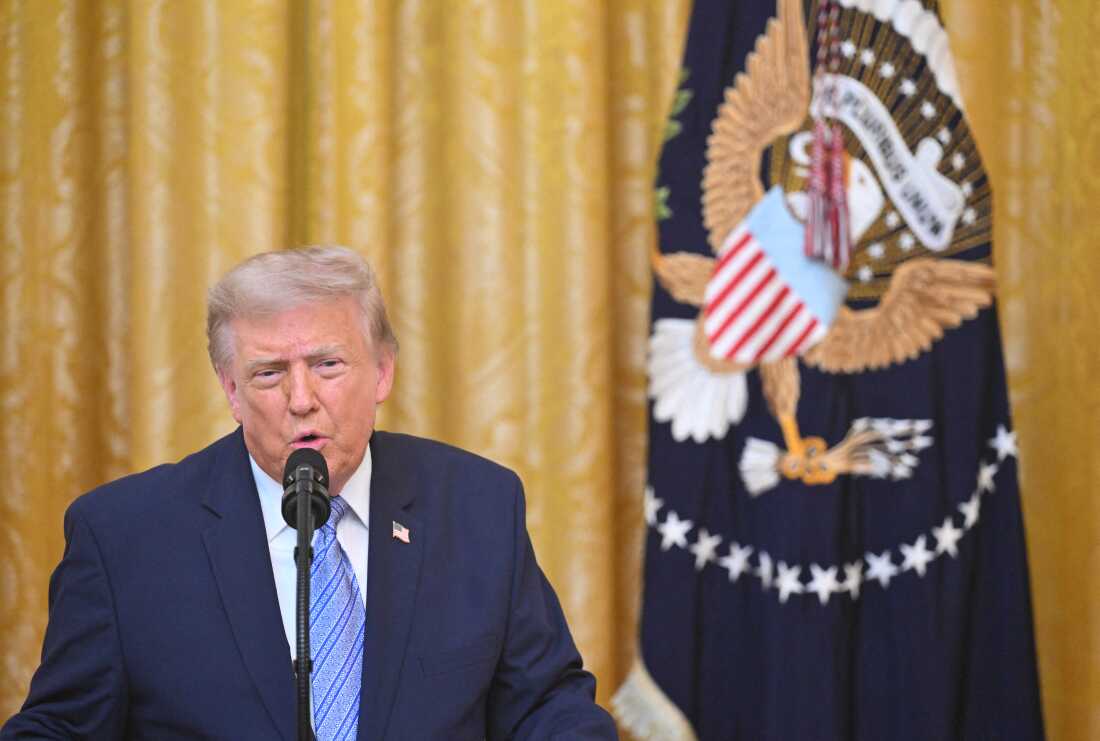
President Trump addresses the nation from the East Room of the White House. Image Credit: Saul Loeb/Pool/AFP via Getty Images
The Trump administration is facing renewed political and legal scrutiny after court filings revealed that billions of dollars in federal clean energy grants were canceled using political criteria tied to the 2024 presidential election. The disclosure has intensified debate over whether federal funding decisions were influenced by partisan considerations rather than program performance or statutory requirements.
The controversy centers on more than $7.5 billion in Biden-era clean energy grants that were terminated last October. While the administration initially defended the cuts as part of an effort to eliminate wasteful spending, recent court documents have raised questions about how the decisions were made and whether they disproportionately affected states that supported Democratic nominee Kamala Harris in the 2024 election.
The issue has now become part of a broader discussion over presidential authority, federal spending, and the future of government grant programs.
Court Filing Reveals Basis for Grant Cancellations
The controversy emerged through court filings in an ongoing lawsuit challenging the cancellation of hundreds of federal grants.
According to documents submitted by government lawyers, the Department of Energy acknowledged that the grants included in the October termination notice were not selected based on program performance, statutory requirements, cost reductions, or project effectiveness.
Instead, the filing stated that the grants were included “based solely on the political identity of the grant recipient’s state,” referring to whether the projects were located in states that voted for Kamala Harris and were represented by Democratic senators.
The filing also noted that officials did not consider the political or geographic distribution of downstream beneficiaries before making the decisions.
Trump Administration Rejects Political Motivation Claims
Despite the language contained in the court documents, the Department of Energy has rejected suggestions that funding decisions were politically motivated.
A department spokesperson said reports characterizing the filing as an admission of political targeting misrepresented the government’s position.
According to the department, references to political considerations related only to the timing of the public announcement, not the actual decisions to terminate funding.
Officials continue to argue that the grant cancellations formed part of broader efforts to review spending and eliminate projects they believed no longer aligned with federal priorities.
Which Grants Were Canceled?
The canceled funding primarily involved clean energy projects approved during the Biden administration.
Court records indicate that the Department of Energy initially reviewed more than 600 grants across both Republican- and Democratic-leaning states and recommended many of them for possible termination.
However, the White House Office of Management and Budget ultimately canceled 284 grants, with nearly all involving projects located in states that voted Democratic during the 2024 presidential election.
The affected states included California, Colorado, Connecticut, Delaware, Hawaii, Illinois, Maryland, Massachusetts, Minnesota, New Hampshire, New Jersey, New Mexico, New York, Oregon, Vermont, and Washington.
Hundreds of comparable projects located in Republican-leaning states remained funded despite earlier recommendations that they also be considered for cancellation.
READ ALSO
Trump 2028: Why Donald Trump’s hat is fueling new questions about a third Presidential term
Trump’s new ICC policy explained: Why the US wants to dismantle the International Criminal Court
Lawsuit Challenges Biden-Era Funding Cuts
The disclosure emerged through litigation filed by University of California faculty members and researchers who challenged the federal government’s decision to halt previously approved grants.
The plaintiffs argue that the cancellations formed part of a broader political agenda rather than a legitimate review of government spending.
According to the lawsuit, researchers, universities, and institutions relied on the approved grants to support long-term clean energy research and infrastructure projects before funding was withdrawn.
The legal challenge continues as courts evaluate whether the administration acted within its statutory authority.
Proposed Federal Grant Rules Could Expand White House Oversight
The controversy comes as the administration pursues broader changes to federal grant management.
A proposed government rule published earlier this year would allow presidential appointees to exercise greater oversight over discretionary federal grants.
Under the proposal, grants would be expected to demonstrate alignment with presidential policy priorities and satisfy additional standards established by the White House.
The draft framework states that discretionary awards should advance presidential objectives where applicable.
Supporters argue the proposal improves accountability for taxpayer funds, while critics contend it could increase political influence over programs historically administered through established agency procedures.
Political Reaction Intensifies
The court filing has prompted renewed criticism from advocacy groups and policy experts concerned about political neutrality in federal funding.
Some analysts argue that allocating or withdrawing congressionally authorized funding based primarily on political considerations could undermine confidence in federal grant programs.
Others maintain that presidents have long exercised discretion over executive priorities and that administrations routinely review inherited spending programs to reflect changing policy goals.
The dispute highlights broader tensions over executive authority, congressional appropriations, and the balance between political priorities and administrative independence.
What Happens Next?
The lawsuit challenging the canceled grants remains ongoing, and additional court proceedings are expected to clarify how the funding decisions were made.
At the same time, the administration’s proposed overhaul of federal grant regulations could face legal challenges if finalized.
The outcome may shape how future presidents administer billions of dollars in federal assistance covering energy, education, housing, infrastructure, public health, and scientific research.
With both the legal dispute and regulatory changes unfolding simultaneously, the debate over political influence in federal grant-making is likely to remain a major issue in Washington.
FAQ
What are the Trump administration federal grant cancellations?
The controversy involves the cancellation of more than $7.5 billion in federal clean energy grants originally awarded during the Biden administration. Court filings have drawn attention to the criteria used in selecting which projects lost funding.
Why are the grant cancellations controversial?
Court documents stated that the canceled grants were selected based on the political identity of the recipient states. The administration disputes the interpretation, saying political considerations related only to the timing of the announcement rather than the funding decisions themselves.
Which states were affected?
Most canceled grants were associated with states that supported Democratic presidential nominee Kamala Harris in the 2024 election, including California, New York, Illinois, Massachusetts, Oregon, Washington, and several others.
How much funding was canceled?
More than $7.5 billion in federal clean energy grants were terminated under the October funding review.
What types of projects lost funding?
The affected projects primarily involved clean energy initiatives, research programs, renewable energy infrastructure, and related technology development that had received federal support during the Biden administration.
Why are universities suing the Trump administration?
University researchers argue that grants were legally awarded and later canceled without valid programmatic justification, disrupting research and long-term projects.
What does the Department of Energy say?
The Department of Energy denies that grants were canceled for political reasons and says reports have mischaracterized the court filing.
What role did the Office of Management and Budget play?
The Office of Management and Budget oversaw the final decision to terminate hundreds of grants after reviewing recommendations from the Department of Energy.
Could future presidents have more control over federal grants?
The administration has proposed new rules that would require discretionary federal grants to align with presidential policy priorities, potentially expanding executive oversight if finalized.
What happens next in the lawsuit?
The courts will determine whether the administration acted within its legal authority when canceling the grants and whether the funding decisions complied with federal law.
How could this affect future federal funding?
The outcome could influence how future administrations allocate or terminate billions of dollars in federal grants across sectors including energy, education, transportation, housing, healthcare, and scientific research.
Why is this case significant?
The dispute raises broader questions about the balance between presidential policy priorities, congressional spending authority, and the impartial administration of taxpayer-funded grant programs, making it one of the most closely watched federal funding cases in recent years.