

Senate GOP advance $70 Billion immigration bill after dropping Trump ballroom funding amid internal revolt

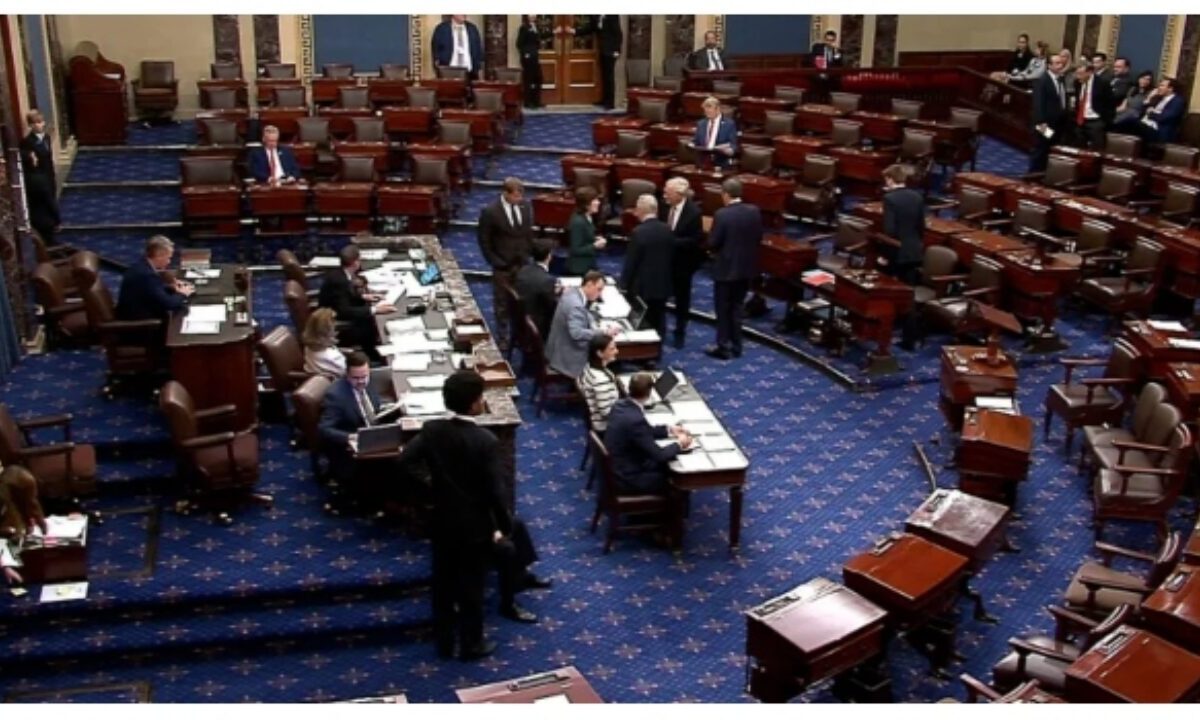
Senate GOP advances immigration funding bill after key changes. Image Credit: Senate TV
Senate Republicans scored a significant legislative victory on Wednesday after successfully advancing a major immigration enforcement funding package worth approximately $70 billion, ending nearly two weeks of delays and internal disagreements.
The legislation, which is being considered through the budget reconciliation process, would provide substantial funding for Immigration and Customs Enforcement (ICE) and other agencies under the Department of Homeland Security (DHS). However, Republican leaders were forced to make key changes to secure enough support, including the removal of controversial funding tied to President Donald Trump’s proposed White House ballroom project.
The vote marks a crucial step in one of the Republican Party’s top legislative priorities heading into the second half of 2026, though significant hurdles remain before final passage.
Senate Advances Massive Immigration Enforcement Funding Package
The Senate voted 53-46 along party lines to begin debate on the immigration enforcement bill, which allocates tens of billions of dollars toward strengthening border security operations, immigration enforcement efforts, detention infrastructure, and other DHS programs.
Republican leaders have described the package as essential for addressing immigration challenges and expanding federal enforcement capabilities.
The bill is being advanced through the reconciliation process, allowing Republicans to bypass the traditional 60-vote Senate threshold under specific budgetary rules. However, internal divisions within the GOP continue to threaten the legislation’s final approval.
Senate Majority Leader John Thune urged Republican lawmakers to remain united behind the proposal, emphasising the importance of securing enough votes to move the legislation across the finish line.
Trump Ballroom Security Funding Removed From Revised Bill
One of the most significant changes to the legislation involved the removal of up to $1 billion in funding that had previously been designated for Secret Service security upgrades connected to President Trump’s proposed White House ballroom project.
The funding became politically controversial after critics argued it was unrelated to immigration enforcement and could jeopardize the bill’s chances of surviving procedural challenges under Senate reconciliation rules.
Republican leaders ultimately decided to eliminate the provision after concerns emerged that it could become a major obstacle to passage.
The White House maintained that the funding was linked to security improvements following an alleged assassination attempt against President Trump earlier this year. Administration officials argued that only a portion of the money would have been used for the ballroom itself, while the remainder would have supported broader Secret Service modernization efforts.
Nevertheless, Senate Republicans concluded that removing the funding was the safest path toward preserving the broader immigration package.
READ ALSO
Trump’s $1.8 Billion anti-weaponization fund faces GOP revolt: Why republicans want it shut down
Anti-Weaponization Fund Sparks Republican Resistance
While GOP leaders resolved the ballroom funding controversy, another issue continues to divide Senate Republicans: the proposed Anti-Weaponization Fund.
The fund has generated criticism from several Republican senators who fear it could be used to compensate individuals whom the Trump administration believes were targeted by politically motivated investigations or prosecutions.
Although Acting Attorney General Todd Blanche recently indicated that the administration does not plan to move forward with the fund, several Republican senators remain skeptical.
Senators including Bill Cassidy, Susan Collins, and Thom Tillis have expressed support for amendments that would formally eliminate the fund from federal law.
Tillis went further, suggesting he could oppose the entire immigration package if language permanently ending the fund is not included.
The dispute underscores the delicate balancing act facing Republican leaders as they attempt to maintain party unity while advancing one of their most important legislative priorities.
Budget Reconciliation Rules Shape the Debate
The ongoing negotiations highlight the powerful influence of Senate budget rules on major legislation.
Earlier versions of the immigration bill faced scrutiny under the Senate’s Byrd Rule, which limits provisions considered unrelated to federal spending within reconciliation legislation.
The Senate parliamentarian previously determined that the ballroom security funding did not qualify under reconciliation requirements, prompting lawmakers to revise the bill.
Republican leaders have since worked to ensure that the revised package focuses primarily on immigration enforcement spending, increasing its chances of surviving procedural challenges.
What Happens Next?
Attention now shifts to the amendment process, where lawmakers are expected to propose a series of changes that could determine the bill’s fate.
Democrats are expected to challenge several provisions while Republicans continue negotiating internally over the Anti-Weaponization Fund and other contentious issues.
Senate Majority Whip John Barrasso expressed confidence that Republicans ultimately possess the votes necessary to pass the legislation. However, with a narrow majority and lingering disagreements, the outcome remains uncertain.
If approved, the bill would represent one of the largest federal investments in immigration enforcement and border security in recent years, significantly expanding resources available to ICE, Customs and Border Protection, and other DHS agencies.
As debate continues, the legislation is emerging as a key test of Republican unity and a major political battleground ahead of the 2026 midterm elections.
FAQ
What is the Senate immigration funding bill?
The Senate immigration funding bill is a Republican-backed legislative package that provides approximately $70 billion for Immigration and Customs Enforcement (ICE), Customs and Border Protection (CBP), and other Department of Homeland Security agencies.
How much funding does the bill provide?
The legislation allocates roughly $70 billion for immigration enforcement, border security operations, detention facilities, personnel expansion, and related DHS programs.
Why was Trump ballroom funding removed from the bill?
Republican leaders removed up to $1 billion in proposed funding for White House ballroom security upgrades because it risked violating Senate reconciliation rules and could have jeopardized support for the broader immigration package.
What is budget reconciliation?
Budget reconciliation is a special congressional procedure that allows certain tax and spending bills to pass the Senate with a simple majority vote instead of the standard 60-vote threshold.
What is the Anti-Weaponization Fund?
The Anti-Weaponization Fund is a controversial proposal that critics say could compensate individuals who were allegedly targeted by politically motivated investigations. Several Republican senators are seeking to eliminate it from the legislation.
Why are some Republicans opposing parts of the bill?
Some Republican senators are concerned about the Anti-Weaponization Fund and want stronger guarantees that it will not be implemented. Others worry about provisions that could create political liabilities ahead of elections.
Will the Senate immigration bill pass?
The bill has advanced to debate, but final passage is not guaranteed. Republican leaders must maintain support from nearly all GOP senators while navigating procedural challenges and amendment votes.
How does the bill affect ICE?
The legislation would significantly increase funding for ICE operations, potentially expanding detention capacity, enforcement activities, staffing levels, and operational resources.
What agencies would benefit from the funding?
The primary beneficiaries include Immigration and Customs Enforcement (ICE), Customs and Border Protection (CBP), and other agencies within the Department of Homeland Security (DHS).
When could the Senate vote on final passage?
Senators are expected to begin amendment votes before moving toward a final vote. The exact timeline depends on negotiations and procedural developments during Senate debate.
Why is this bill important?
The legislation represents one of the largest proposed investments in immigration enforcement in recent years and could significantly shape U.S. border security and immigration policy heading into the 2026 elections.