

Runo: Meet the Nigerian Building a Dating App for Divorcees and Widows

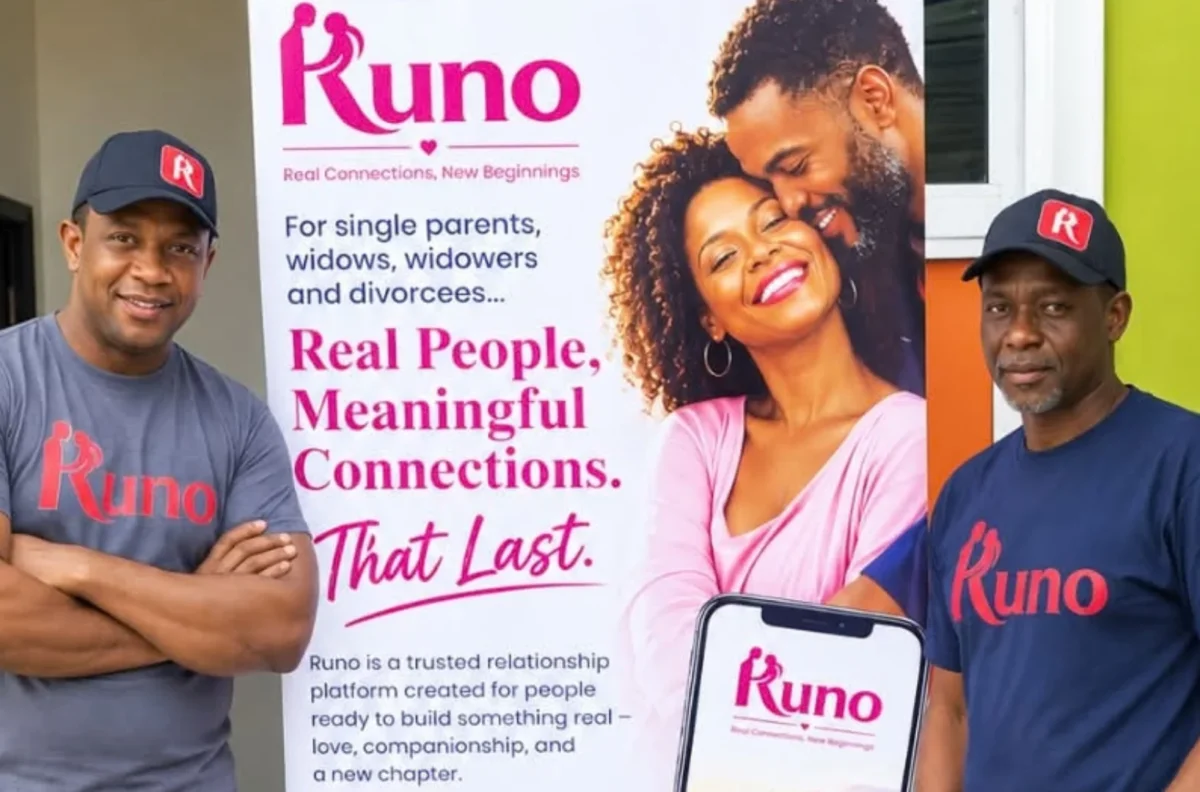
When Tega Ogaga saw a single mother being ridiculed online for expressing her desire to find love again, he began to question how society treats people whose marriages have ended or who have lost their partners.
The woman, a mother of three, had posted on a Facebook matchmaking page, hoping to meet someone with whom she could start a new relationship. Instead, she faced harsh comments from people questioning why a man should accept the responsibility of raising another man’s children.
The incident occurred in 2025. For Ogaga, a corporate finance analyst, it revealed a problem that extended beyond one woman’s experience.
Widows, widowers, divorcees and single parents often face judgement when they decide to pursue new relationships. Some retreat from dating to avoid public humiliation.
Ogaga responded by building Runo, a relationship platform designed specifically for these groups.
According to a report by TechCabal’s John Adoyi published on October 9, 2026, the platform aims to help people find companionship without having to defend their past or apologise for wanting to start again.
Runo dating app: Why Tega Ogaga built the platform
Ogaga’s idea emerged after he spent hours examining similar posts in Facebook matchmaking groups.
He found repeated examples of people expressing their desire for companionship only to face ridicule because of their marital history or family responsibilities.
The experience prompted him to investigate the problem further. As he interviewed widows, widowers, divorcees and single parents, he discovered that the fear of judgement often discouraged people from seeking new relationships.
One widow told him she preferred to remain isolated rather than face the unsolicited opinions that came with admitting she wanted to marry again.
Ogaga also identified a gap in the dating market. Many conventional dating apps cater to a broad audience, but people rebuilding their lives after divorce or bereavement may have different priorities.
They may want serious relationships with partners who understand their experiences, respect their family responsibilities and share their expectations.
Runo was developed to address those needs.
The platform was scheduled to launch on October 9, beginning in Lagos, with plans to expand its reach as it attracts more users.
How Runo works
Runo targets adults aged 28 to 65 who are interested in meaningful relationships.
Users can create profiles that include details such as their age, occupation, religion, marital history and family circumstances. They can also state the number and ages of their children and whether they are willing to date someone who already has children.
The app uses a familiar swipe-based interface, but it places restrictions on communication.
Users must like each other’s profiles before they can exchange messages. This mutual-match requirement is intended to reduce unsolicited contact and give members greater control over their interactions.
The platform also respects users’ stated age preferences. For example, someone seeking a partner between 45 and 55 should not be shown profiles outside that range.
These features reflect the platform’s focus on helping users establish connections based on shared interests and expectations.
Privacy and safety features on Runo
Trust is central to Runo’s approach because its intended users may be particularly concerned about harassment, deception and exploitation.
The app allows members to browse anonymously without displaying their photographs immediately. Users can choose when to reveal their pictures to someone they have matched with.
It also offers optional identity verification for people who submit government-issued identification. Verified users receive a badge on their profiles.
In addition, members can report suspicious accounts for investigation and possible removal.
These measures are designed to give users more control over their dating experience. However, identity verification does not guarantee that a person is trustworthy, and users must still exercise caution when communicating with strangers online.
Ogaga told TechCabal that trust was one of the most important features he wanted to build into the platform, given the sensitivity of the experiences many prospective members have faced.
Runo subscription plans and pricing
Runo operates a freemium model, allowing users to access basic services without paying for a subscription.
According to TechCabal, the platform offers two paid plans:
- Premium: ₦7,500 per month.
- VIP: ₦75,000 per year.
The platform also uses a digital currency called RUNC for certain advanced features, including in-app audio and video calls. Users can also use the currency to send virtual gifts.
Prospective members should confirm the current subscription prices and the features available under each plan before making payments.
How Runo plans to attract users
Rather than immediately investing heavily in social media advertising, Ogaga and his team are pursuing a community-based approach.
They plan to reach prospective users through churches, mosques, grief counsellors, divorce lawyers and support groups for widows and single parents.
The team is also targeting WhatsApp communities where people already share experiences and seek advice.
According to Ogaga, the strategy will help Runo establish trust before launching a large advertising campaign.
The company reported more than 200 waitlist sign-ups within ten days of opening registration, without spending money on paid advertising.
Community partnerships could help the startup reach people who might otherwise hesitate to join a dating platform. However, its ability to maintain a safe environment as membership grows will be important to its long-term success.
Can Runo change attitudes towards dating after divorce?
Runo enters a society where remarriage and dating after the loss of a spouse or the breakdown of a marriage can attract public scrutiny.
The challenge can be particularly difficult for women. Research cited by TechCabal includes a 2017 study examining the gendered consequences of divorce and remarriage in Lagos and Abuja. The study found that divorced women faced harsher social condemnation and greater barriers to remarriage than divorced men.
Another study published in 2024 examined the effects of social stigma on young unmarried mothers in Ife-East, southwestern Nigeria.
These findings point to a wider problem: the desire to find companionship can become complicated by expectations about marriage, motherhood and personal history.
A dating app cannot eliminate those attitudes on its own. Runo must also attract a substantial user base, protect members’ privacy and give people confidence that they can meet others safely.
Ogaga recognises that cultural resistance may pose another challenge. He told TechCabal that some Nigerian communities discourage widows from remarrying.
The company intends to address such barriers through public education, storytelling and conversations with communities as it expands.
Runo’s ambitions beyond Nigeria
Ogaga spent nine months preparing Runo for the market, including six months establishing its business structure and three months developing the software.
He also prepared a six-volume operational blueprint covering the company’s identity, product requirements, market analysis and plans for attracting investors.
Despite preparing the business for eventual venture investment, he has chosen to focus on demonstrating demand and generating revenue before approaching senior investors.
For its first year, Runo is targeting 50,000 users in Nigeria. It also plans to establish regional hubs in Nairobi, Johannesburg and Kigali.
Its three-year projections include 250,000 users and a paid subscriber conversion rate of 4%.
These are company targets, not achieved results. Whether Runo can meet them will depend on user adoption, subscription revenue and its ability to build a trusted community across different markets.
For Ogaga, however, the platform’s success goes beyond subscriber numbers and financial valuation.
He told TechCabal that he would consider it a major achievement if people left Runo because they had found the relationships they wanted.
That ambition captures the idea behind the platform: helping people who have experienced loss or the end of a marriage find companionship without feeling that their past disqualifies them from love.