

Piddington referendum: Why a tiny Oxfordshire village is voting to leave the UK

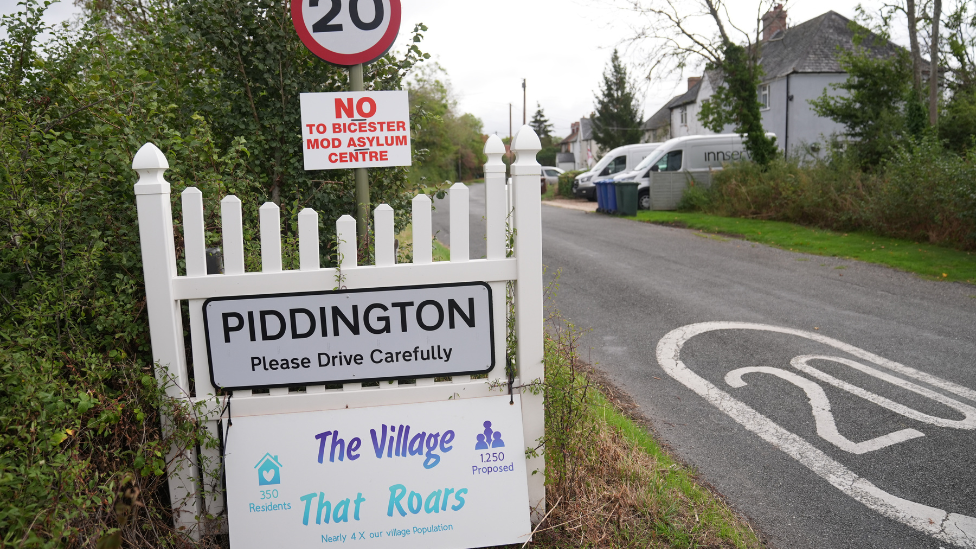
Piddington votes on leaving the UK over asylum centre. Credit: PA Media
A tiny Oxfordshire village is taking an extraordinary step on Tuesday as residents of Piddington vote on whether they should seek to leave the United Kingdom.
The unusual referendum is not being triggered by a traditional independence movement. Instead, it has emerged from a fierce local dispute over government plans to accommodate up to 1,256 male asylum seekers at a former Ministry of Defence site close to the village.
With Piddington home to only around 350 to 400 people, the proposed accommodation could house several times the village’s population. Residents opposed to the plan say they were not given enough say over a decision they believe could fundamentally change life in their community.
The vote has attracted national political attention, with Conservative and Reform UK politicians visiting the village and other communities reportedly seeking advice on how to organise similar campaigns.
But there is an important detail behind the dramatic headlines: Piddington cannot legally leave the UK simply because residents vote to do so.
Why is Piddington holding a referendum?
The referendum is designed as a symbolic political protest.
Piddington Parish Council and campaigners say the vote is intended to demonstrate the strength of local opposition to the proposed asylum accommodation and highlight what they regard as a lack of meaningful consultation.
Residents first backed the idea of holding a referendum in July. The campaign has since grown into a wider protest against the government’s decision to use the nearby former military facility for asylum accommodation.
The ballot asks residents whether Piddington should seek to secede from the United Kingdom and pursue self-determination.
The result is expected to attract significant attention because the village has effectively turned an immigration and planning dispute into a question about local democracy.
The referendum itself, however, does not have the legal power to redraw Britain’s constitutional map.
What is planned for the Piddington asylum centre?
The government wants to use Site A at MoD Bicester, a former military facility located between Piddington and the Arncott villages, as alternative accommodation for asylum seekers.
The Home Office has proposed accommodation for up to 1,256 male asylum seekers.
The plan forms part of the government’s wider effort to reduce its reliance on asylum hotels. Ministers have argued that former military sites can provide more suitable accommodation while reducing the cost of the asylum system.
The government says it is closing asylum hotels and moving people into alternative accommodation, including former military facilities. It also maintains that such sites are designed to be relatively self-contained and that local authorities and police are involved in considering safety and security.
The proposal has nevertheless generated intense opposition in Piddington.
The scale of the proposed facility is one of the central concerns. A village with roughly 350 residents could find itself next to accommodation intended for more than three times its existing population.
Why are Piddington residents angry?
The dispute is not simply about the number of people who could be housed at the site.
Residents have raised concerns about safety, infrastructure, local services and the effect the accommodation could have on everyday life.
A group of 133 women from the village sent an open letter to female MPs warning that they feared for their safety and security if the plans went ahead.
Some residents have also discussed self-defence classes and additional security measures, reflecting the level of anxiety that has developed within the community.
Those concerns have become a major part of the political debate, with opposition politicians arguing that the government failed to properly involve residents before announcing the plans.
Piddington Parish Council chairman Tim McNally has also criticised the planning process, arguing that the community was effectively excluded from a decision with major consequences for the village.
The government disputes the idea that local communities are being ignored, saying consultation and engagement with authorities and police form part of the process.
READ ALSO
Who are the Falkland Islanders? Everything to know as Argentina reignites battle over the Islands
Could Piddington actually leave the UK?
No, not through this referendum.
The Piddington vote is symbolic rather than legally binding.
There is no established legal process that allows a village in England to unilaterally declare independence from the United Kingdom following a local referendum.
That makes the vote fundamentally different from a constitutional referendum authorised by the UK government or Parliament.
The purpose of the ballot is political pressure rather than immediate constitutional change.
Campaigners hope the result will demonstrate the depth of local feeling and encourage other communities facing similar asylum accommodation proposals to organise their own votes.
Piddington campaign could spread beyond Oxfordshire
One of the most significant developments surrounding the referendum is the interest it has generated outside the village.
McNally has said hundreds of parish and town councillors from elsewhere in Britain have contacted the campaign seeking information about how Piddington organised its referendum.
The campaign has consequently developed a blueprint covering steps communities could take, including working with parish councils, organising a local vote and communicating the result to MPs.
That could turn Piddington from a local protest into a template for communities unhappy with government decisions involving asylum accommodation.
The political response has already been substantial.
Shadow Home Secretary Chris Philp and Reform UK politicians including Suella Braverman and Sarah Pochin have visited the village and expressed support for residents challenging the government’s plans.
The involvement of national politicians has elevated the dispute into a broader argument about immigration, local democracy and the government’s use of former military sites.
What happens after the Piddington referendum?
The immediate impact of the vote will depend less on whether residents choose “yes” or “no” and more on whether the result increases pressure on the government.
The proposed asylum centre is still subject to the planning and consultation process. A public consultation on the plans is running until 17 September, meaning the referendum comes at a particularly sensitive point in the decision-making process.
Cherwell District Council has also been examining the proposal and is expected to consider its response to the planned 1,256-place accommodation scheme.
That means the Piddington vote could become another piece of evidence in an increasingly contentious planning battle rather than the final word on the future of the site.
The government has not accepted that the referendum can change its constitutional position. Its focus remains on replacing expensive asylum hotels with alternative accommodation.
Why the Piddington vote matters nationally
Piddington’s unusual referendum has become a national story because it captures a much bigger conflict over who gets the final say when central government decisions dramatically affect small communities.
For residents, the argument is about safety, local infrastructure and having a meaningful voice.
For the government, the issue is part of a nationwide effort to reform asylum accommodation and reduce reliance on hotels.
For opposition parties, Piddington offers a powerful example of what they describe as central government overriding local communities.
That is why Tuesday’s vote matters even though it cannot legally make Piddington an independent territory.
The village may not be able to leave the UK, but its referendum could show how far local communities are prepared to go to challenge decisions made in Westminster.
The bigger question is whether Piddington remains an unusual one-off, or becomes the model for a new wave of symbolic local referendums across Britain.
Frequently Asked Questions About Piddington
Why is Piddington voting to leave the UK?
Piddington residents are holding a symbolic referendum to protest government plans to accommodate up to 1,256 male asylum seekers at a former Ministry of Defence site near the village. Campaigners say the vote is intended to highlight concerns about safety, infrastructure and local democracy.
Can Piddington legally leave the UK?
No. The referendum is symbolic and does not give the village a legal route to independence from the United Kingdom.
How many people live in Piddington?
Piddington has a population of roughly 350 to 400 people, depending on the figure used. The proposed asylum accommodation could therefore house several times the village’s existing population.
How many asylum seekers could be housed near Piddington?
The government’s proposal is for accommodation for up to 1,256 male asylum seekers at the former MoD Bicester site.
Where is Piddington?
Piddington is a small village in Oxfordshire, near Bicester. The proposed asylum accommodation site is at a former Ministry of Defence facility close to the village.
Why does Piddington oppose the asylum centre?
Opponents have raised concerns about the scale of the proposed accommodation, safety, infrastructure, local services and what they describe as inadequate consultation with residents.
When is the Piddington referendum?
The symbolic referendum is being held on Tuesday, 15 September 2026.
Will the Piddington referendum stop the asylum centre?
Not by itself. The referendum has no direct legal power to cancel the government’s proposal. The future of the site remains connected to the planning, consultation and government decision-making process.
Could other UK villages copy Piddington?
Yes. Piddington campaigners say hundreds of parish and town councillors have contacted them about their approach, raising the possibility that other communities could organise similar symbolic votes.
What is the government saying about Piddington?
The Home Office says it is closing asylum hotels and moving asylum seekers into alternative accommodation, including former military sites. It says it is engaging local authorities and police to address safety and security concerns.