

NNPC announces the completion of the OB3 gas pipeline: What to know

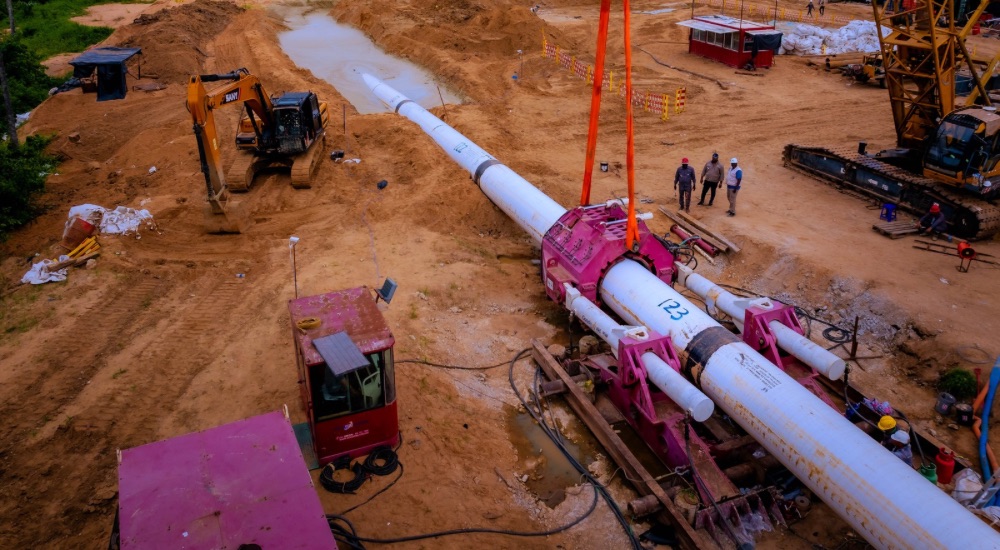
NNPC completes OB3 gas pipeline River Niger crossing
Nigeria’s energy sector has recorded a major breakthrough as Nigerian National Petroleum Company Limited announced the successful completion of a critical segment of the Obiafu-Obrikom-Oben (OB3) gas pipeline.
The milestone, the River Niger crossing, represents a significant leap in the country’s ambition to strengthen gas infrastructure, boost electricity generation, and drive industrial growth.
What the OB3 Gas Pipeline Project Means for Nigeria
The OB3 gas pipeline, a 130-kilometre strategic infrastructure project, is designed to transport up to 2 billion standard cubic feet of gas per day across key regions in Nigeria.
With the successful completion of the River Niger crossing, the pipeline is now closer to achieving full operational capacity, unlocking its potential to enhance energy availability and supply reliability nationwide.
According to NNPC, the project plays a central role in building an integrated gas network that supports Nigeria’s long-term energy security and economic expansion.
River Niger Crossing: A Major Engineering Breakthrough
One of the most technically challenging aspects of the OB3 project was the River Niger crossing, a complex engineering feat executed approximately two kilometres beneath the riverbed.
The crossing was delivered using advanced horizontal directional drilling (HDD) technology, in collaboration with engineering firm PCE Nig. Limited.
NNPC described the achievement as a testament to technical excellence, innovation, and disciplined execution, marking a new benchmark for large-scale infrastructure delivery in Nigeria’s oil and gas sector.
Boost for Power Generation and Industrial Growth
The completion of the OB3 pipeline segment is expected to have far-reaching impacts on Nigeria’s economy.
By increasing gas supply to power plants and industrial users, the project is set to:
- Improve electricity generation capacity
- Support manufacturing and industrialisation
- Enhance domestic gas utilisation
- Reduce energy supply disruptions
This aligns with Nigeria’s broader strategy to transition towards a gas-powered economy, leveraging its abundant natural gas reserves.
NNPC Leadership Highlights Strategic Importance
Speaking on the milestone, Bayo Ojulari, Group Chief Executive Officer of NNPC Limited, described the River Niger crossing as a “defining milestone” in Nigeria’s gas infrastructure development.
He emphasised that overcoming such a complex engineering challenge demonstrates the company’s growing capability to deliver world-class energy projects.
Ojulari also noted that the success builds on previous achievements, including the AKK pipeline crossing completed in 2025, showcasing NNPC’s evolving engineering strength and project management expertise.
Alignment with Nigeria’s Energy and Economic Goals
The OB3 pipeline project supports the Federal Government’s ambitious targets to:
- Increase oil production to 3 million barrels per day
- Boost gas output to 12 billion standard cubic feet per day by 2030
The initiative is also tied to the government’s “gas-to-prosperity” agenda, which aims to use natural gas as a catalyst for economic development, job creation, and improved living standards.
NNPC acknowledged the role of the administration led by President Bola Ahmed Tinubu in providing a supportive policy environment for energy sector investments.
Economic Impact and Future Outlook
Industry analysts believe the OB3 pipeline will significantly reduce bottlenecks in gas transportation, ensuring a more stable and efficient supply chain.
This is particularly critical for Nigeria, where gas shortages have historically affected power generation and industrial productivity.
With the River Niger crossing now completed, attention will shift to final integration and operational optimisation, positioning the OB3 pipeline as a cornerstone of Nigeria’s energy infrastructure.
A Turning Point for Nigeria’s Gas Economy
The completion of the OB3 gas pipeline River Niger crossing marks a turning point in Nigeria’s energy journey.
Beyond its technical achievement, the project represents a strategic investment in the country’s future, one that promises improved power supply, stronger industrial growth, and enhanced economic resilience.
As Nigeria continues to prioritise gas development, the OB3 pipeline stands out as a critical asset in unlocking the nation’s full energy potential.
FAQ
What is the OB3 gas pipeline?
The OB3 (Obiafu-Obrikom-Oben) gas pipeline is a 130km infrastructure project designed to transport natural gas across Nigeria to support power generation and industries.
Why is the River Niger crossing important?
It is the most technically complex part of the pipeline. Completing it connects major gas supply routes and enables the pipeline to operate at full capacity.
How much gas can the OB3 gas pipeline transport?
The pipeline is designed to carry up to 2 billion standard cubic feet of gas per day.
Who completed the OB3 gas pipeline project?
The project was executed by the Nigerian National Petroleum Company Limited (NNPC) through its gas infrastructure subsidiary.
How will the OB3 gas pipeline affect electricity in Nigeria?
It will increase gas supply to power plants, helping to improve electricity generation and reduce outages.
What technology was used for the River Niger crossing?
Advanced horizontal directional drilling (HDD) technology was used to install the pipeline beneath the riverbed.
What are the economic benefits of the OB3 gas pipeline?
The project supports industrial growth, job creation, energy security, and overall economic development.
Is the OB3 gas pipeline fully operational now?
The River Niger crossing has been completed, bringing the project closer to full operational capacity.
How does the OB3 gas pipeline fit into Nigeria’s energy plans?
It aligns with the government’s gas-to-prosperity strategy and long-term targets for increased gas production and utilisation.
What challenges did the OB3 project face?
The River Niger crossing posed major engineering challenges, which were overcome using advanced drilling techniques and expertise.