

Nigeria’s Power Crisis Has a ₦2tn Subsidy Problem

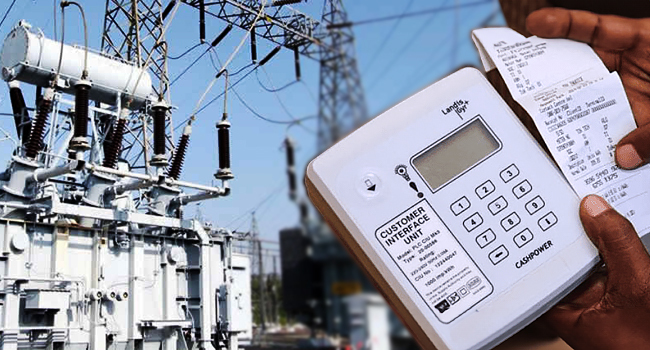
Nigeria’s decision not to increase electricity tariffs in the immediate future could leave the Federal Government with another subsidy bill approaching ₦2 trillion, as the cost of keeping tariffs below the actual cost of supplying power continues to widen.
The Federal Government incurred a ₦1.93 trillion electricity subsidy obligation in 2025, according to the Nigerian Electricity Regulatory Commission’s (NERC) 2025 Annual Report.
Now, with the government maintaining its position that there are no immediate plans to raise electricity tariffs, the subsidy burden could remain around the same level in 2026.
Why is Nigeria paying the electricity subsidy?
The subsidy exists because the amount many electricity consumers pay for power is below what it costs to supply that electricity.
NERC describes the difference as the gap between the cost-reflective tariff and the allowed tariff paid by customers.
When the approved tariff does not cover the cost of supplying electricity, the Federal Government is expected to cover the shortfall through a tariff subsidy.
In 2025, that obligation reached ₦1.93 trillion, representing 57.44% of the total Nigerian Bulk Electricity Trading (NBET) invoice for the year, according to NERC. The average monthly subsidy obligation was about ₦160.69 billion.
That means the subsidy is not a small adjustment to electricity bills. It represents a substantial portion of the money required to keep the power market functioning under the existing tariff structure.
What happens when tariffs stay frozen?
The Federal Government has now said it does not plan to increase electricity tariffs immediately.
Power Minister Joseph Tegbe made the position clear at a media parley in Abuja marking his first 100 days in office.
According to Tegbe, the government’s objective is to build a commercially viable electricity sector while protecting vulnerable consumers.
For electricity consumers, this means there is no immediate additional tariff increase from the Federal Government.
But freezing tariffs does not eliminate the difference between what electricity costs and what consumers pay.
The government must either absorb that difference through subsidies or allow the unpaid amounts to appear elsewhere in the electricity supply chain.
That is where the sector’s existing debt problem becomes important.
Power companies are already warning about fresh debts
Nigeria is attempting to address a longstanding power-sector debt backlog through a ₦4 trillion Presidential Power Sector Debt Reduction Programme.
The government has already raised an estimated ₦1.23 trillion toward addressing part of a reported ₦3.3 trillion debt backlog, according to the power minister.
However, power generation companies have warned that settling old debts will not solve the problem if new liabilities continue accumulating.
The Association of Power Generation Companies said fresh liabilities could exceed ₦7 trillion before the government’s debt-reduction programme is fully implemented.
APGC chief executive Joy Ogaji questioned what would happen to debts accumulated during 2025 and 2026 while the government works through the older obligations.
This creates a difficult financial cycle: the government is trying to clear old electricity-sector debts while the market continues to generate new obligations.
The problem is bigger than electricity tariffs
The subsidy figure is only one part of Nigeria’s power-sector problem.
The minister said the government’s assessment found constraints across the entire electricity value chain, including gas supply, generation, transmission and distribution.
Gas supply to power plants has been affected by damaged pipelines and commercial conditions that discourage investment, while ageing generating equipment and deferred maintenance have limited the amount of available capacity that can reach consumers.
Transmission infrastructure is also under pressure from vandalism, damaged lines and overstretched equipment.
On the revenue side, Tegbe said generation companies were receiving only 27% of their bills, limiting their ability to maintain plants and pay gas suppliers.
The figures show why simply changing the price consumers pay does not automatically solve the electricity crisis.
The sector also needs enough gas, functioning generation plants, reliable transmission infrastructure, efficient distribution and stronger payment collection.
Nigerians are still paying for the system
Although the government subsidy protects consumers from paying the full cost-reflective tariff, it does not mean electricity becomes cheaper for the country as a whole.
The government ultimately has to find resources to cover the subsidy and other obligations in the electricity market.
The challenge is particularly significant because the subsidy has remained close to ₦2 trillion despite the tariff reforms introduced in 2024.
Under the Band A to E structure, Band A customers in most DisCos moved closer to cost-reflective tariffs, while customers in other bands continued to receive subsidised electricity.
NERC’s 2025 data also shows that the subsidy burden differed significantly across distribution companies, reflecting differences in their operating costs and the cost of supplying electricity in their franchise areas. For example, Abuja DisCo recorded about ₦278.37 billion in accrued subsidy, while Ibadan DisCo recorded about ₦239.94 billion.
What the government is trying to change
The Federal Government says it wants to improve the underlying economics of the electricity market rather than rely indefinitely on higher tariffs.
The power minister said the administration is working on the sector’s debt, revenue leakages, metering gaps, infrastructure and grid stability.
The government also installed about 350,000 electricity meters during the minister’s first 100 days, bringing cumulative installations to more than one million by August 2026. The resolution of litigation around the AMMON metering programme has also cleared the way for the procurement of about 1.4 million smart meters, according to the minister.
The intention is to improve billing accuracy and revenue collection while addressing infrastructure constraints.
But the immediate financial question remains: how much will the government have to absorb while tariffs remain below the cost of supplying electricity?
The ₦2tn question
Nigeria’s electricity subsidy could therefore approach another ₦2 trillion in 2026 if the existing tariff structure remains in place and the gap between allowed tariffs and the cost of supply remains substantial.
The government has chosen to avoid an immediate tariff increase while it works on the broader electricity market.
For consumers, that provides protection from another immediate increase in electricity bills.
For the government and power companies, however, the underlying cost has not disappeared.
It has simply remained somewhere else in the system — as a subsidy obligation, unpaid bills or accumulating sector debt.
That leaves Nigeria facing a broader power-sector question: how long can the country keep electricity prices below the cost of supply without fixing the financial gap that the policy creates?
FAQ
How much did Nigeria spend on electricity subsidy in 2025?
The Federal Government incurred an electricity subsidy obligation of about ₦1.93 trillion in 2025, according to NERC.
Why does Nigeria subsidise electricity?
The subsidy covers the gap between the cost-reflective price of supplying electricity and the lower tariff approved for consumers.
Will electricity tariffs increase in 2026?
The Minister of Power, Joseph Tegbe, said the Federal Government has no immediate plan to increase electricity tariffs.
Why could the subsidy reach ₦2 trillion again?
If tariffs remain below the cost of supplying electricity, the government continues to bear the resulting gap through subsidy obligations.
What is Nigeria doing about power-sector debt?
The Federal Government is implementing a ₦4 trillion Presidential Power Sector Debt Reduction Programme, while also working on metering, revenue collection, generation, gas supply and transmission infrastructure.
Does an electricity tariff freeze eliminate the cost of power?
No. It keeps the amount paid by consumers below the cost-reflective level, leaving the resulting gap to be covered through government subsidy or reflected elsewhere as unpaid obligations.