

UK Visa: 17 Countries Exempt From Health Worker English Test

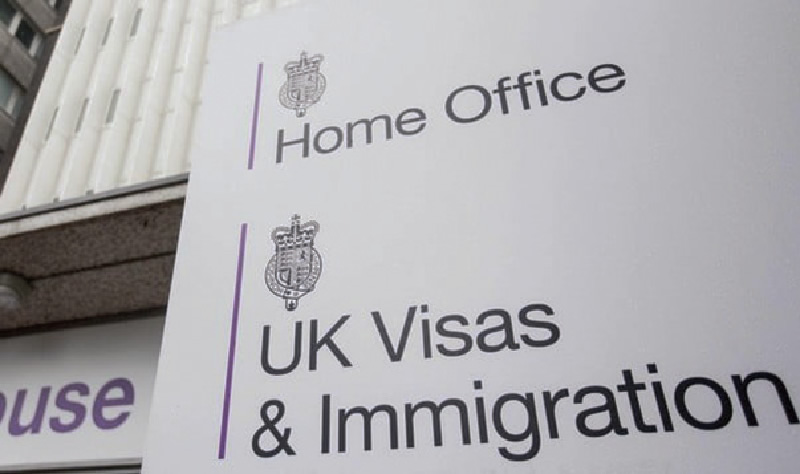
The United Kingdom has listed 17 countries and territories whose citizens do not have to separately prove their English-language knowledge when applying for a Health and Care Worker visa.
The exemption means nationals of the listed countries can apply for the visa without taking an approved English-language test solely to satisfy the visa’s English requirement.
However, the exemption is based on nationality and does not mean that every applicant from these countries automatically qualifies for a UK Health and Care Worker visa.
Applicants must still meet the other immigration requirements, including having an eligible job with an approved UK employer and a certificate of sponsorship.
The 17 countries and territories on the UK list
According to the latest UK government guidance, citizens of these countries and territories do not need to prove their English knowledge for the Health and Care Worker visa:
- Antigua and Barbuda
- Australia
- The Bahamas
- Barbados
- Belize
- British overseas territories
- Canada
- Dominica
- Grenada
- Guyana
- Jamaica
- Malta
- New Zealand
- St Kitts and Nevis
- St Lucia
- St Vincent and the Grenadines
- United States of America
The UK government lists these countries and territories specifically under the section covering people who do not need to prove their knowledge of English.
What about Nigerian healthcare workers?
Nigeria is not included in the 17-country exemption list.
This means a Nigerian applying for a Health and Care Worker visa will generally still need to prove their English-language ability unless they qualify through another accepted route.
The UK currently says applicants can demonstrate their English in several ways. These include having certain UK qualifications, holding a degree taught in English, passing an approved English-language test or having previously demonstrated the required English level in a successful visa application.
For Nigerians with university degrees taught in English, the degree route may be relevant.
Where a degree was awarded outside the UK and was taught in English, the applicant may need an assessment from Ecctis to confirm that the qualification is equivalent to a UK bachelor’s degree or higher and was taught in English.
This is particularly important because being from an English-speaking country does not automatically place an applicant on the UK’s 17-country nationality exemption list.
Doctors, nurses and other professionals have another option
There is also a separate provision for certain regulated healthcare professionals.
The UK government says doctors, dentists, nurses and midwives do not need to prove their English knowledge separately for the visa if they have already passed an English-language assessment accepted by their relevant professional regulator.
This means a healthcare professional may be able to use an English assessment already completed as part of professional registration.
For example, the UK guidance for people applying for health and social care jobs from abroad states that doctors, dentists, nurses and midwives can use the English test taken for professional registration to meet the visa language requirement, provided they achieved the required scores before applying for the visa.
The professional registration process is separate from the immigration process, however.
A person may therefore need to satisfy both the relevant UK professional regulator and the visa requirements before they can begin working.
What English level is required?
For a new Health and Care Worker visa application, applicants who need to prove their English must generally demonstrate B2 level on the Common European Framework of Reference for Languages.
The requirement covers the ability to read, write, speak and understand English.
Applicants who do not qualify through another accepted route can prove this by passing a Secure English Language Test from an approved provider.
There are transitional rules for some people extending or updating an existing visa.
For example, someone who had a Health and Care Worker visa before 8 January 2026 and is applying to extend or update it needs B1 English and does not have to prove their knowledge again under the stated conditions.
Passing an English test is not enough
Meeting the English requirement is only one part of the Health and Care Worker visa process.
Applicants must have a confirmed job offer from a UK employer approved by the Home Office and receive a certificate of sponsorship containing details of the job.
They must also work in an eligible occupation and meet the applicable salary requirement.
The visa can allow eligible healthcare professionals to stay in the UK for up to five years before they need to extend or update their permission, provided they continue to meet the relevant requirements.
Important change for overseas care workers
The English-language exemption should also not be confused with the UK’s rules on overseas recruitment for care workers.
The UK government closed the overseas application route for care workers and senior care workers to new applications from 22 July 2025.
There is a transition period allowing certain in-country applications until 2028, subject to the applicable rules.
Therefore, someone seeing that certain countries are exempt from the English requirement should not assume that citizens of those countries can automatically travel to the UK under any healthcare or care-work route.
The occupation, employer, sponsorship and immigration rules still apply.
What Nigerian applicants should know
For Nigerians considering healthcare jobs in the UK, the most important point is that Nigeria does not appear on the nationality-based exemption list.
However, that does not necessarily mean every Nigerian healthcare professional must sit a separate English test for the visa.
A Nigerian doctor, dentist, nurse or midwife who has already completed an English assessment accepted by the relevant UK professional regulator may be able to use that assessment to satisfy the visa requirement.
A Nigerian graduate whose degree was taught in English may also have another route to demonstrating English, subject to the UK government’s qualification requirements and, where applicable, an Ecctis assessment.
Applicants should therefore establish which English-language route applies to their individual circumstances before paying for another test.
The 17-country exemption is only one part of the visa rules
The UK’s latest guidance makes clear that nationality can remove the need to separately prove English, but it does not remove the wider Health and Care Worker visa requirements.
For applicants from countries such as Nigeria that are outside the exemption list, there are still several possible ways to satisfy the language requirement.
The key is to determine whether the applicant can rely on a qualifying degree, a previous successful visa application, an accepted professional assessment or an approved English-language test.
For Nigerians planning to work in the UK healthcare sector, the nationality list is therefore useful — but checking the alternative English routes may be just as important.
FAQ
Which countries are exempt from the UK Health and Care Worker visa English test?
Citizens of 17 listed countries and territories, including Australia, Canada, Jamaica, New Zealand, the United States and several Caribbean countries, do not need to separately prove their English knowledge for this visa.
Is Nigeria exempt from the UK Health and Care Worker visa English test?
No. Nigeria is not included in the UK’s 17-country nationality exemption list. However, some Nigerian applicants may qualify through other accepted methods of proving English.
Can Nigerian nurses use their professional English test for the UK visa?
Yes, a nurse may be able to use an English-language assessment accepted by the relevant professional regulator to satisfy the visa requirement, subject to the applicable rules.
What English level is required for a new Health and Care Worker visa?
Applicants who need to prove English generally need to demonstrate B2 level across reading, writing, speaking and understanding.
Can an English-taught degree satisfy the UK visa English requirement?
Yes, an eligible degree taught in English can be used to demonstrate English. For a degree awarded outside the UK, an Ecctis assessment may be required.
Does passing the English test guarantee a UK Health and Care Worker visa?
No. Applicants must also meet requirements relating to their job, employer, sponsorship, occupation and salary, among other conditions.