

What is the new Cat species scientists just discovered in Bolivia?

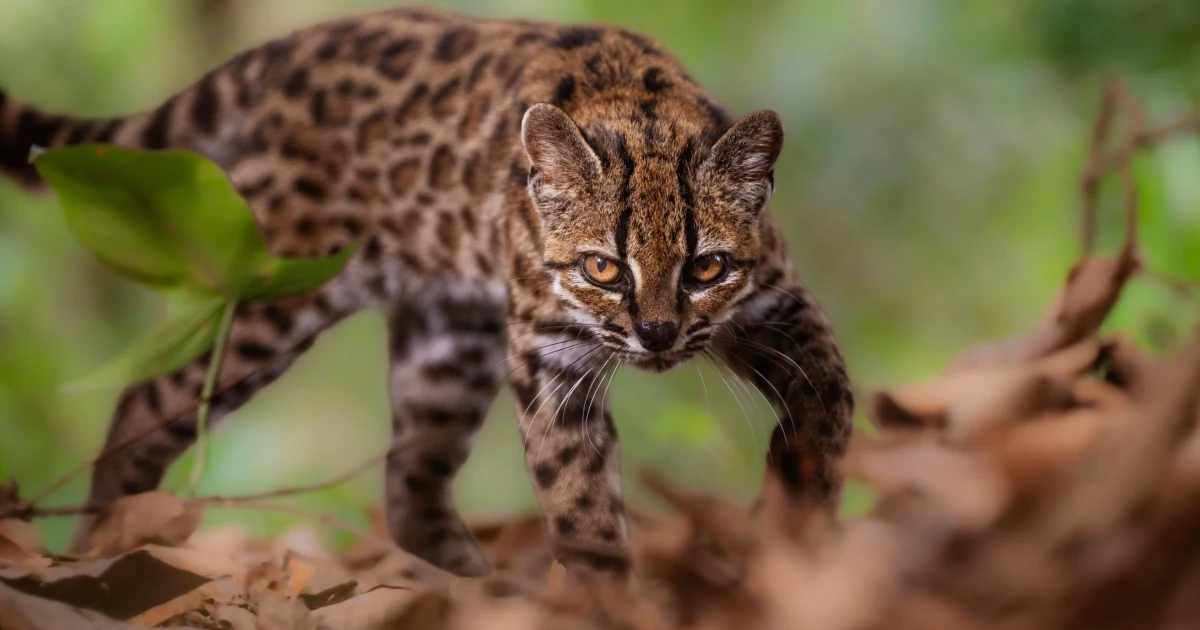
Leopardus tilcayo was identified as a distinct wild cat species in Bolivia’s Yungas forest. Credit: Fernando Faciole / National Geographic
A tiny spotted wild cat in Bolivia has been formally identified as a new species, giving scientists their first newly described living cat species in more than a century and prompting a major rethink of the tiger cat family tree.
The animal, named Leopardus tilcayo, was first encountered by researchers years ago after a local family took it in as a kitten. At the time, scientists believed it belonged to an already known group of small wild cats.
That assumption changed after researchers noticed physical differences between the Bolivian animal and reference specimens from neighbouring countries. Advanced genetic analysis eventually confirmed that the cat represented a distinct evolutionary lineage.
The discovery, published in the journal Current Biology, is significant beyond the identification of one unusual animal. Researchers found that what had traditionally been treated as a smaller group of tiger cats actually contains five genetically distinct species.
New Cat Species Found in Bolivia’s Yungas Forest
The newly identified species lives in Bolivia’s Yungas forest, a mountainous ecosystem on the eastern slopes of the Andes.
The region is characterised by humid, cloud-covered forests and is considered an important habitat for wildlife.
The cat itself is remarkably small. The researchers described the animal as measuring about 46 centimetres from head to body and weighing roughly 1.4 kilograms.
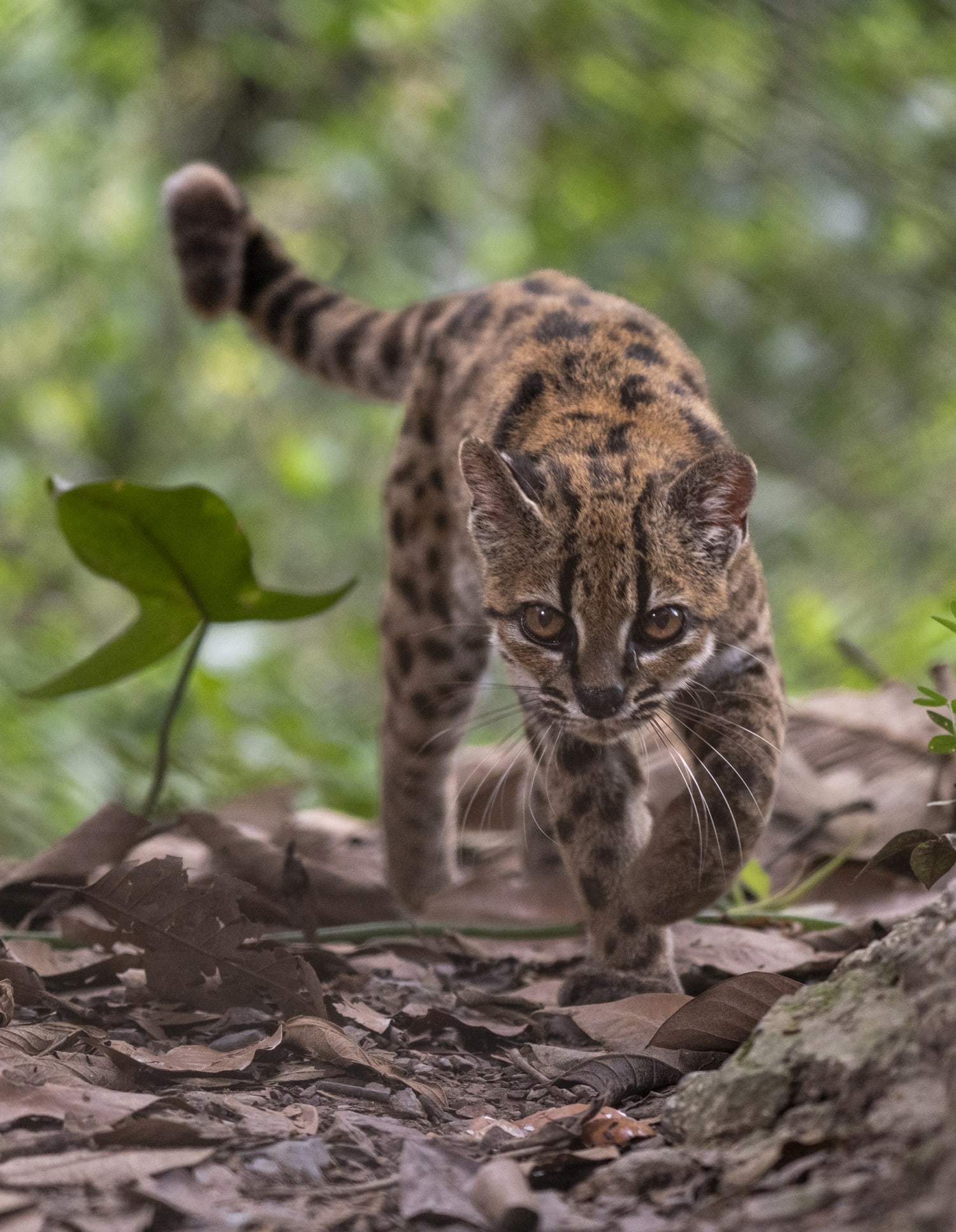
Its appearance includes light-brown fur covered with irregular rosettes, along with a small face, rounded ears and long whiskers.
Local communities have long referred to the animal as Tilcayo, a name the scientists retained when assigning its scientific name, Leopardus tilcayo.
Despite the discovery, researchers say much about the species remains unknown.
Scientists have yet to establish many basic details about its lifestyle, including its full diet, reproduction, population size and predators.
How Scientists Realised the Cat Was Different
The story of Leopardus tilcayo began in 2016, when biologist and National Geographic Explorer Paola Nogales-Ascarrunz was contacted about an unusual wild cat being kept at the Senda Verde Wildlife Sanctuary.

A local man had reportedly found the animal as a kitten near a forest and initially took it home, believing it might be a domestic cat.
Its appearance quickly raised questions.
The animal was noticeably smaller than an average house cat and had distinctive leopard-like markings. Nogales-Ascarrunz initially believed it was a tiger cat belonging to a species already known to science.
The mystery became more apparent several years later.
While preparing material about Bolivia’s wild cats in 2019, she compared photographs of the animal with reference images from Brazil and noticed that its markings did not appear to match.
The Bolivian cat had considerably larger rosettes.
That visual difference eventually led researchers to investigate whether something more fundamental separated the animal from other tiger cats.
DNA Analysis Revealed a Species Hidden in Plain Sight
Physical appearance can help scientists distinguish wildlife species, but small wild cats can be particularly difficult to identify because closely related species may look remarkably similar.
This is where genomic analysis became important.
Researchers analysed genetic material from 38 cats across several South American countries, including specimens held in museums.
The results placed the Bolivian cat on a distinct branch of the Leopardus family tree.
The analysis indicated that the lineage leading to Leopardus tilcayo separated from other tiger cats approximately 1.4 million years ago.
That evolutionary distance helped researchers establish the case for treating the Bolivian animal as a separate species.
The discovery also demonstrates why some wildlife species can remain scientifically unrecognised even when humans have encountered them.
A cat can look familiar while carrying genetic differences that are impossible to identify from photographs alone.
Scientists Now Recognise Five Tiger Cat Species
The discovery has consequences well beyond Bolivia.
Tiger cats were once largely treated as one species across a broad area of South America. Genetic research over the past several years has progressively revealed that this group contains multiple distinct lineages.
The latest study brings the number of recognised tiger cat species to five.
Researchers also described a new tiger cat subspecies from Peru’s Yungas region, naming it Leopardus tigrinus antisuyo.
The findings add another layer to an already complicated history of tiger cat classification.
Scientists say small wild cats are particularly difficult to study because they are elusive and often live in remote environments. Camera traps can record their presence, but photographs may not always provide enough information to separate closely related species.
Even museum specimens have sometimes been misidentified.
READ ALSO
Why the New Cat Species Matters for Conservation
The discovery could change how scientists assess the conservation status of tiger cats.
Conservation assessments depend partly on understanding how widely a species is distributed and how large its population is.
If several genetically different animals are treated as one widespread species, the combined population can appear larger and more secure than the individual populations actually are.
Researchers have shared their findings with the International Union for Conservation of Nature (IUCN) for consideration in future assessments of the separate tiger cat lineages.
The exact number of Leopardus tilcayo living in the wild is currently unknown.
That uncertainty is significant because the species appears to have a restricted known range in the Yungas.
Bolivia’s Yungas Forest Faces Growing Environmental Pressure
The discovery comes as the Yungas faces several threats.
Researchers have identified deforestation, agricultural expansion, human-caused fires and mining among the pressures affecting the region’s mountain forests.
For a species whose known habitat may be geographically limited, habitat loss could have serious implications.
Scientists involved in the study have pointed to restoring forest areas damaged by fires, protecting remaining native forests and maintaining connections between habitat patches as important conservation priorities.
A clearer understanding of where Leopardus tilcayo lives could help conservationists determine the areas that need greater protection.
Could More New Cat Species Be Discovered?
Researchers believe the Bolivian discovery may be part of a larger shift in how scientists understand small wild cats.
Genomic technology is allowing researchers to identify evolutionary differences that traditional field observations and photographs can miss.
The latest research has already raised questions about other species.
Evidence discussed in the study suggests that margays, another group of small spotted cats found across parts of the Americas, could contain several distinct species. However, researchers involved in the study caution that more focused genetic research would be needed before such a classification could be established.
Scientists also believe similar genomic investigations could reveal previously unrecognised small cat species in other parts of the world, including Africa and Asia.
The Last Newly Described Living Cat Species Was Identified in 1923
The significance of the Bolivian discovery is partly linked to its rarity.
According to the researchers, Leopardus tilcayo is the first newly described living cat species in more than 100 years.
The last new cat species cited in this context was the pampas cat in 1923.
New species are regularly described by scientists, particularly among insects, microorganisms and other less-studied organisms. A previously unknown member of the cat family is considerably more unusual.
The discovery also highlights how much remains unknown about biodiversity.
Scientists may have studied cats for centuries, yet modern genetic tools are still revealing previously hidden branches of the cat family tree.
For conservationists, that discovery carries a practical message: species need to be identified accurately before their populations and threats can be properly assessed.
Frequently Asked Questions About the New Cat Species
What is the new cat species discovered in 2026?
The newly identified wild cat is called Leopardus tilcayo, commonly referred to as the Tilcayo. It was identified in Bolivia’s Yungas forest.
Where was the new cat species discovered?
The species was identified in the Yungas forest region of Bolivia, on the eastern slopes of the Andes.
What does the new Bolivian cat look like?
Leopardus tilcayo is a small wild cat with light-brown fur and irregularly shaped rosettes. It has a relatively small face, rounded ears and long whiskers.
How big is the new cat species?
The researchers examined an animal measuring approximately 46 centimetres in body length and weighing around 1.4 kilograms.
Is the new Bolivian cat smaller than a domestic cat?
Yes. The known animal is smaller than an average domestic cat, weighing about 1.4kg.
Why was the cat only recently identified as a new species?
The cat resembles other small tiger cats, making identification based solely on appearance difficult. Genetic analysis revealed that it belongs to a distinct evolutionary lineage.
How old is the new cat species?
Researchers estimate that the lineage leading to Leopardus tilcayo separated from other tiger cats around 1.4 million years ago.
How many tiger cat species are there now?
The latest research identifies five genetically distinct tiger cat species within the group previously treated much more broadly.
Is the new cat species endangered?
Its conservation status has not yet been fully established. Researchers say its population in the wild is unknown, and the IUCN is expected to assess the separate tiger cat lineages.
What threatens the new cat species?
The Yungas habitat faces pressure from deforestation, agricultural expansion, fires and mining, all of which could affect wildlife living in the region.
Could scientists discover more new cat species?
Researchers believe modern genomic techniques could reveal additional previously unrecognised small wild cat species in other parts of the world.