

Who is Bendancer, the Nigerian dancer attempting a 168-hour world record?

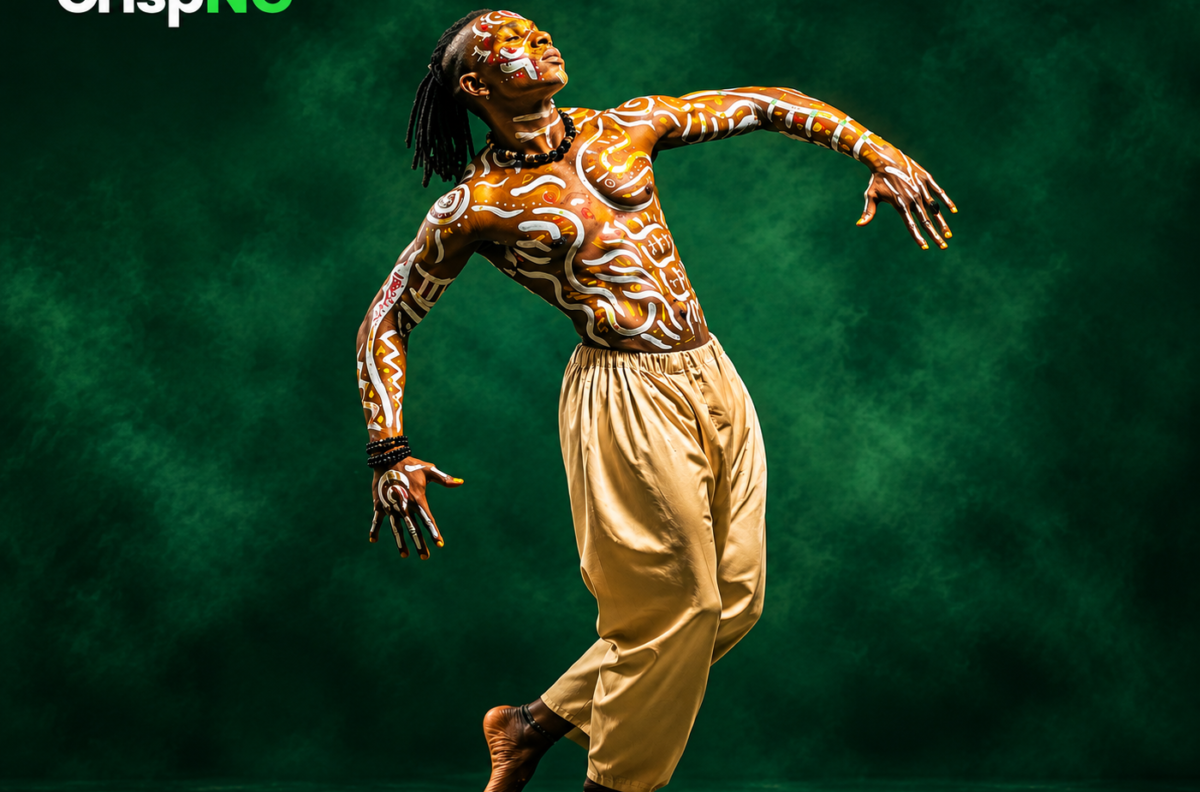
For 33-year-old Benjamin Daniel, popularly known as Bendancer, dancing is more than entertainment. It began as a childhood passion, became a profession and eventually took him to international stages, the New Afrika Shrine and a career teaching other young dancers.
Now, he is attempting one of the most physically demanding challenges of his career: dancing continuously for 168 hours, or seven days, in a bid to set a new world record.
Bendancer began the marathon on September 22 at Freedom Park in Lagos, drawing crowds of supporters and attracting widespread attention on social media. His target is 41 hours longer than the existing record for the longest individual dance marathon.
But before the seven-day challenge, there was a much longer journey that brought Bendancer to this point.
Who is Bendancer?
Bendancer is the stage name of Benjamin Daniel, a Nigerian contemporary dancer, choreographer and dance instructor who has spent about 18 years dancing professionally.
He grew up in northern Nigeria and developed an interest in dancing from a young age. In an interview with Simple Digital, Bendancer recalled that he started dancing when he was about 10.
His passion, however, was not immediately welcomed by his family.
According to Bendancer, his father wanted him to pursue professions such as medicine or law and did not initially see dancing as a viable career. The disagreement created tension between him and his family, but dance eventually became the path he chose.
Rather than abandon it, he decided to take the craft seriously.
That determination eventually turned a childhood interest into a professional career.
How did Bendancer become a professional dancer?
Bendancer has described his early years as difficult, particularly because of limited access to mentors, funding, the internet and opportunities.
In a May 2026 interview with The Guardian, he said he began dancing around the age of eight to 10 before gradually turning it into a profession.
He eventually travelled, performed on different stages and developed a reputation as a professional dancer and choreographer.
His career has included appearances at major Nigerian entertainment events, including Felabration and the Big Brother Naija finale, according to Voice of Nigeria.
His work has also taken him outside Nigeria.
For Bendancer, the progression from dancing for passion to earning a living from the craft also revealed the challenges facing professional dancers in Nigeria.
He later established Bendancer Academy International, with the aim of helping younger dancers develop both their artistic abilities and the business skills needed to build sustainable careers.
What is Bendancer Academy International?
Bendancer Academy International is part of his effort to create a more structured path for young dancers.
He has said the academy does not focus only on teaching dance movements. It also exposes students to the business side of the profession, including branding, contracts and production.
Bendancer has argued that dancers need to understand that professional success requires more than talent.
His experience also convinced him that young dancers should not have to face the same lack of information, mentorship and resources that he encountered when he was starting out.
The academy therefore became an extension of his own journey, allowing him to pass knowledge to younger performers.
How did Bendancer get to the New Afrika Shrine?
One of the significant stages in Bendancer’s career was his connection with the Kuti family and the New Afrika Shrine in Lagos.
In an interview with Simple Digital, Bendancer described becoming the first male dancer to perform with Made Kuti’s band as a major moment in his career.
He said there were doubts about having a male dancer perform at the Shrine, but Made Kuti supported him and allowed him to prove himself.
The experience gave Bendancer an opportunity to perform within a musical tradition strongly associated with Afrobeat and the Kuti family.
For him, dancing at the Shrine was therefore not simply about choreography. He viewed dance as another way of communicating culture, energy and ideas alongside music.
Why is Bendancer attempting a 168-hour dance marathon?
Bendancer’s current challenge did not come suddenly.
In his interview with The Guardian, he explained that he wanted to attempt the longest individual dance marathon because he believed accomplishing it could inspire people beyond the dance industry.
The challenge involves dancing for 168 hours, equivalent to seven days.
The current Guinness World Records listing for the longest dance marathon by an individual is held by India’s Srushti Sudhir Jagtap, who danced for 127 hours between May 29 and June 3, 2023.
Bendancer’s planned 168-hour attempt would therefore go 41 hours beyond that mark.
However, completing the physical challenge does not automatically mean a Guinness World Records title has been awarded. The BBC reported that Guinness World Records had not confirmed whether Bendancer’s attempt would qualify as an official record.
What makes Bendancer’s challenge different?
The marathon is not built around a single style of dance.
According to the BBC, Bendancer has incorporated several elements of Nigerian culture into the performance, with Afrobeats featuring prominently alongside genres such as fuji, jazz and zouk. He has also worn traditional Nigerian clothing, including agbada and dashiki.
His team said the intention was to showcase Nigeria’s cultural diversity rather than make the event solely a test of physical endurance.
That is particularly significant for a dancer whose career has been closely connected with Nigerian music and culture.
How is Bendancer surviving seven days of dancing?
A seven-day dance marathon places enormous physical demands on the body, so preparation has been an important part of the attempt.
Bendancer’s team said he underwent intensive fitness training before beginning the challenge. His preparation included changes to his diet, increased carbohydrate intake and cardiovascular conditioning.
During the marathon, he has been allowed five minutes of rest for every continuous hour of activity under the rules being followed for the attempt.
Rather than necessarily taking the five minutes immediately after every hour, he has reportedly accumulated some of his permitted rest and used it after dancing for several hours.
A medical team has also been present at Freedom Park to provide assistance when required.
Why has Bendancer’s challenge attracted attention?
The spectacle has drawn young Nigerians to Freedom Park, where supporters have gathered to watch and record the performance.
Videos from the event have also circulated widely on social media, turning the challenge into a major online talking point.
The marathon comes at a time when Nigerians have shown considerable interest in endurance-based world-record attempts.
In 2023, Hilda Baci’s cooking marathon in Lagos became a Guinness-recognised record and generated widespread interest in similar challenges. Guinness later said it received more than 1,500 new applications from Nigeria within two months of Baci’s attempt.
Bendancer’s challenge is now adding dance to that growing list of Nigerian record attempts.
For him, however, the seven-day performance represents more than a number on a record book.
It is the latest stage in a journey that began with a young boy who simply wanted to dance,