

Lindsay Clancy trial takes new turn as psychiatric treatment and postpartum psychosis face intense court scrutiny

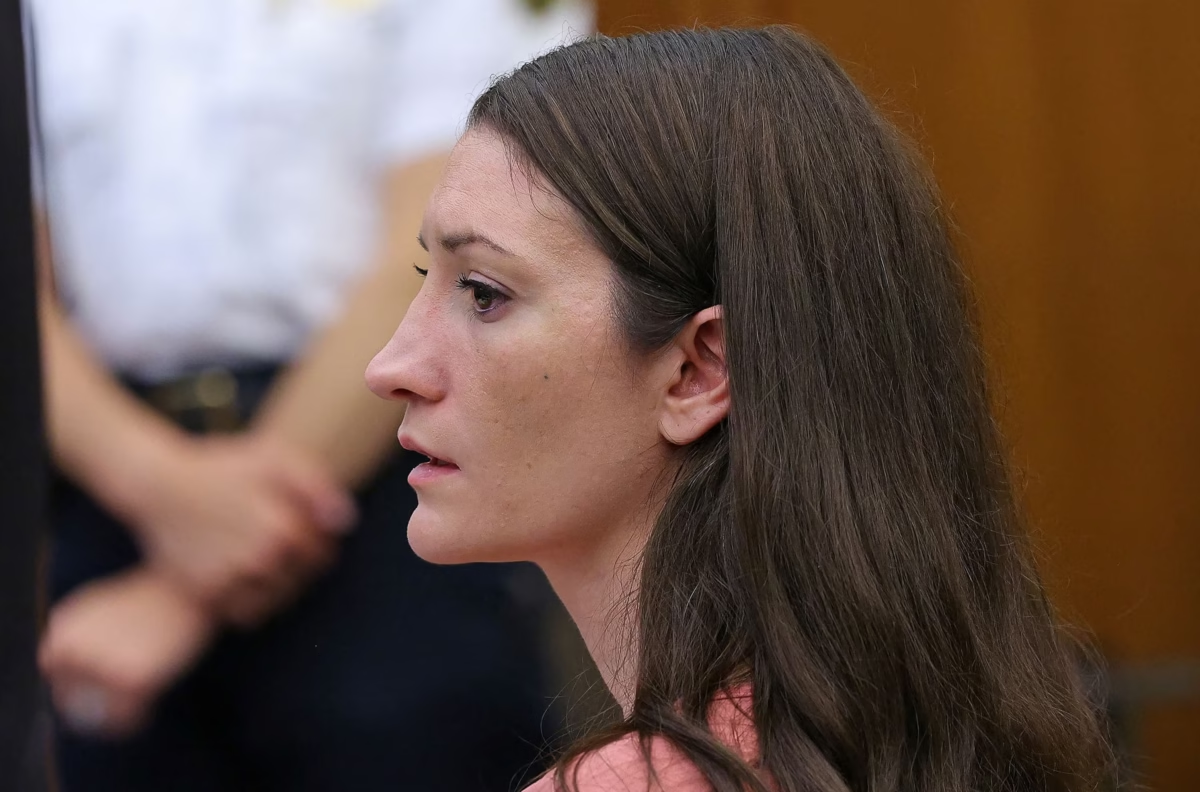
Lindsay Clancy attends her murder trial at Plymouth Superior Court, in Plymouth, Massachusetts, August 3, 2026. CREDIT: Greg Derr/Pool via Reuters
The Lindsay Clancy murder trial is continuing in Massachusetts, with psychiatric treatment and the role of postpartum psychosis at the center of the defense strategy.
Clancy, a Duxbury mother accused of killing her three young children in January 2023, is facing prosecutors who argue that she should be held criminally responsible. Her defense has presented a different account, arguing that postpartum psychosis severely affected her perception of reality at the time of the deaths.
The trial entered another significant phase Monday as psychiatrist Dr. Jennifer Tufts faced intensive questioning from defense attorney Kevin Reddington. Prosecutors are expected to continue presenting testimony Tuesday, with psychiatric nurse practitioner Julie Paul expected to return to the witness stand.
The proceedings are being closely watched because the case raises broader questions about maternal mental health, psychiatric treatment and criminal responsibility.
Who Is Lindsay Clancy?
Lindsay Clancy is a Massachusetts mother from Duxbury who is accused of killing her three young children in January 2023.
Clancy has admitted responsibility for the children’s deaths, while her defense disputes the prosecution’s interpretation of her mental state and argues that she was suffering from a severe psychiatric illness.
The defense has focused heavily on her mental-health treatment in the period leading up to the deaths. According to testimony and arguments presented in court, Clancy had contact with multiple mental-health professionals and received several psychiatric medications.
The prosecution, meanwhile, is seeking to establish that Clancy’s actions meet the legal standard for criminal responsibility.
Defense Challenges Psychiatrist Jennifer Tufts
One of the key developments in the trial has been the defense’s questioning of Dr. Jennifer Tufts, a psychiatrist who treated Clancy before the deaths.
On Monday, Reddington questioned Tufts about her experience, clinical judgment and the treatment decisions made during Clancy’s rapidly changing psychiatric care.
The questioning reflects a central element of the defense case: whether the medical professionals treating Clancy adequately recognized and responded to the seriousness of her condition.
Clancy and her former husband, Patrick Clancy, have also filed medical malpractice lawsuits involving Tufts and other professionals connected to her psychiatric care.
The malpractice claims are separate from the criminal case, and the existence of those lawsuits does not establish that any medical provider was legally responsible for the deaths.
Julie Paul Testimony Could Shed More Light on Clancy’s Treatment
Psychiatric nurse practitioner Julie Paul is another important witness in the proceedings.
Paul prescribed some of the medications Clancy received during a period of intensive psychiatric treatment in late 2022. Her testimony could provide jurors with additional information about Clancy’s symptoms, treatment history and interactions with mental-health professionals before the January 2023 incident.
The questions surrounding Clancy’s treatment are important to both sides because the defense is attempting to demonstrate that her psychiatric condition was severe and inadequately managed.
The prosecution will have an opportunity to challenge that interpretation and present its own evidence about Clancy’s mental state and actions.
What Is the Defense Argument in the Lindsay Clancy Case?
The Lindsay Clancy defense is centered on postpartum psychosis and the argument that severe mental illness affected her ability to understand reality and her actions.
Postpartum psychosis is a rare but serious psychiatric condition that can occur after childbirth. It can involve a profound loss of contact with reality and requires urgent medical attention.
The condition is different from the more common postpartum depression. While postpartum depression can be serious, postpartum psychosis involves psychotic symptoms and can develop rapidly.
In Clancy’s case, the defense is using the condition as part of its argument about her criminal responsibility.
It is important to distinguish between the defense’s claim and a medical or legal finding: the jury has not yet determined whether Clancy was legally responsible for the deaths.
READ ALSO
Jake Haro sentenced to over 30 years in prison for killing infant son and faking kidnapping
Why Postpartum Psychosis Has Become a Major Issue
The trial has generated renewed discussion about how postpartum mental illnesses are recognized and treated.
An opinion article published alongside the trial coverage argued that postpartum psychosis deserves greater recognition within psychiatric diagnostic systems and healthcare. The author, neurologist Dr. Barbara Decker, also described her own experience with postpartum mental illness and argued for improved access to specialized care.
The broader medical discussion does not determine the outcome of Clancy’s criminal case. It does, however, highlight why the proceedings have attracted attention beyond Massachusetts.
Experts and advocates have increasingly emphasized the importance of recognizing serious mental-health symptoms after childbirth and ensuring that mothers experiencing psychiatric emergencies can receive appropriate treatment quickly.
What Happens if Lindsay Clancy Is Acquitted?
An acquittal would not necessarily mean that Clancy would immediately return to the community.
According to the Boston Globe’s trial report, if jurors acquit Clancy, she could be transferred to a state psychiatric hospital and remain subject to periodic reviews concerning whether she could safely live in the community.
That distinction is important because an acquittal in a case involving a mental-health defense can have different consequences from a conventional finding that a defendant is simply free to leave court.
The exact outcome would depend on the jury’s verdict and subsequent legal and psychiatric proceedings.
Lindsay Clancy Trial: What Happens Next?
The trial is continuing with additional witness testimony, including testimony connected to Clancy’s psychiatric treatment.
The court is expected to hear further evidence as prosecutors and defense attorneys present their respective cases. Jurors will ultimately have to evaluate the evidence and determine whether the prosecution has established the required elements of the charges and whether the defense’s mental-health arguments meet the applicable legal standard.
The case remains unresolved, and any conclusion about Clancy’s ultimate criminal responsibility before the jury reaches a verdict would be premature.
Why the Lindsay Clancy Case Matters Beyond the Trial
The Lindsay Clancy case has become part of a wider conversation about postpartum mental health, psychiatric care and the criminal justice system.
The central legal question concerns Clancy’s responsibility under Massachusetts law. The broader public-health discussion asks a different question: whether healthcare systems are adequately equipped to identify mothers experiencing severe psychiatric symptoms before a crisis develops.
Those questions should not be confused. A court verdict will determine the legal outcome of one defendant, while medical research and public-health policy will continue examining how postpartum psychiatric disorders can be identified and treated.
For now, attention remains focused on the Plymouth Superior Court, where testimony is continuing and jurors are hearing evidence that could determine the outcome of one of Massachusetts’ most closely watched criminal trials.
FAQ
Who is Lindsay Clancy?
Lindsay Clancy is a Duxbury, Massachusetts mother facing a criminal trial over the deaths of her three children in January 2023. Her defense is centered on severe mental illness and postpartum psychosis.
What is the Lindsay Clancy trial about?
The trial concerns whether Clancy should be held criminally responsible for the deaths of her three children. The defense has focused on her psychiatric condition, while prosecutors argue that she is criminally responsible.
What is the latest in the Lindsay Clancy trial?
The trial is continuing with testimony from mental-health professionals. On Monday, Aug. 10, psychiatrist Dr. Jennifer Tufts faced intensive questioning from Clancy’s defense. Psychiatric nurse practitioner Julie Paul is expected to continue testimony as the proceedings move forward.
What is postpartum psychosis?
Postpartum psychosis is a rare and severe psychiatric condition that can develop after childbirth. It can involve a loss of contact with reality and requires urgent professional treatment.
Did Lindsay Clancy have postpartum psychosis?
Her defense argues that she suffered from postpartum psychosis. That remains a disputed issue in the criminal case and is ultimately relevant to the jury’s assessment of her legal responsibility.
Who is Dr. Jennifer Tufts?
Jennifer Tufts is the psychiatrist who treated Clancy before the deaths. She has been a significant witness because the defense is examining whether Clancy’s psychiatric care was appropriate and whether warning signs were adequately addressed.
Who is Julie Paul in the Lindsay Clancy case?
Julie Paul is a psychiatric nurse practitioner who prescribed some of the medications Clancy received during her psychiatric treatment. Her testimony is relevant to understanding Clancy’s treatment history.
Why is psychiatric treatment important in the Lindsay Clancy trial?
The defense is using Clancy’s psychiatric history to support its argument about her mental state and criminal responsibility. The treatment decisions made before the deaths are therefore a major area of courtroom scrutiny.
What does the prosecution argue in the Lindsay Clancy case?
Prosecutors contend that Clancy should be held criminally responsible for the deaths. The prosecution’s case seeks to establish the legal elements required for a conviction.
Could Lindsay Clancy be acquitted because of mental illness?
The defense can present evidence about mental illness and its effect on criminal responsibility. Whether that evidence satisfies the applicable legal standard is ultimately a matter for the court and jury.
What happens if Lindsay Clancy is acquitted?
An acquittal would not necessarily mean immediate release into the community. Based on the current trial reporting, she could be sent to a state psychiatric hospital for treatment and periodic reviews.
Why has the Lindsay Clancy case sparked discussion about maternal mental health?
The case has drawn attention to postpartum psychosis, psychiatric treatment after childbirth and the challenges of recognizing severe maternal mental illness.
Is postpartum psychosis the same as postpartum depression?
No. They are different conditions. Postpartum depression is much more common, while postpartum psychosis is rare and can involve a severe break from reality. Both require professional attention, but postpartum psychosis is considered a psychiatric emergency.
When will the Lindsay Clancy trial end?
There is no confirmed end date in the material provided. The trial is still ongoing, with additional witnesses expected to testify.
Has Lindsay Clancy been found guilty?
No final verdict has been reported in the supplied Aug. 11, 2026 coverage. The trial is ongoing, so her criminal responsibility remains for the jury to determine.
Why is the Lindsay Clancy trial receiving national attention?
The case combines a high-profile criminal prosecution with difficult questions surrounding postpartum psychosis, psychiatric treatment and the legal standards used to determine criminal responsibility.