

King Harald V dies at 89: What happened, who succeeds him and what Norway’s Royal succession means

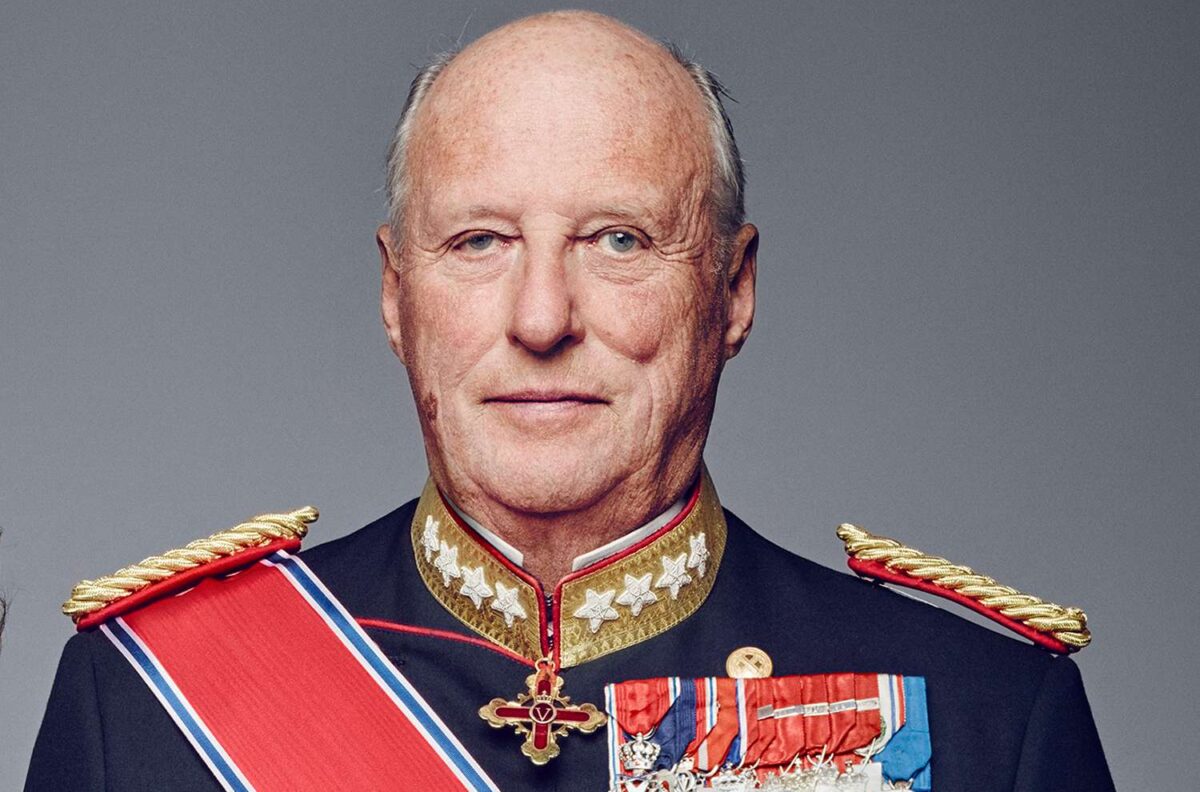
King Harald V of Norway. Credit: FEA for All
Norway has entered a historic period of mourning and royal transition following the death of King Harald V, who died at the age of 89 after more than three decades on the Norwegian throne.
The Norwegian Royal Court announced that King Harald died peacefully at Oslo University Hospital Rikshospitalet at 6:35 a.m. local time on Friday, August 28, 2026. His death immediately triggered the constitutional succession process, meaning Norway was not left without a monarch.
King Harald’s death marks the end of an era for Norway. The monarch had served as the country’s ceremonial head of state since 1991 and was Europe’s oldest reigning monarch before his death. He was widely known for helping modernize the Norwegian monarchy and for becoming an important national figure during periods of tragedy and uncertainty.
King Harald V death confirmed by Norwegian Royal Court
The Royal Court confirmed the death of King Harald V on August 28, stating that the monarch passed away peacefully at Rikshospitalet in Oslo.
His death followed a period of serious health challenges. Royal officials had previously announced that his health had deteriorated and that he was receiving treatment for a bacterial bloodstream infection.
King Harald had faced recurring health problems in recent years but remained committed to his role as monarch. He had previously resisted calls for abdication, maintaining that his position as king was a lifelong commitment.
Norway’s government and armed forces announced national mourning measures following his death, while tributes began arriving from political leaders, royal families and members of the public.
Who succeeds King Harald V? Crown Prince Haakon becomes Norway’s new king
The most immediate question following King Harald’s death has been: Who is the new King of Norway?
Under Norway’s constitutional succession system, the answer is automatic.
King Harald’s son, Crown Prince Haakon, succeeded to the throne immediately upon his father’s death. Reports identified the new monarch as King Haakon VIII, ending the period in which he served as Crown Prince and heir apparent.
Norway’s government explains that the country is never without a monarch. When a reigning king or queen dies, the next person in the constitutional line of succession automatically becomes the new monarch.
This means there is no waiting period for the new king to formally inherit the throne.
Unlike some royal traditions, Norway does not require a coronation for the succession to take effect.
READ ALSO
King Charles makes historic Buckingham Palace decision, ending a 189-year royal tradition
How Norway’s royal succession works after King Harald’s death
Norway’s royal succession is governed by Article 6 of the Norwegian Constitution.
The Norwegian Royal Court describes the succession system as linear, with direct descendants taking priority over more distant relatives. Older children generally take precedence over younger children in the line of succession.
A constitutional amendment introduced gender-neutral succession for those born after the change took effect. However, special transitional rules meant that Crown Prince Haakon retained his position ahead of his older sister, Princess Märtha Louise, because he was born before the amendment.
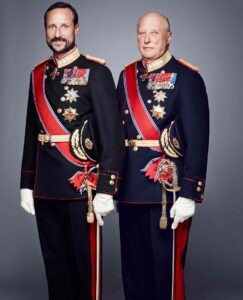
Following Haakon’s accession, Princess Ingrid Alexandra moves into an even more important position in the royal line of succession as the next-generation heir.
The transition therefore establishes a new royal order:
King Haakon VIII → Princess Ingrid Alexandra → Prince Sverre Magnus
The succession process provides continuity for Norway’s constitutional monarchy during a period of national mourning.
King Harald V’s legacy after more than three decades on the throne
King Harald became King of Norway in 1991 following the death of his father, King Olav V.
Born in 1937, Harald was historically significant even before becoming king. He was the first Norwegian-born royal heir in centuries and lived through some of the defining events of modern Norwegian history. During World War II, he spent time in exile in the United States while other members of the Norwegian royal family were based abroad during the Nazi occupation of Norway.
Throughout his reign, King Harald was credited with bringing a more modern and accessible image to the monarchy. His marriage to Sonja Haraldsen, a commoner and his longtime partner, represented a break from traditional expectations surrounding European royal marriages.
He also became known for his role as a unifying figure during moments of national grief, including Norway’s response to the 2011 terrorist attacks. His public messages during national crises helped strengthen his reputation as a monarch closely connected to the Norwegian people.
Norway mourns King Harald as royal family enters a new era
King Harald’s death comes during a challenging period for Norway’s royal family, which has faced increased public scrutiny in recent years.
Despite controversies surrounding other members of the royal family, Harald himself remained a widely respected figure and was regarded as one of the most popular figures within Norway’s constitutional system. International leaders and European royals have also paid tribute following his death.
King Charles III described Harald as a “dear cousin” while extending condolences to the Norwegian royal family, highlighting the close historical connections between the British and Norwegian royal houses.
As Norway mourns its former king, attention is now turning toward King Haakon VIII and the future of the Norwegian monarchy.
The constitutional transition may have happened automatically, but the change represents one of the most significant moments for Norway’s royal family in more than three decades.
Frequently Asked Questions About King Harald V’s Death and Norway’s Royal Succession
Did King Harald V of Norway die?
Yes. King Harald V of Norway died on August 28, 2026, at the age of 89. The Norwegian Royal Court said he died peacefully at Oslo University Hospital Rikshospitalet at 6:35 a.m. local time.
How old was King Harald V when he died?
King Harald V was 89 years old when he died.
What was the cause of King Harald V’s death?
King Harald V had experienced significant health problems before his death. Royal officials had said his condition had deteriorated and that he was receiving treatment for a bacterial infection in his bloodstream. The Royal Court confirmed that he later died peacefully in hospital.
Who is the new King of Norway after King Harald V’s death?
King Harald V’s son, Crown Prince Haakon, automatically succeeded him as Norway’s new monarch. Reports following the succession identified him as King Haakon VIII.
Did Crown Prince Haakon become king immediately?
Yes. Norway’s constitutional system ensures that the country is never without a monarch. The next person in the line of succession automatically becomes king or queen when the reigning monarch dies.
Will there be a coronation for Norway’s new king?
The succession itself does not depend on a coronation. The new monarch automatically succeeds to the throne under Norway’s constitutional system when the previous monarch dies.
Who is next in line to the Norwegian throne after King Haakon VIII?
Princess Ingrid Alexandra is a key next-generation heir in Norway’s line of succession. The Norwegian Royal Court identifies the succession as a direct and linear system governed by constitutional rules.
How does the Norwegian royal succession work?
Norway’s succession is based primarily on direct descent. Older children generally take priority over younger children, and constitutional rules govern who is eligible to inherit the throne. The system was amended in 1990 to introduce gender-neutral succession, though transitional rules applied to members of the royal family born before the amendment.
How long was King Harald V King of Norway?
King Harald V became monarch in 1991 and served for more than three decades before his death in 2026.
Why was King Harald V important to Norway?
King Harald V was widely associated with the modernization of Norway’s monarchy and was a prominent national figure during moments of crisis and mourning. He was especially remembered for his role in helping unite the country following the 2011 terrorist attacks.
Was King Harald V Europe’s oldest reigning monarch?
Yes. Before his death, King Harald V was regarded as Europe’s oldest reigning monarch.
Who was King Harald V married to?
King Harald V was married to Queen Sonja. Their relationship was historically significant because Sonja Haraldsen was not from a royal family, making their marriage an important departure from traditional expectations surrounding royal marriages.
Does the King of Norway have political power?
Norway is a constitutional monarchy. The monarch serves as the country’s head of state, while political power is exercised through Norway’s democratically elected institutions and government.
What happens in Norway when a monarch dies?
When a Norwegian monarch dies, the next eligible person in the line of succession automatically becomes the new monarch. The country observes official mourning procedures while constitutional and ceremonial arrangements are made for the transition.