

John Sarcone ruled ‘not lawfully serving’ as U.S. Attorney: What to know

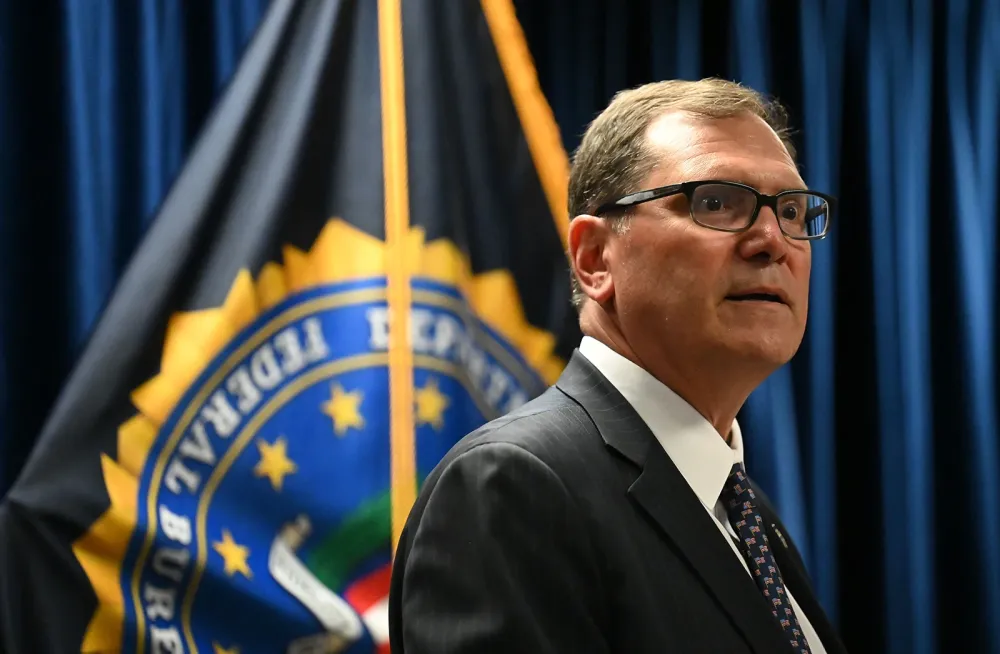
John A. Sarcone III, first assistant U.S. attorney for the Northern District of New York, during a news conference at the FBI Field Office in Albany, New York, on June 23, 2026. CREDIT: Will Waldron / Albany Times Union via Getty Images
A federal appeals court has upheld the disqualification of John Sarcone as acting U.S. attorney for the Northern District of New York, ruling that he was not lawfully serving in the position when he obtained subpoenas targeting New York Attorney General Letitia James’s office.
The 2nd U.S. Circuit Court of Appeals ruled 2-1 on Friday, August 21, affirming a lower court decision that had both quashed the subpoenas and disqualified Sarcone from the investigations.
The ruling has created another legal challenge for the Trump administration’s approach to filling senior federal prosecutor positions without Senate confirmation. The Justice Department has already said it intends to take the case to the Supreme Court, setting up a potentially significant battle over the limits of executive authority.
The case centers on the Federal Vacancies Reform Act (FVRA), the federal law governing how vacant executive positions can be temporarily filled.
Why Was John Sarcone Disqualified?
The dispute over Sarcone began after he was appointed interim U.S. attorney for the Northern District of New York in March 2025.
According to the court filings described by The Hill and MS NOW, Sarcone initially received a 120-day appointment. When that period expired, federal district judges declined to extend his tenure indefinitely.
The Trump administration then changed his position, with then-Attorney General Pam Bondi appointing him as a special attorney and first assistant U.S. attorney. That arrangement was used to designate Sarcone as acting U.S. attorney under the Federal Vacancies Reform Act.
The appeals court majority rejected that interpretation.
Judges Guido Calabresi and Maria Araújo Kahn concluded that the FVRA allows a first assistant to automatically assume an acting position only when that individual was already serving as first assistant when the vacancy occurred.
The court said appointing someone as first assistant after the vacancy had already happened did not trigger the automatic succession provision.
What Did John Sarcone’s Subpoenas Target?
The legal dispute gained attention because Sarcone issued subpoenas involving Letitia James’s office, including matters connected to investigations involving Donald Trump, his family business and the National Rifle Association.
James challenged Sarcone’s authority to issue the subpoenas.
A federal district judge later blocked the subpoenas and disqualified Sarcone, concluding that the Justice Department’s method for keeping him in the acting position violated federal law.
The appeals court has now upheld that decision.
The ruling does not simply concern the particular subpoenas. It also addresses a broader question about how the executive branch can fill vacant federal prosecutorial positions when Senate confirmation has not occurred.
What Is the Federal Vacancies Reform Act?
The Federal Vacancies Reform Act provides rules for temporarily filling certain vacant positions in the federal government that normally require presidential appointment and Senate confirmation.
Under the law, the first assistant to a Senate-confirmed official can automatically perform the duties of the vacant position under certain circumstances.
The legal question in Sarcone’s case was whether the administration could create that automatic succession situation by appointing him as first assistant after the vacancy had already occurred.
The 2nd Circuit majority said it could not.
The court’s interpretation could have consequences beyond Sarcone because the Trump administration has faced similar challenges involving acting U.S. attorneys in other states.
READ ALSO
Who is Letitia James? Trump’s adversary and NY Attorney General indicted on Federal Charges
DOJ Plans Supreme Court Appeal
The Justice Department has rejected the appeals court’s conclusion and said it intends to seek review by the U.S. Supreme Court.
A DOJ spokesperson said the department disagreed with the decision and planned to take the case to the nation’s highest court.
That means the dispute could become an important test of the administration’s authority to install acting federal prosecutors without going through the traditional Senate confirmation process.
The Supreme Court would have to decide whether the lower courts correctly interpreted the Federal Vacancies Reform Act and whether the administration’s approach to appointing acting prosecutors complied with the statute.
Two Judges Backed the Ruling, Trump-Appointed Judge Dissented
The 2-1 appeals court decision reflected a sharp disagreement among the judges.
Judges Guido Calabresi, a Clinton appointee, and Maria Araújo Kahn, a Biden appointee, formed the majority.
Judge Michael Park, who was nominated by Trump during his first presidency, dissented.
Park argued that Sarcone had legal authority to pursue the grand jury subpoenas. His dissent maintained that the majority’s interpretation placed new restrictions on executive authority and upset the balance Congress established through the vacancies law.
The disagreement highlights the broader constitutional and statutory questions surrounding temporary federal appointments.
John Sarcone Ruling Adds to Trump Administration Legal Setbacks
The Sarcone case comes amid a series of court rulings challenging the Trump administration’s appointment of acting U.S. attorneys.
The 2nd Circuit decision follows rulings involving other prosecutors, including Alina Habba in New Jersey and Sigal Chattah in Nevada, where courts have also questioned whether acting appointments complied with federal law.
The pattern has increased scrutiny of the administration’s strategy for installing preferred prosecutors while avoiding lengthy Senate confirmation battles.
For the Justice Department, the Supreme Court appeal could provide an opportunity to establish a clearer national standard for how acting U.S. attorneys can be appointed.
For critics of the administration’s approach, the ruling reinforces the argument that federal appointment powers must remain within the limits established by Congress.
What Happens to the Sarcone Case Now?
The immediate next step is expected to be the Justice Department’s effort to bring the dispute before the Supreme Court.
The appeals court’s ruling remains significant regardless of whether the Supreme Court agrees to hear the case. For now, Sarcone’s authority to serve as acting U.S. attorney has been rejected by the lower courts, and the subpoenas he obtained were quashed.
The case could ultimately determine how the Federal Vacancies Reform Act applies to acting federal prosecutors and whether administrations can use appointment changes to place individuals in vacant positions after those vacancies have already occurred.
With the Justice Department preparing for a Supreme Court fight, John Sarcone’s case could become a major test of presidential appointment power and the limits of executive authority.
FAQ
Who is John Sarcone?
John A. Sarcone III is a federal prosecutor who served as first assistant U.S. attorney and was appointed interim U.S. attorney for the Northern District of New York in 2025. His authority to continue serving as acting U.S. attorney became the subject of a legal challenge.
Why was John Sarcone disqualified as acting U.S. attorney?
A federal appeals court ruled that Sarcone was not lawfully serving as acting U.S. attorney when he obtained subpoenas targeting the New York attorney general’s office. The court found that the administration’s method of placing him in the acting position did not comply with the Federal Vacancies Reform Act.
What did John Sarcone do that led to the lawsuit?
Sarcone obtained grand jury subpoenas seeking records from New York Attorney General Letitia James’s office. The subpoenas were connected to investigations involving James’s office, Donald Trump and the National Rifle Association.
What did the appeals court rule about John Sarcone?
The 2nd U.S. Circuit Court of Appeals ruled 2-1 that Sarcone was not legally serving as acting U.S. attorney when he obtained the subpoenas. The court upheld a lower court ruling that quashed the subpoenas and disqualified him from the investigations.
What is the Federal Vacancies Reform Act?
The Federal Vacancies Reform Act, commonly known as the FVRA, establishes rules for temporarily filling certain vacant federal positions that normally require presidential appointment and Senate confirmation.
Why is the Federal Vacancies Reform Act important in the Sarcone case?
The central issue is whether someone appointed as a first assistant after a vacancy occurs can automatically assume the acting position under the FVRA. The 2nd Circuit majority concluded that the law does not permit that arrangement.
Is John Sarcone still acting U.S. attorney?
The appeals court has ruled that Sarcone was not lawfully serving as acting U.S. attorney when he obtained the disputed subpoenas. The Justice Department plans to challenge the ruling before the Supreme Court.
Is the Justice Department appealing the John Sarcone ruling?
Yes. The Justice Department said it intends to take the case to the Supreme Court, arguing that it disagrees with the appeals court’s decision.
What happened to the subpoenas issued by John Sarcone?
A lower federal court quashed the subpoenas, and the 2nd Circuit upheld that decision as part of its ruling against Sarcone.
Who is Letitia James in the John Sarcone case?
Letitia James is New York’s attorney general. Her office challenged Sarcone’s authority after receiving subpoenas connected to investigations involving Trump and the National Rifle Association.
Who ruled against John Sarcone?
Judges Guido Calabresi and Maria Araújo Kahn formed the 2nd Circuit majority that ruled against Sarcone. Judge Michael Park dissented.
Did all the judges agree with the John Sarcone ruling?
No. The decision was 2-1. Judge Michael Park disagreed with the majority and argued that Sarcone had legal authority to seek the grand jury subpoenas.
Could the Supreme Court overturn the John Sarcone ruling?
It is possible, but the Supreme Court would first need to decide whether to hear the case. If the justices take it up, they could ultimately affirm, reverse or otherwise modify the lower court’s ruling.
Why does the John Sarcone case matter?
The case could have implications for presidential appointment power, acting U.S. attorneys and the Federal Vacancies Reform Act. A Supreme Court ruling could clarify how administrations can temporarily fill senior federal prosecutorial positions without Senate confirmation.
Are other Trump-appointed U.S. attorneys facing similar legal challenges?
Yes. The Sarcone decision follows other court rulings questioning the legality of acting U.S. attorney appointments made during the Trump administration, including cases involving prosecutors in New Jersey and Nevada.
What happens next in the John Sarcone case?
The Justice Department is expected to pursue its planned Supreme Court challenge. Until further action changes the legal position, the 2nd Circuit’s ruling remains the latest major decision concerning Sarcone’s authority and the disputed subpoenas.