

Japan disaster agency launch: What households should do now

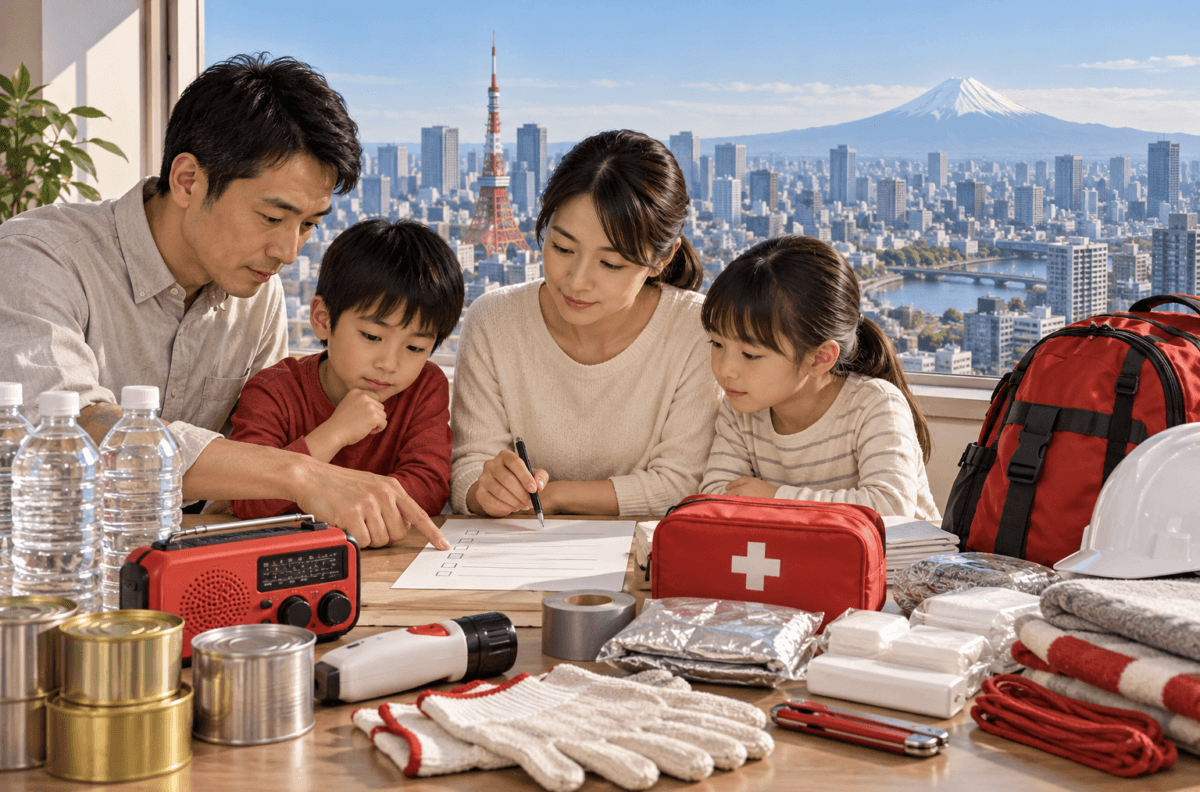
Conceptual illustration: a household checks emergency supplies; this image does not depict a real household or event.
Japan’s new disaster agency has opened with a call for households to check quake safety, secure furniture and prepare emergency supplies, as the government brings national disaster planning under one coordinating body.
The Japan disaster agency began work on 2 November, creating a central body for prevention, emergency response and recovery as the country faces earthquakes, tsunamis, typhoons and volcanic hazards. The agency opened with more than 350 staff, according to the Associated Press.
For residents and visitors, the immediate question is practical: where should people go, how will they receive alerts and what should they keep ready? The new office changes how national departments coordinate disaster work; household preparation still shapes how quickly people can act when a warning arrives.
Japan disaster agency: what it will coordinate
The agency opened under the Cabinet Office after legislation established a dedicated national organisation. Its remit covers prevention, emergency response and reconstruction, bringing responsibilities that were spread across government into a single coordinating structure. Japan’s Prime Minister’s Office recorded the launch ceremony in its official report.
NHK World-Japan reported that the agency has about 350 staff, roughly 1.6 times the size of the former disaster management division, and plans regional offices by July 2028. The Library of Congress says the law places the organisation under the Cabinet, makes the prime minister its top official and authorises coordination and recommendations across government.
The structure matters during a compound emergency, when an earthquake can trigger a tsunami warning, transport disruption and extended shelter needs at once. A central agency can align national planning, while local authorities continue to manage nearby evacuation sites and residents’ immediate instructions.
Why Japan is expanding disaster planning
Japan faces several high-impact hazards. Government estimates cited by the Associated Press put the potential toll of a severe Nankai Trough earthquake at 298,000 deaths, with 6.5 million people requiring evacuation and 2.35 million homes affected. Separate estimates for a major Tokyo earthquake include 18,000 deaths and 4.1 million evacuees.
These figures describe planning scenarios rather than a date for a future disaster. They help authorities estimate shelter, transport, medical and supply needs at a scale that individual municipalities could struggle to meet alone. The new agency follows legislation enacted in July and years of discussion about improving national readiness, as The Japan Times reported.
For international readers, Japan’s approach shows how national coordination and simple household actions work together. Visitors should also learn local alert sounds and evacuation signs, since warnings may arrive quickly and in several languages depending on the area.
What households and visitors should prepare
Japan’s disaster agency asks households to check their building’s earthquake resistance, secure heavy furniture, review nearby evacuation sites and practise routes. Its preparedness guidance recommends keeping food, drinking water and portable toilets for at least three days. The Japan Times reports officials encourage households to build towards a week where possible.
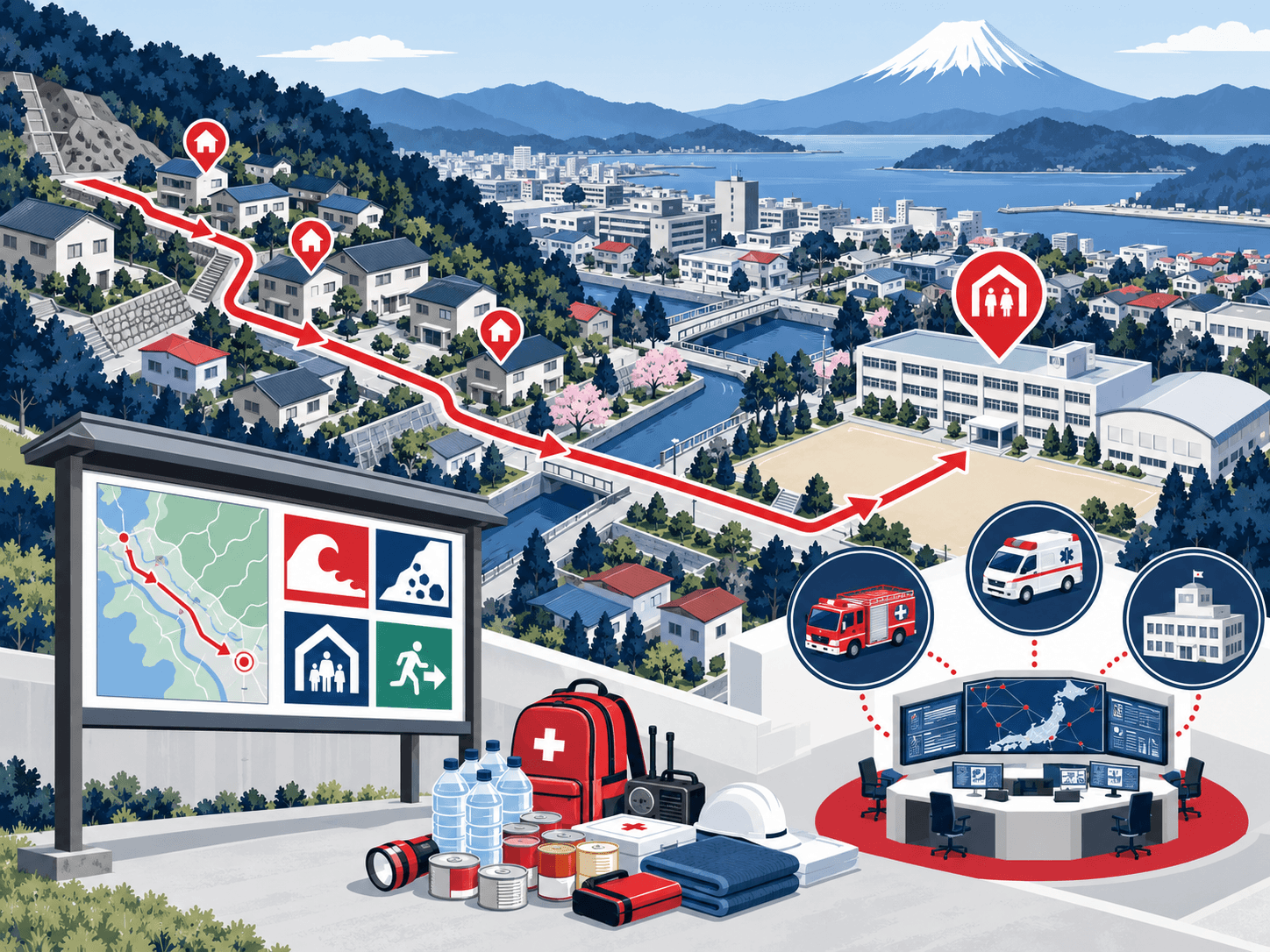
Start by checking the route from each room to an exit, then identify a second way out in case debris blocks the first. Keep shoes, a torch, a battery-powered radio, medicines, copies of essential documents and a charged power bank where household members can reach them.
Travellers can save their accommodation address, locate the nearest designated shelter and check their embassy’s emergency contact details before setting out. During an official alert, follow local authority instructions and move away from the coast when a tsunami warning calls for evacuation.
Households with children, older relatives, mobility needs or pets should adapt supplies and routes to those needs. Check stored food and water regularly, and agree how family members will reconnect if phone networks become congested.
Japan disaster agency: frequently asked questions
When did Japan’s new disaster agency begin work?
The National Disaster Management Agency launched on 2 November 2026, following legislation that created the organisation earlier in the year.
What will the agency do?
It will coordinate national disaster prevention, emergency response and reconstruction across government, while local authorities continue to manage community-level measures.
How much emergency food and water should households store?
Official guidance calls for at least three days of food, drinking water and portable toilets. The Japan Times reports officials recommend building supplies towards a week where households can.
What should visitors to Japan prepare?
Visitors should learn local evacuation signs, identify nearby shelters, keep essential medicines and documents accessible, and follow local authority instructions during an emergency.