

Iran captures U.S. underwater drone in Strait of Hormuz: Here’s what Washington says happened

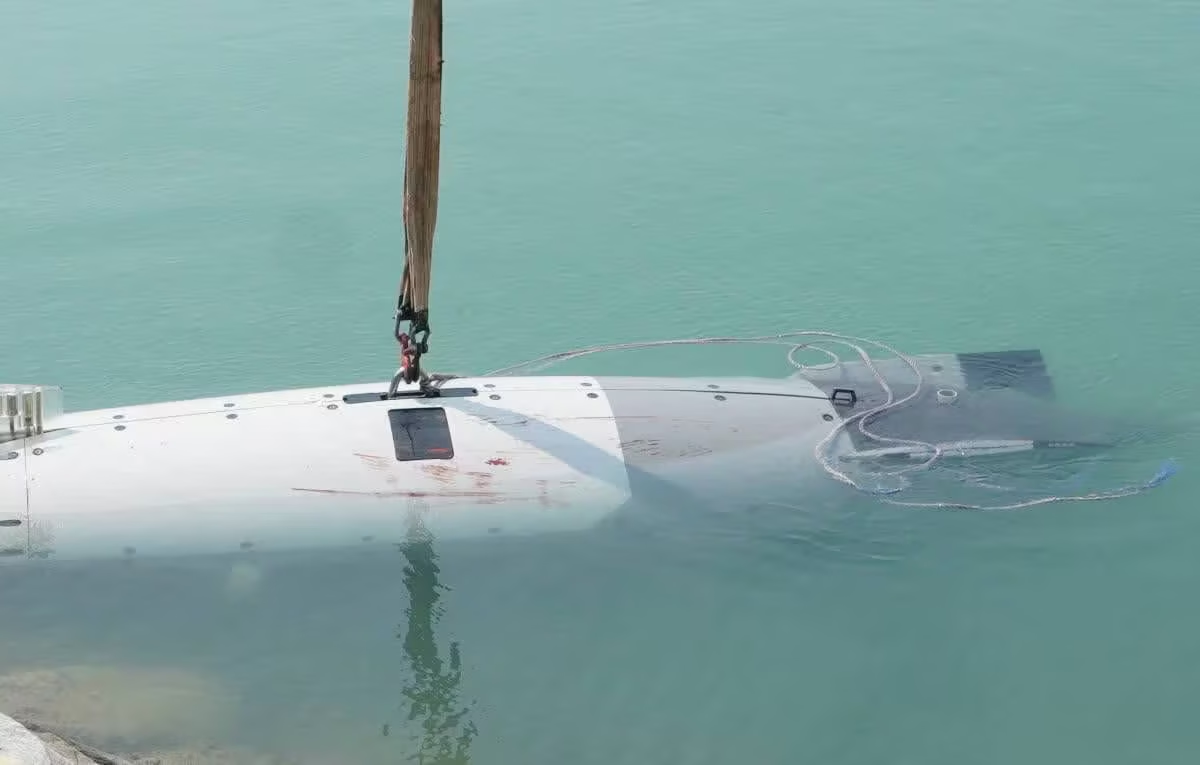
An unmanned U.S. submersible that Iran’s Islamic Revolutionary Guard Corps says it captured at the entrance of the Strait of Hormuz, at an undisclosed location in Iran, in this picture obtained on Sept. 8, 2026. (IRGC/West Asia News Agency/handout via Reuters)
Iran says it has captured a U.S. unmanned underwater vehicle near the entrance to the Strait of Hormuz, exposing a new dimension of the escalating confrontation between Washington and Tehran.
The Islamic Revolutionary Guard Corps said Tuesday that its naval forces seized what Iranian state media identified as a Dive-LD autonomous underwater vehicle. The United States, however, offered a sharply different account, saying the underwater drone had malfunctioned more than a day earlier while surveying regional waters and was not carrying sensitive equipment.
The dispute over what happened to the vehicle matters beyond the loss of one unmanned system. The incident provides a rare look at the expanding role of autonomous underwater technology in U.S. military operations around one of the world’s most strategically important waterways.
Iran Says It Captured a U.S. Underwater Drone
Iran’s Revolutionary Guards Navy said it had captured an American unmanned submarine at the entrance to the Strait of Hormuz.
Iranian state media described the vehicle as a Dive-LD, a large autonomous underwater vehicle manufactured by California-based defense technology company Anduril.
The IRGC portrayed the capture as a significant military achievement, saying the submarine was equipped with advanced technologies. Images released through Iranian state media appeared to show the unmanned submersible after it was taken into Iranian possession.
Washington’s description was considerably less dramatic.
A Pentagon spokesperson said the underwater drone had malfunctioned more than a day before Iran’s announcement. According to the Pentagon, it had been conducting a survey of regional waters as part of ongoing U.S. military operations.
The Pentagon also said the defective vehicle was an older model and did not collect sensitive data or carry classified sonar or radar equipment.
That distinction is important. If Washington’s account is accurate, Iran may have captured a valuable piece of military hardware without obtaining the kind of classified intelligence that could significantly compromise U.S. operations.
What Is the Dive-LD Underwater Drone?
The Dive-LD is an autonomous underwater vehicle designed to operate without a crew onboard.
Anduril says the system can perform missions including mine countermeasures, seabed mapping, intelligence gathering and inspection of underwater infrastructure such as pipelines and cables.
The vehicle is approximately 19 feet, or 5.8 meters, long.
Its capabilities demonstrate why underwater drones are becoming increasingly important to modern naval warfare. Unlike conventional submarines, autonomous underwater vehicles can be deployed for surveillance and other missions without placing sailors directly in danger.
According to Anduril, the Dive-LD can remain underwater for as long as 10 days without returning to base and can operate at depths of up to 6,000 meters, or roughly 19,700 feet.
DefenseScoop reported in 2024 that individual Dive-LD units cost around $2.5 million.
The relatively low cost compared with crewed military platforms is part of the attraction. A system designed to operate in dangerous waters can potentially be lost without putting a submarine crew at risk.
Why Anduril Says Losing the Drone Was an Expected Risk
Anduril confirmed that one of its vessels had been lost but sought to put the incident in context.
The company described Dive-LD as an “attritable” autonomous system, meaning it is designed from the beginning to operate in hazardous environments where losing the vehicle is considered a possibility.
That concept is becoming increasingly important in U.S. military planning.
The United States is investing heavily in autonomous naval platforms that can monitor large areas, collect information and track adversary activity while reducing the risks faced by military personnel.
The loss of an unmanned vehicle can still provide an adversary with valuable opportunities to study its design, construction and capabilities. But the Pentagon’s claim that this particular vehicle was an older model without sensitive collection equipment suggests Washington does not view the incident as a major intelligence breach.
Why the Strait of Hormuz Makes the Incident More Important
The location of the incident is arguably more significant than the price or technical specifications of the drone.
The Strait of Hormuz is a narrow waterway linking the Persian Gulf with the Gulf of Oman and the wider Arabian Sea. It is one of the world’s most important routes for energy shipments and has become a major flashpoint during the confrontation between Iran and the United States.
A military underwater drone operating around the strait could be involved in mapping the seabed, monitoring underwater infrastructure, identifying potential threats or supporting broader maritime operations.
That makes autonomous underwater systems particularly useful in an environment where mines, submarines and other underwater threats could complicate naval operations.
Iran’s ability to locate and take possession of a U.S. underwater vehicle could also give Tehran an opportunity to examine American autonomous technology, even if the Pentagon insists the drone did not contain classified equipment.
READ ALSO
US strikes Iranian oil tankers: Could this send global oil prices even higher?
Washington’s Response Shows Why the Pentagon Is Downplaying It
The Pentagon’s response appears designed to draw a line between the loss of the physical vehicle and the loss of sensitive military information.
Rather than describing the incident as an Iranian seizure of an active U.S. intelligence platform, the Pentagon characterized it as a malfunction involving an older unmanned system.
That does not mean the vehicle has no military value.
A physical platform can reveal engineering choices, sensors, communications equipment and other design features even when its operators believe it is no longer carrying sensitive information. The extent of what Iran can learn from the captured vehicle will depend on its condition and what equipment remained onboard.
Neither the Pentagon nor Anduril indicated that the loss compromised classified information.
The Bigger U.S. Military Shift Toward Unmanned Naval Systems
The incident comes as the U.S. military expands its use of autonomous systems across air, land and maritime operations.
Underwater drones offer an especially attractive capability because oceans are difficult and expensive to monitor continuously.
A crewed submarine is enormously more complicated and costly to deploy. An autonomous vehicle can potentially spend days operating independently, collect information and be sent into areas where sending sailors would be considered too risky.
The technology is also becoming increasingly relevant to the protection of underwater infrastructure.
Pipelines, communications cables and other seabed infrastructure have become strategic concerns as governments worry about sabotage and surveillance beneath the ocean.
The Dive-LD’s reported ability to conduct seabed mapping and infrastructure inspections illustrates how military underwater drones can serve multiple purposes beyond traditional combat missions.
Could Iran Use the Captured Drone for Intelligence?
That remains unclear.
The Pentagon says the vehicle did not collect sensitive information and did not carry classified sonar or radar equipment. Iran, meanwhile, has presented the capture as evidence that it successfully intercepted an advanced American military system.
The physical vehicle could still have intelligence value if Iranian authorities are able to examine its hardware.
There is also a difference between obtaining sensitive data and studying the technology itself. Even without classified information stored inside a vehicle, examining its construction could potentially reveal useful details about how autonomous underwater systems are designed and operated.
The available information does not establish how much Iran may have learned from the captured vehicle.
What Happens Next in the Strait of Hormuz?
The immediate significance of the incident will depend partly on whether it remains an isolated equipment loss or becomes part of a wider pattern of U.S.-Iranian confrontation at sea.
For Washington, the priority will be maintaining surveillance and naval operations around the Strait of Hormuz while limiting the risk to crewed vessels.
For Tehran, the capture gives the IRGC an opportunity to demonstrate that American unmanned systems are not necessarily beyond Iranian reach.
The episode also highlights an emerging reality of modern warfare: some of the most important military encounters may increasingly involve machines rather than sailors.
The United States can accept the loss of an unmanned vehicle more readily than the loss of a crewed submarine. Yet when an adversary captures the technology intact, the incident can still carry political, military and intelligence consequences.
For now, Washington is emphasizing that the drone malfunctioned and was an older model without sensitive equipment. Iran is emphasizing the sophistication of what it says it captured.
The truth about the vehicle’s intelligence value may take considerably longer to emerge.
Frequently Asked Questions
Did Iran really capture a U.S. underwater drone?
Iran says its Revolutionary Guards captured a U.S. unmanned underwater vehicle near the entrance to the Strait of Hormuz. The Pentagon confirmed the loss of an underwater drone but said it had malfunctioned more than a day earlier.
What type of U.S. drone did Iran capture?
Iranian state media identified the vehicle as a Dive-LD autonomous underwater vehicle made by Anduril.
What is the Dive-LD used for?
The Dive-LD is designed for underwater missions including mine countermeasures, seabed mapping, intelligence gathering and inspection of underwater infrastructure.
How deep can the Dive-LD go?
Anduril says the Dive-LD is designed to dive to depths of up to 6,000 meters, or about 19,700 feet.
How long can the Dive-LD operate underwater?
According to Anduril, the autonomous underwater vehicle can operate for up to 10 days without returning to base.
Did the captured drone contain classified U.S. information?
The Pentagon says the malfunctioning drone was an older model and did not collect sensitive data or carry classified sonar or radar equipment.
How much does a Dive-LD cost?
DefenseScoop reported in 2024 that a Dive-LD unit cost about $2.5 million.
Why is the Strait of Hormuz important?
The Strait of Hormuz is a strategically important maritime passage connecting the Persian Gulf with the Gulf of Oman. It is critical to global energy shipping and has become a major point of tension between Iran and the United States.
Can Iran learn anything from the captured drone?
The Pentagon says the vehicle did not contain sensitive data, but physically examining an unmanned military system could potentially provide information about its hardware and design. The extent of any intelligence gain is not publicly known.
Does the incident mean the U.S. lost control of its underwater operations?
Not necessarily. The available information concerns the loss of one autonomous vehicle. It does not establish that Iran has disrupted the broader U.S. underwater surveillance or naval operation in the region.