

How Police Inspector was Killed in Imo – and What this Means for Average Nigerians

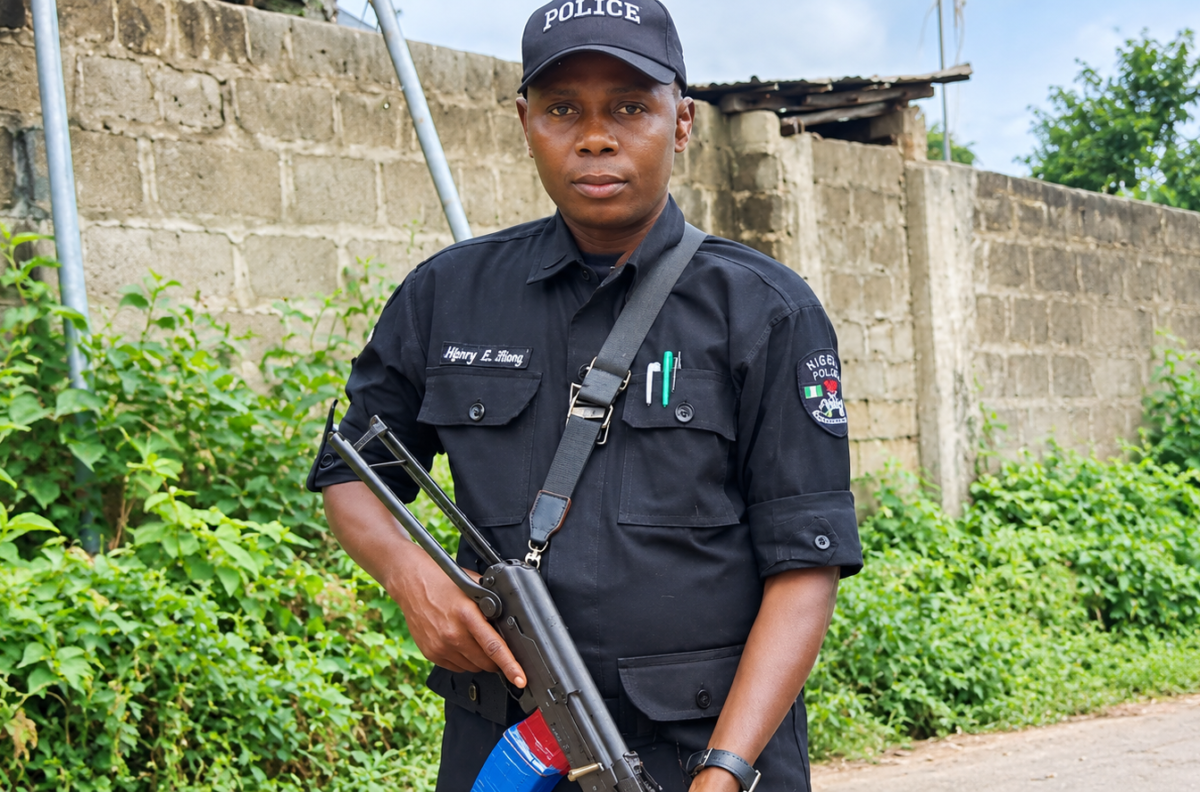
The killing of a police inspector while on guard duty at the residence of a serving Imo State commissioner has raised questions about security arrangements around public officials and what the incident means for ordinary Nigerians.
Inspector Henry Effiong, attached to the Imo State Police Command, was reportedly killed in the early hours of Monday at the residence of the Commissioner for Trade and Investment, Bar Rex Anunobi, in New Owerri.
Effiong was deployed to the residence as part of his official security duties.
But the assignment ended with his death, as the officer was reportedly attacked inside the property and his service rifle and mobile phone were taken.
The circumstances surrounding the incident have raised questions about how the attackers gained access to the residence, how they overpowered an armed police officer and whether the existing security arrangement failed.
How the police inspector was killed
According to a police situation report obtained by SaharaReporters, the incident was discovered after the commissioner’s housekeeper, identified as Solomon Uzobu, found Effiong dead.
The police were reportedly contacted at about 8am, after which officers from the New Owerri Police Division visited the residence.
Effiong was found dead inside his room, with his legs reportedly tied and his body positioned towards the bathing area.
A sharp object suspected to be a machete was believed to have been used in the attack.
Investigators also recovered an empty magazine and a walkie-talkie at the scene.
However, the officer’s service rifle and mobile phone were reportedly missing.
The missing firearm has become an important part of the investigation because of the possibility that it could be used in another criminal operation if it is not recovered.
How did the attackers enter the residence?
One of the biggest unanswered questions is how the attackers were able to breach a property where a police officer had been deployed for security.
According to the police report, a security guard identified as Genesis reportedly disappeared after the incident.
The guard allegedly packed his belongings, switched off his phone and left the area.
Investigators reportedly suspect that he may have assisted the attackers in gaining access to the residence.
However, that remains an allegation and does not establish that the guard was involved in the killing.
His role, if any, will have to be determined through the police investigation.
The circumstances nevertheless raise questions about whether the attackers exploited a weakness in the residence’s security or had prior knowledge of the officer’s routine and the property’s security arrangements.
What does the killing mean for ordinary Nigerians?
The significance of the incident extends beyond the death of one police officer.
Effiong was not reportedly killed while responding to a robbery or confronting criminals on the streets. He was at a residence where he had been deployed as part of his official duties.
That makes the incident particularly concerning.
The average Nigerian does not have an armed police officer stationed outside their home. Many rely on locked doors, neighbourhood vigilance, local security groups and emergency calls when faced with threats.
If attackers could allegedly gain access to a property protected by a police officer, kill the officer and leave with his firearm, it naturally raises questions about the level of protection available to ordinary residents.
This does not mean police officers are expected to be immune from attacks. Officers remain vulnerable to the same violence affecting the wider population.
But a police officer being killed while carrying out an official security assignment raises questions about the effectiveness of the system around him.
The stolen rifle creates another security concern
Effiong’s death is not the only concern arising from the incident.
His service rifle was reportedly taken from the scene.
The recovery of the weapon should therefore be a priority for investigators.
A firearm stolen from a police officer could potentially be used in another criminal operation, making its recovery important not only to the investigation into Effiong’s death but also to public safety.
Investigators will need to establish who took the weapon, where it was taken and whether the attackers had a specific reason for targeting the officer and his firearm.
The missing rifle could also provide clues about whether the attack was planned.
What the incident exposes about Nigeria’s security system
Nigeria’s security problems are often discussed through cases of terrorism, kidnapping, banditry and communal violence.
But attacks on security personnel can also expose weaknesses within the country’s security system.
The Imo incident raises questions about security deployment, intelligence gathering, access control and communication.
If investigators establish that the attackers had prior knowledge of the residence or the officer’s routine, that could point to a level of planning that goes beyond a random attack.
Authorities therefore need to determine not only who killed Effiong, but also how the attackers gained access to the property and whether anyone helped them.
Those answers could be important in preventing similar attacks on other security personnel and public officials.
Nigerians need more than investigations after attacks
The Imo State Police Command has launched an investigation into the incident and is expected to pursue those responsible for Effiong’s death and recover his stolen weapon.
But the case also presents an opportunity to examine the security arrangement that allowed the attack to happen.
For ordinary Nigerians, security is not simply about what happens after an attack.
It is about whether threats can be detected early, whether security personnel are adequately protected while carrying out their duties and whether criminals can be prevented from exploiting weaknesses in the system.
The killing of Inspector Effiong therefore raises a question that goes beyond the commissioner’s residence in New Owerri.
If a police officer assigned to protect a public official can be killed at his post, what does that say about the protection available to the average Nigerian?