

Ibrahim Idris: 7 things to know about former Kogi governor who died at 77

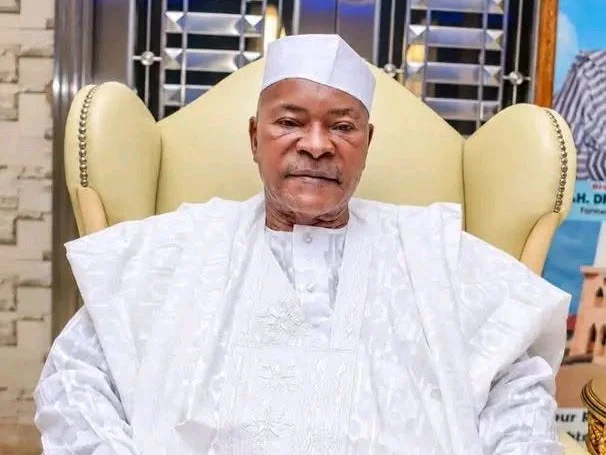
Former Kogi State Governor Ibrahim Idris has died in the United Kingdom at the age of 77, bringing to an end the life of a businessman-turned-politician who governed the North-Central state for nearly nine years.
Idris, popularly known as Ibro, died on Sunday, September 20, 2026, according to his family. He governed Kogi from 2003 until January 2012, first winning the governorship election in 2003 and later returning to office after a court-ordered rerun in 2008.
Following his death, Kogi State Governor Usman Ododo declared three days of mourning and announced that Idris would receive a state burial, with the state government taking responsibility for the burial arrangements and expenses.
Here are seven things to know about Ibrahim Idris.
1. Ibrahim Idris was born in Kogi and studied law
Ibrahim Idris was born in 1949 in Idah, in present-day Kogi State.
He began his early education in Onitsha, Anambra State, before moving to Kano, where he completed his primary education.
He later attended King’s Commercial College in Buguma, Rivers State, before studying law at the University of Abuja, where he obtained his bachelor’s degree.
His path to politics, however, did not begin immediately after his education.
2. He built a business career before entering politics
Before becoming governor, Idris established himself as a businessman.
He founded Ibro Trading Company, which developed interests in areas including construction, furniture manufacturing and hospitality.
His business activities also extended into the hotel industry. Reports on his career note that he established a furniture business in Sokoto in the 1970s before expanding into other ventures.
His business background later became an important part of his public profile when he moved into politics.
3. He defeated an incumbent to become Kogi governor in 2003
Idris entered elective politics with the Peoples Democratic Party and won the Kogi governorship election in 2003.
He defeated the incumbent governor, Abubakar Audu, to become the state’s second elected civilian governor under the Fourth Republic. He was sworn into office on May 29, 2003.
His victory marked the beginning of a governorship that would eventually last almost nine years, although his time in office was interrupted by a major legal battle over the 2007 election.
4. His second election led to a major legal battle
Idris was declared winner of the 2007 Kogi governorship election, but the result was later annulled following a legal dispute involving the exclusion of All Nigeria Peoples Party candidate Abubakar Audu from the election.
The Court of Appeal upheld the decision and ordered a fresh election.
Clarence Olafemi, then Speaker of the Kogi State House of Assembly, served as acting governor while the rerun was conducted.
Idris subsequently contested the March 29, 2008 rerun and won, allowing him to return to the Government House.
The dispute eventually contributed to an important constitutional question over the tenure of governors whose elections had been annulled.
Idris and other affected governors argued that their four-year terms should begin afresh after winning rerun elections. The Supreme Court rejected that argument in January 2012, paving the way for Idris to leave office.
5. Several major Kogi projects were associated with his administration
During Idris’ years in office, his administration undertook projects in infrastructure and other sectors.
Premium Times reports that projects associated with the administration included the Greater Lokoja Water Scheme, Lokoja International Market, Confluence Stadium and the state specialist hospital.
The publication also reported that his government invested in education and provided financial support for accreditation of academic programmes at the then Kogi State University, Anyigba.
Following his death, Governor Ododo also credited the Idris administration with interventions in infrastructure, education, healthcare and other sectors, describing its years in office as an important chapter in Kogi’s political and developmental history. Those comments were part of the governor’s official condolence message.
Idris handed over to Idris Wada in January 2012 after Wada won the December 2011 governorship election.
6. His family experienced both a major survival story and a personal loss
Idris’ family also experienced significant public tragedies during and after his time in office.
In 2006, three of his daughters survived the ADC Airlines Flight 53 crash. The crash attracted national attention after the Boeing 737-200 aircraft crashed shortly after take-off from Abuja, killing most of the people on board.
Idris subsequently spoke publicly about his daughters’ survival and described it as a major act of God’s mercy.
Years later, he suffered the loss of his son, Mohammed Ibrahim Idris.
Mohammed, a former member of the House of Representatives who represented the Ankpa/Olamaboro/Omala Federal Constituency, died in Abuja in April 2024 at the age of 55.
7. He died in the UK at 77 and will receive a state burial
Idris died in the United Kingdom on September 20, 2026, aged 77.
His nephew, Shehu Ahmed, confirmed the death to AIT Live, while other reports subsequently cited family confirmation. Details about the cause of death have not been made public.
Kogi Governor Usman Ododo responded by declaring three days of mourning across the state and directing that the Nigerian and Kogi State flags be flown at half-mast at government offices and designated public institutions during the mourning period.
The governor also announced a state burial for the former governor, with the Kogi State Government taking responsibility for the burial arrangements and expenses.
Idris’ death closes the chapter on the political career of a former Kogi governor whose years in office included an election dispute that reached the Supreme Court, a return to office through a rerun election and nearly nine years at the helm of the state.