

How Ebola Entered Nigeria Again in 2026

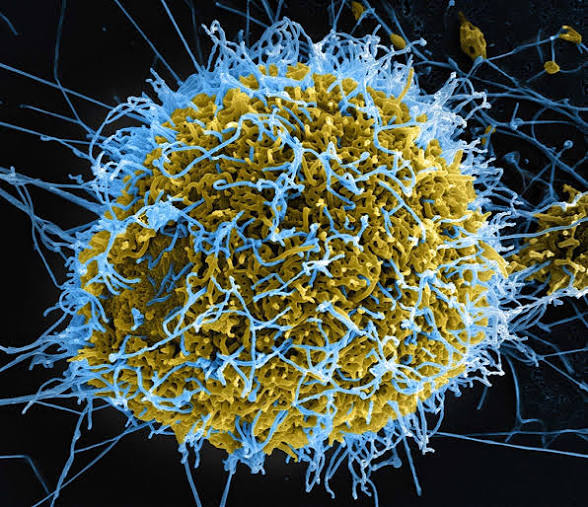
Nigeria’s first confirmed Ebola case in 2026 involves a woman who arrived in Abuja from an overseas trip on October 3. Her symptoms appeared days later, but questions remain about where she contracted the virus.
Nigeria has confirmed an imported case of Ebola virus disease in the Federal Capital Territory, bringing the infection back into the country more than a decade after its 2014 outbreak.
The case involves a 42-year-old Ugandan-born woman who lives in Abuja and travelled to Uganda before returning to Nigeria. The Africa Centres for Disease Control and Prevention (Africa CDC) disclosed on October 22 that she arrived in the country with her husband on October 3.
However, her travel history alone does not establish where she contracted the infection. Here is how the case unfolded.
The trip that preceded the diagnosis
According to Premium Times, Africa CDC Director-General Jean Kaseya said the woman had spent approximately two and a half weeks in Kampala, Uganda’s capital, before returning to Nigeria.
Nigeria’s Coordinating Minister of Health and Social Welfare, Muhammad Pate, said she travelled through Ethiopia, where she had a two-hour stopover in Addis Ababa.
The woman developed symptoms several days after arriving in Abuja. The World Health Organisation (WHO) said her symptoms began on October 7, four days after her arrival.
The timing prompted investigations into her movements and possible exposure to the virus before and after her return.
However, Uganda’s health authorities disputed claims that the case established an Ebola outbreak in their country. They said the location where the woman was exposed remained under investigation.
This distinction matters because investigators must establish the likely source of infection rather than assume that a traveller contracted a disease in a country through which they passed.
How doctors identified the infection
The woman initially sought treatment at a private health facility in Abuja on October 11 after developing symptoms. Reports indicate that she was initially treated for malaria-like symptoms because her condition resembled a more common illness.
When her condition failed to improve, her travel history raised concerns about a possible Ebola infection.
Health authorities were alerted, samples were collected and laboratory testing confirmed the Bundibugyo strain of Ebola virus on October 20.
The confirmation made Nigeria the fifth country to detect the virus during the outbreak that began in the Democratic Republic of the Congo (DRC) in May 2026, according to WHO.
The Bundibugyo strain is distinct from the Zaire ebolavirus responsible for some of the world’s best-known Ebola outbreaks. Identifying the strain helps health authorities determine the appropriate response.
The outbreak behind Nigeria’s case
Nigeria’s case emerged amid a wider regional outbreak linked to the DRC, with infections also reported in other African countries.
The virus can spread through direct contact with the blood or other bodily fluids of an infected person, or with contaminated materials. Travelling from an affected region does not automatically mean someone is infected, but travel history can help health workers identify possible exposure.
Nigeria previously contained an Ebola outbreak in 2014 after the virus entered the country through an infected traveller from Liberia. That outbreak tested the country’s ability to identify cases, trace contacts and prevent wider transmission.
The latest case has again placed those public health systems under pressure.
What Nigeria is doing now
Following confirmation, health authorities isolated the patient and began contact tracing. The Federal Ministry of Health reported that 44 contacts had been identified for monitoring.
The Nigeria Centre for Disease Control and Prevention activated its incident management system, while health authorities and international partners intensified surveillance and infection-prevention measures.
The immediate priority is to monitor identified contacts, identify anyone else who may have been exposed and prevent further transmission.
The case has not, by itself, established that Ebola is spreading within the wider Nigerian community. The effectiveness of contact tracing and monitoring will be important in determining whether the infection remains contained.
For now, investigators must establish where the woman contracted the virus, while Nigeria’s health authorities work to prevent an imported case from becoming a wider outbreak.
Also Read
- Ebola in Nigeria: 8 Steps to Protect Yourself From the Virus
- Ebola Risk: Why Nigeria Is on Alert After Kenya Confirms Imported Case
- Ebola Is Spreading in Congo: What You Need to Know About the Outbreak