

Hafiz Tahir Ashrafi: Why Archbishop of Canterbury withdrew award given to Muslim cleric

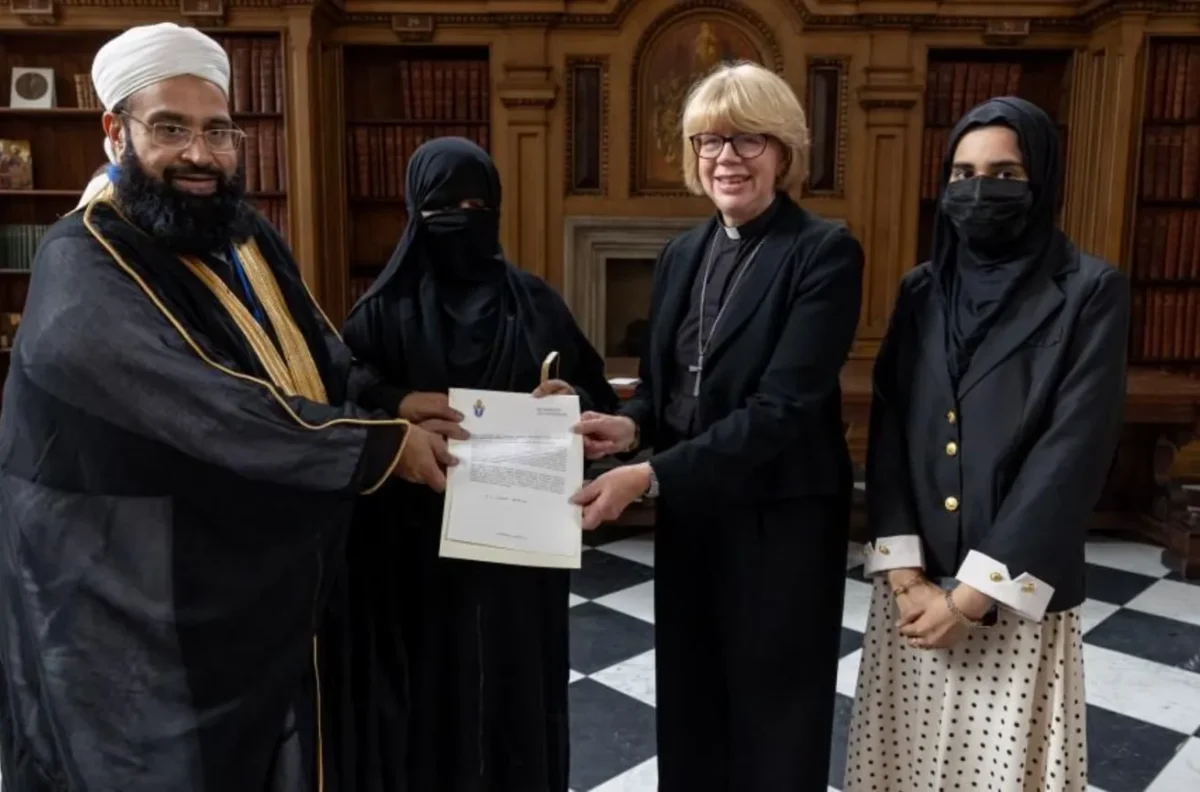
Hafiz Muhammad Tahir Mehmood Ashrafi was honoured at Lambeth Palace in London last week for his work promoting reconciliation and interfaith cooperation.
Days later, the award was withdrawn after previous comments he made about Osama bin Laden resurfaced.
The decision has put the Pakistani Muslim cleric at the centre of an international controversy, particularly because the award ceremony took place on September 11, the 25th anniversary of the 9/11 attacks.
Here is what happened.
Why was Hafiz Tahir Ashrafi given the award?
Ashrafi was presented with the Hubert Walter Award for Reconciliation and Interfaith Cooperation by the Archbishop of Canterbury, Dame Sarah Mullally.
According to Lambeth Palace, the award recognised his longstanding support for religious minorities in Pakistan, particularly the Christian community.
The Archbishop’s office said this support is valued by many Christians in Pakistan, including members of the Anglican Church.
Ashrafi was among 27 people who received Lambeth Awards this year, which recognise contributions to the Church of England, the Anglican Communion and wider society.
The award was presented at Lambeth Palace on September 11, 2026.
That date was significant because it marked 25 years since the September 11, 2001 terrorist attacks in the United States, which killed almost 3,000 people.
What did Ashrafi say about Osama bin Laden?
The controversy centres on comments Ashrafi made in 2007, when he was associated with the Pakistan Ulema Council.
At the time, protests were taking place in Pakistan over the British knighthood awarded to author Salman Rushdie.
Ashrafi said he would give Osama bin Laden the Islamic title Saifullah, meaning “Sword of God”.
Reports of the remarks said Ashrafi described bin Laden as serving Muslims through jihad against “infidels”.
Bin Laden was the founder of al-Qaeda and was responsible for the organisation that carried out the September 11 attacks.
The remarks therefore attracted renewed scrutiny after photographs of Ashrafi receiving the interfaith award were published.
Why did the Archbishop withdraw the award?
Lambeth Palace initially presented the award as recognition of Ashrafi’s work in interfaith relations.
However, after his previous comments came to light, the Archbishop’s office said it reconsidered the decision.
In a statement dated September 17, Lambeth Palace confirmed that the award had been withdrawn and said Ashrafi had been contacted about the decision.
The statement did not describe the earlier comments in detail but said they had led the Palace to reconsider the award.
The decision came only days after the ceremony.
What has Ashrafi said about the controversy?
Ashrafi’s spokesperson disputed the interpretation being placed on his 2007 comments.
According to the spokesperson, the remarks were being reported without their proper context.
Ashrafi has said that his comments about bin Laden were made as an example during the controversy over Rushdie’s knighthood.
His explanation was that he was trying to demonstrate what he described as the level of offence felt by some Muslims over the British honour given to Rushdie.
His spokesperson also said that Ashrafi never actually bestowed the title on bin Laden and argued that the comparison should not be interpreted as an endorsement of bin Laden.
The spokesperson further pointed to Ashrafi’s stated record against terrorism and violent extremism.
What was the award meant to recognise?
The Hubert Walter Award was specifically connected to reconciliation and interfaith cooperation.
Lambeth Palace said Ashrafi was recognised because of his support for religious minorities, particularly Christians in Pakistan.
The Archbishop’s office also said interfaith dialogue requires engagement across deeply held differences and that commitment remains unchanged.
The withdrawal therefore does not mean Lambeth Palace has abandoned its stated commitment to interfaith dialogue. Rather, the Palace said the newly surfaced historical comments caused it to reconsider this particular award.
Why has the decision attracted attention?
The timing has been a major part of the controversy.
Ashrafi received the award on the 25th anniversary of the September 11 attacks, while his past comments about the man behind al-Qaeda had not been part of the public discussion surrounding the award at the time.
The National Secular Society criticised the decision to present the honour, particularly because of its timing.
The episode has also raised questions about the background checks carried out before prominent figures receive honours.
Lambeth Palace’s response indicates that the earlier comments were considered significant enough to reverse the award after they became known.
Who is Hafiz Muhammad Tahir Mehmood Ashrafi?
Ashrafi is a Pakistani Muslim cleric and religious figure associated with the Pakistan Ulema Council.
He has been involved in interfaith initiatives and has publicly engaged on relations between Muslims and religious minorities in Pakistan.
His supporters have highlighted his work with Christian communities and his stated opposition to terrorism.
His recent recognition by the Archbishop of Canterbury was specifically based on his work in interfaith harmony.
However, his earlier comments about bin Laden have now become a central part of the public discussion surrounding him.
What happens to the award now?
The Hubert Walter Award presented to Ashrafi has been withdrawn.
Lambeth Palace confirmed the decision on September 17 and said Ashrafi had been informed.
The Archbishop’s office also reiterated its support for interfaith dialogue and cooperation.
For Ashrafi, the controversy means that an award intended to recognise his work with religious minorities has instead drawn renewed international attention to comments he made almost two decades ago.
The dispute now centres on two competing accounts: Lambeth Palace’s decision to withdraw the honour after the remarks came to light, and Ashrafi’s position that those remarks have been presented without the context in which they were made.