

Gauteng panic buttons: 5% of 2024/25 target reached

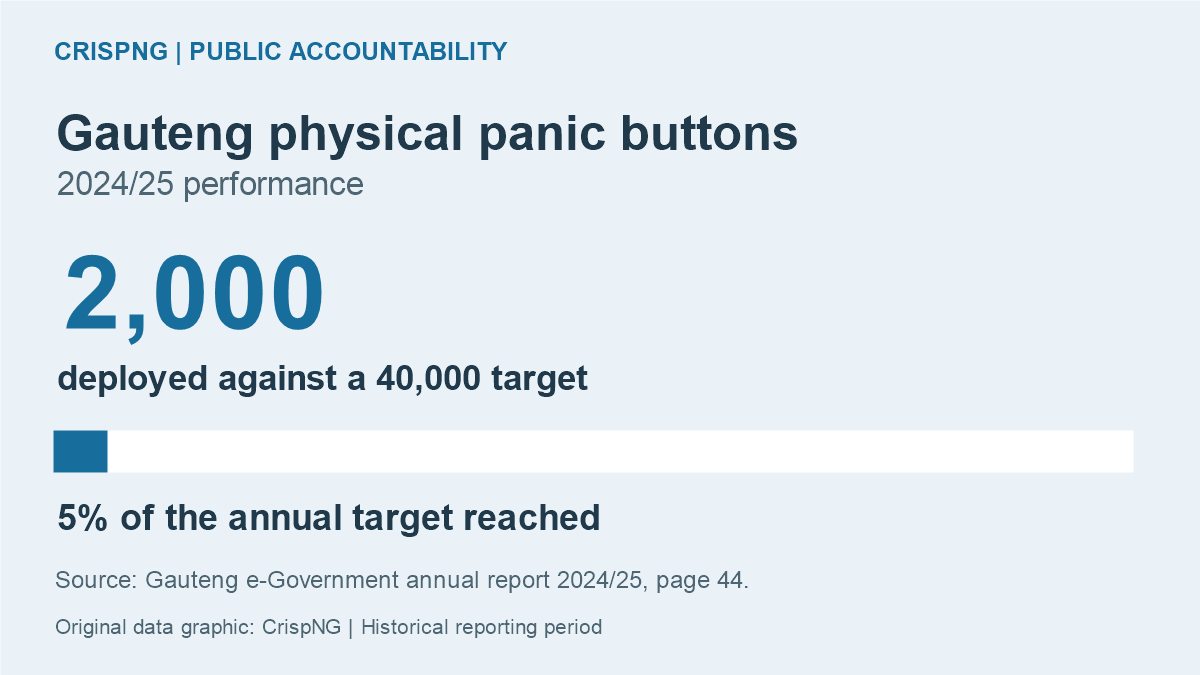
Original data graphic: CrispNG. Source: Gauteng Department of e-Government annual report 2024/25, page 44. These are historical performance figures, not a current device count.
The rollout of Gauteng panic buttons reached just 5% of the province’s physical-device target in 2024/25. The Department of e-Government’s annual report records 2,000 devices deployed against a planned 40,000.
A GroundUp investigation published on 27 October has drawn fresh attention to the programme and conflicting public statements about the number distributed. The annual-report figures cover the financial year ending 31 March 2025; they are not a new count of devices operating in 2026.
What the Gauteng panic buttons report records
The performance table on page 44 of the 2024/25 annual report records a shortfall of 38,000 physical devices. It attributes the missed target to budget constraints and says a request for additional money during the budget-adjustment process was unsuccessful.
In the section explaining its response to the missed target, the department says it will not continue implementing that project because of funding constraints. That statement concerns the physical-device indicator in the historical report. It does not establish that the entire emergency app has stopped operating.
Physical devices and app downloads are different
The same table separately records 44,663 app downloads during 2024/25. A download does not represent a physical panic button handed to a resident. The two figures describe different parts of the programme.
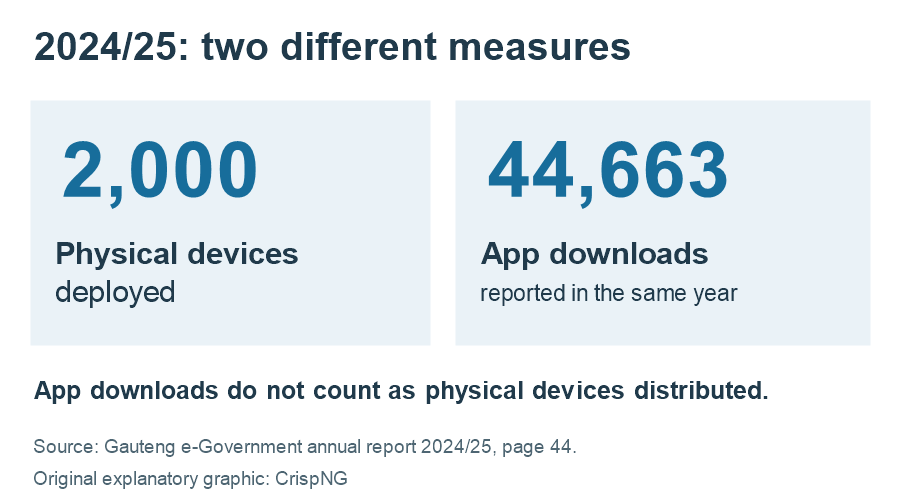
A July 2024 advisory described both a physical device and a smartphone app. It announced a planned handover to elderly residents in Kagiso and a much larger intended distribution over the following three months. Those were announced plans, rather than proof that the devices reached residents.
The distinction matters for people who need a way to call for assistance without relying on a smartphone. App uptake and delivery of a separate device answer different questions about access to the programme.
What remains unexplained
GroundUp reported that the premier’s office had claimed in December 2024 that more than 80,000 physical devices had been distributed. It contrasted that claim with Premier Panyaza Lesufi’s later figure of 2,000 and the annual report.
In a separate October 2025 statement, the department itself described more than 2,000 physical buttons and a separate, much larger app-download total.
GroundUp said it had not received answers to its questions from the provincial government or the system’s developer by publication. That is the publication’s account of its own requests for comment.
The annual report explains the missed 2024/25 target but does not reconcile the 80,000 claim reported by GroundUp. It also does not establish how many working physical devices residents have today. Readers should distinguish historical deployment figures from current emergency-service coverage.
Information checked: 28 October 2026. The performance figures refer to the 2024/25 financial year.