

From Arrests to Convictions: Is Nigeria Winning the Fight Against Illegal Mining?

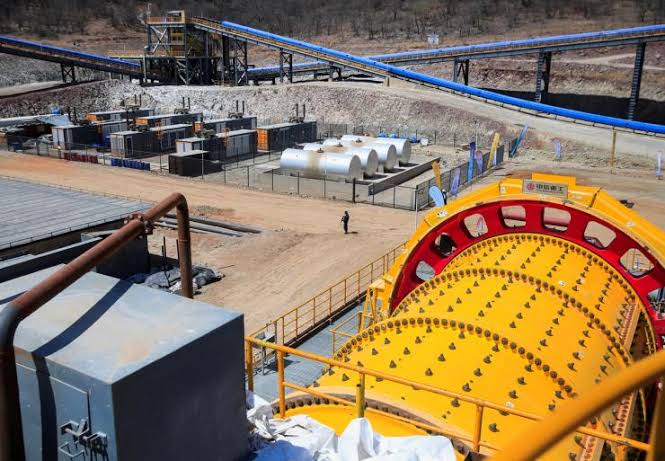
The EFCC’s arrest of 15 suspects at four alleged illegal lithium-processing plants in Ogun State comes after several convictions involving unauthorised mineral dealings. But with new cases continuing to emerge, questions remain about whether enforcement is translating into lasting results.
Nigeria’s crackdown on illegal mining has produced prison sentences, asset forfeitures and repeated arrests. Yet, authorities continue to uncover suspected unauthorised mineral operations, raising questions about the effectiveness of the country’s enforcement efforts.
On October 23, 2026, operatives of the Economic and Financial Crimes Commission (EFCC) arrested 14 Chinese nationals and one Nigerian at four alleged illegal lithium-processing plants in Ogere, Ogun State.
The commission said the operation followed intelligence gathering and surveillance. Officers recovered bags of lithium-bearing rocks, 18 mobile phones, four laptops and a trailer truck, among other items.
According to the EFCC, the suspects will be charged to court after investigations are concluded. Their arrests, however, come against the background of previous prosecutions that have already resulted in convictions.
Previous convictions show enforcement can produce results
In July 2026, the Federal High Court in Lagos sentenced two Chinese nationals, Zhang Hong Lin and Gao Pei Hai, to five years in prison each following their conviction for illegal mining-related offences and the unlawful export of solid minerals.
The defendants had pleaded guilty to five counts involving conspiracy and the unlawful possession of mineral resources intended for export. The court also ordered the recovered minerals forfeited to the Federal Government and gave the convicts the option of paying a N50 million fine covering the counts.
The case demonstrated that investigations into unauthorised mineral dealings can progress beyond arrests to criminal convictions and financial penalties.
Earlier, in May 2025, the Federal High Court in Jos sentenced four Chinese nationals to five years in prison each, with an option of a N1 million fine each, for unlawful dealings in solid minerals.
The court also ordered the forfeiture of mineral resources and proceeds linked to the offences. The defendants were arrested in Plateau State in March 2025.
These cases demonstrate that Nigerian authorities have secured convictions in separate illegal-mining-related prosecutions. However, they do not establish whether the penalties have deterred other operators or reduced the overall scale of illegal mining.
Why do new cases continue to emerge?
The latest arrests in Ogun State raise questions about how suspected unauthorised processing facilities were established and supplied with mineral-bearing materials.
Lithium has attracted growing commercial interest because it is used in rechargeable batteries for electric vehicles, electronic devices and energy-storage systems. Nigeria has sought to develop its solid minerals sector as part of efforts to diversify its economy beyond crude oil.
That commercial opportunity makes effective regulation important. Authorities must be able to identify licensed operators, trace mineral supplies and establish whether processing and transportation activities comply with the law.
However, the EFCC has not disclosed the identities of the 15 suspects, the quantity of lithium recovered or the specific regulatory violations associated with each facility.
It has also not explained how the plants obtained their raw materials or how long they had been operating.
Without those details, it is too early to determine whether the latest case exposes gaps in licensing, inspections, mineral transportation controls or other aspects of regulation.
Arrests are only the beginning
The number of people arrested in an operation can demonstrate the scale of an investigation, but it does not establish its eventual outcome.
Investigators must gather admissible evidence, determine each suspect’s role and establish whether offences have been committed. Prosecutors must then prove their cases in court.
The outcome of the Ogun investigation will therefore matter more than the initial arrest figure.
Authorities will need to establish who controlled the facilities, where the minerals originated and whether other individuals or businesses were involved in the alleged activities. Where the evidence supports criminal charges, successful prosecution could help establish accountability.
The government must also consider what happens after convictions. Enforcing court orders, recovering proceeds of crime and strengthening monitoring can help prevent illegal operations from simply relocating or re-emerging elsewhere.
However, determining whether these measures are working requires broader evidence, including prosecution outcomes, repeat offending and changes in the prevalence of unauthorised mining.
Is Nigeria winning the fight against illegal mining?
Nigeria has demonstrated that it can investigate illegal mineral dealings, secure convictions and obtain forfeiture orders. The July 2026 and May 2025 cases provide concrete examples.
But the continued discovery of suspected unauthorised operations shows why individual prosecutions cannot, on their own, establish that the wider problem is under control.
A proper assessment would require data on the number of investigations that lead to convictions, the enforcement of penalties, the recovery of illicitly obtained resources and whether illegal operations decline over time.
The Ogun case is another opportunity for authorities to demonstrate that enforcement can extend beyond arrests.
Ultimately, Nigeria’s success in fighting illegal mining will depend not simply on how many suspects are arrested, but on whether investigations lead to credible prosecutions, penalties are enforced and regulatory systems prevent unauthorised operations from continuing.