

Executive privilege: New DOJ memo raises fresh questions over Presidential accountability

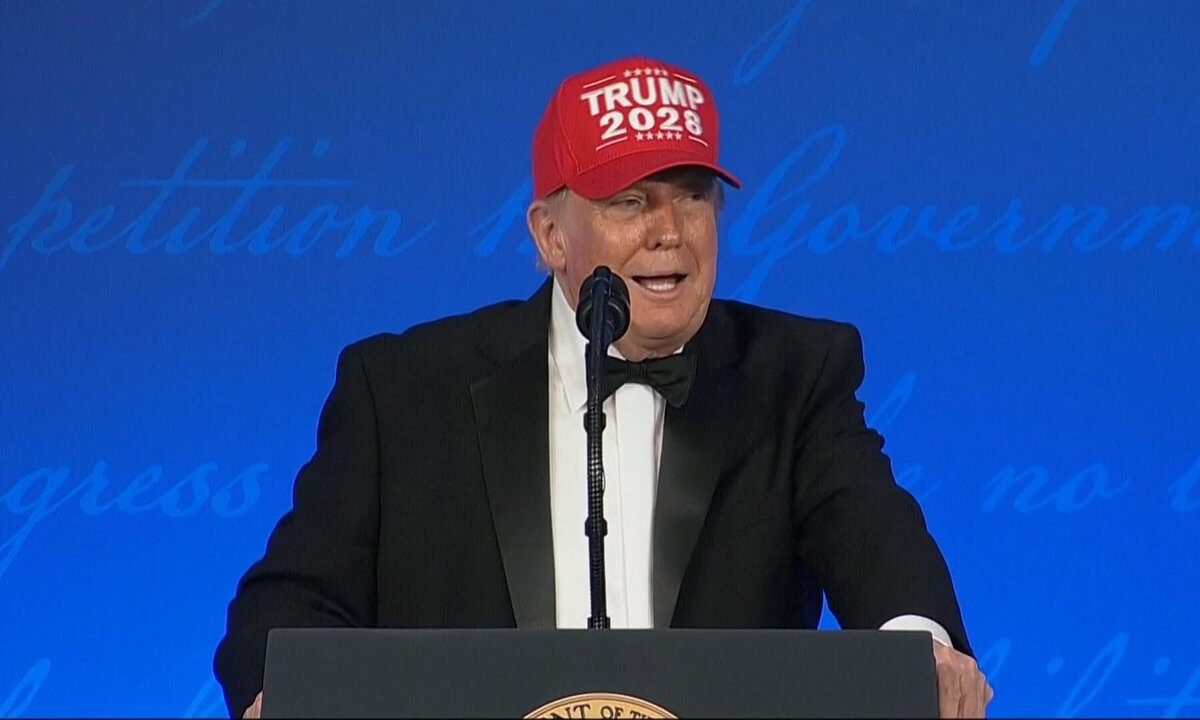
Trump reignited debate over a possible third term after wearing a “Trump 2028” hat during the White House Correspondents’ Dinner while insisting he was joking, Image Source: SMH
A new legal interpretation from the U.S. Department of Justice is putting executive privilege back at the center of the debate over presidential power, congressional investigations and accountability.
A recent Office of Legal Counsel (OLC) memo argues that private advisers who communicate with a president may be able to resist subpoenas by asserting the president’s executive privilege. The position has drawn criticism from legal scholars who argue that expanding the protection beyond government officials could make it harder for Congress and courts to obtain testimony in investigations involving presidential conduct.
The debate is particularly significant because executive privilege has long been one of the most powerful tools available to presidents seeking to protect confidential communications. At the same time, the privilege is not generally considered unlimited, and several major disputes have ended with courts rejecting presidential claims.
What Is Executive Privilege?
Executive privilege refers to the president’s ability to withhold certain communications and information from Congress, courts or the public when disclosure could interfere with the functioning of the executive branch.
The concept is rooted in the separation of powers, though the U.S. Constitution does not expressly use the term “executive privilege.” Presidents have asserted versions of the privilege throughout American history.
The protection is generally associated with confidential presidential communications and sensitive government information. It is not the same as blanket immunity from subpoenas or legal proceedings.
That distinction is becoming increasingly important as the Justice Department considers how far presidential protections can extend to people outside the federal government.
Why the New DOJ Executive Privilege Memo Matters
The latest OLC interpretation reportedly takes a broader position than an earlier 2019 opinion concerning former White House Counsel Don McGahn.
Under the new interpretation, private individuals who advise the president could potentially invoke the president’s privilege to resist compelled testimony.
Critics argue that extending executive privilege to private advisers could create a significant obstacle for congressional investigations and court proceedings.
If a president could prevent outside advisers from testifying simply because their communications with the president were confidential, investigators could face greater difficulty obtaining information about potential wrongdoing.
The Don McGahn Case Shows How Privilege Can Delay Investigations
The controversy surrounding Don McGahn provides an important example of how claims of presidential protection can affect congressional oversight.
In 2019, McGahn refused to comply with a House Judiciary Committee subpoena seeking his testimony in connection with special counsel Robert Mueller’s investigation into Donald Trump.
The Trump administration relied on a claim known as testimonial immunity, arguing that senior presidential advisers could not be compelled to testify before Congress.
A federal district court judge, Ketanji Brown Jackson, rejected the administration’s position and ordered McGahn to testify. The legal dispute continued through appeals before the parties eventually reached an agreement allowing McGahn to testify behind closed doors.
The episode demonstrated that even when a privilege claim ultimately fails, the legal process can consume substantial time and potentially slow a congressional investigation.
What Did the Supreme Court Say About Executive Privilege?
One of the most important cases involving executive privilege came during the Watergate scandal.
President Richard Nixon attempted to prevent the release of White House recordings that had been subpoenaed by special prosecutor Leon Jaworski.
In United States v. Nixon, the Supreme Court rejected Nixon’s claim of an absolute presidential privilege and ordered him to comply with the subpoena.
The ruling established an important principle: presidential confidentiality interests exist, but they do not automatically override the demands of a criminal judicial proceeding.
The case remains one of the most significant legal precedents in discussions about the limits of executive privilege.
READ ALSO
Thomas Jefferson Also Faced a Privilege Dispute
The history of executive privilege extends much further back than Watergate.
During the 1807 treason trial of former Vice President Aaron Burr, Burr sought documents from President Thomas Jefferson through a subpoena.
Jefferson resisted the demand and asserted executive privilege. Chief Justice John Marshall, however, emphasized the importance of an accused person’s ability to obtain evidence needed to establish innocence.
Marshall recognized that some official documents might warrant protection from public disclosure, but he did not accept the idea that executive privilege created an unlimited barrier to relevant evidence.
The historical episode has become part of the broader debate about how presidential confidentiality should be balanced against judicial and congressional authority.
Can Executive Privilege Be Used by Private Presidential Advisers?
This is one of the central questions raised by the new OLC interpretation.
The legal debate turns partly on the distinction between executive privilege and testimonial immunity.
Senior government officials may have certain protections connected to their official duties and presidential communications. Critics of the latest interpretation argue that those protections should not automatically extend to private citizens who advise the president.
Whether such a claim is ultimately accepted could depend on how courts interpret the Constitution, existing Supreme Court precedent and the specific circumstances surrounding a subpoena.
Can Congress Override Executive Privilege?
Congress can challenge an executive privilege claim through various legal and political mechanisms, including subpoenas, negotiations and litigation.
However, Congress does not simply erase executive privilege by issuing a subpoena. When the executive and legislative branches disagree, courts may ultimately be asked to determine whether the claimed protection applies.
The McGahn dispute illustrates how complicated this process can become, with litigation potentially continuing long after an investigation begins.
Why Executive Privilege Is Facing Renewed Attention
The latest controversy comes as political battles over congressional investigations and presidential accountability remain intense.
The Guardian opinion article examining the OLC memo argues that the interpretation could make it harder to investigate presidential misconduct. Its author, University of Pennsylvania law professor Claire Finkelstein, also questioned the memo’s treatment of historical legal precedents.
The article is an opinion piece, meaning its criticism represents the author’s legal and political analysis rather than an official judicial determination.
The underlying legal question, however, could become significant if Congress issues subpoenas to presidential advisers and the administration relies on the new interpretation to resist them.
What Happens Next?
The ultimate significance of the DOJ memo could depend on whether courts are asked to rule on the interpretation.
An OLC opinion represents the Justice Department’s legal position, but it does not have the same authority as a Supreme Court decision. A court considering a future subpoena dispute could accept, reject or distinguish the Justice Department’s reasoning.
That means the debate over executive privilege and presidential accountability is likely to continue, particularly if congressional investigations lead to new legal challenges.
For now, the new interpretation has revived an enduring constitutional question: how much confidentiality should a president have, and where should the law draw the line between protecting presidential communications and ensuring accountability?
Frequently Asked Questions About Executive Privilege
What is executive privilege?
Executive privilege is the claimed presidential power to withhold certain confidential executive-branch information or communications from Congress, courts or the public. The protection is not absolute.
Is executive privilege in the U.S. Constitution?
The Constitution does not expressly use the phrase “executive privilege.” Presidents have asserted the power based on constitutional principles involving separation of powers and the president’s responsibilities.
Can a president claim executive privilege?
Yes. U.S. presidents have repeatedly asserted executive privilege. Courts, however, have recognized limits on the power and have rejected some presidential claims.
Can executive privilege stop a congressional subpoena?
An executive privilege claim can be used to resist a congressional demand for information, but it does not necessarily end the dispute. Congress can challenge the claim, and courts may ultimately determine whether the privilege applies.
Does executive privilege protect private advisers?
This is currently a major legal question raised by the Justice Department’s latest OLC interpretation. Critics argue that extending presidential privilege to private advisers would go beyond established protections for government officials.
What is the difference between executive privilege and presidential immunity?
Executive privilege generally concerns the withholding of confidential information or communications. Presidential immunity concerns protection from certain legal actions against a president. They are separate legal concepts.
What happened in United States v. Nixon?
The Supreme Court ruled in 1974 that President Richard Nixon could not use an absolute claim of executive privilege to prevent the release of subpoenaed White House recordings in a criminal proceeding.
Did Donald Trump use executive privilege?
The Trump administration asserted executive privilege and related immunity claims during disputes over congressional investigations, including the 2019 fight over testimony from former White House Counsel Don McGahn.
Can courts reject executive privilege?
Yes. Courts have rejected presidential privilege claims in certain circumstances. The Nixon tapes case is the best-known example.
Why is executive privilege controversial?
Supporters argue that presidents need confidential communications to receive candid advice and effectively perform their constitutional duties. Critics worry that overly broad privilege claims can prevent Congress and courts from investigating potential misconduct.
Does executive privilege mean a president can hide anything?
No. Executive privilege is not an unlimited power to withhold all presidential information. Its application depends on the type of information involved and the legal circumstances surrounding the request.
Could the new DOJ memo change presidential accountability?
Potentially, if courts accept its broader interpretation. Allowing private presidential advisers to invoke executive privilege could make some congressional and judicial investigations more difficult by limiting access to witnesses and communications.
Is the DOJ memo legally binding on federal courts?
No. An OLC opinion represents the Justice Department’s legal interpretation, but federal courts are not automatically bound by it. Courts can independently interpret the Constitution, statutes and relevant case law.