

CLARITY Act Senate vote: What it could mean for Bitcoin, XRP and the U.S. crypto market

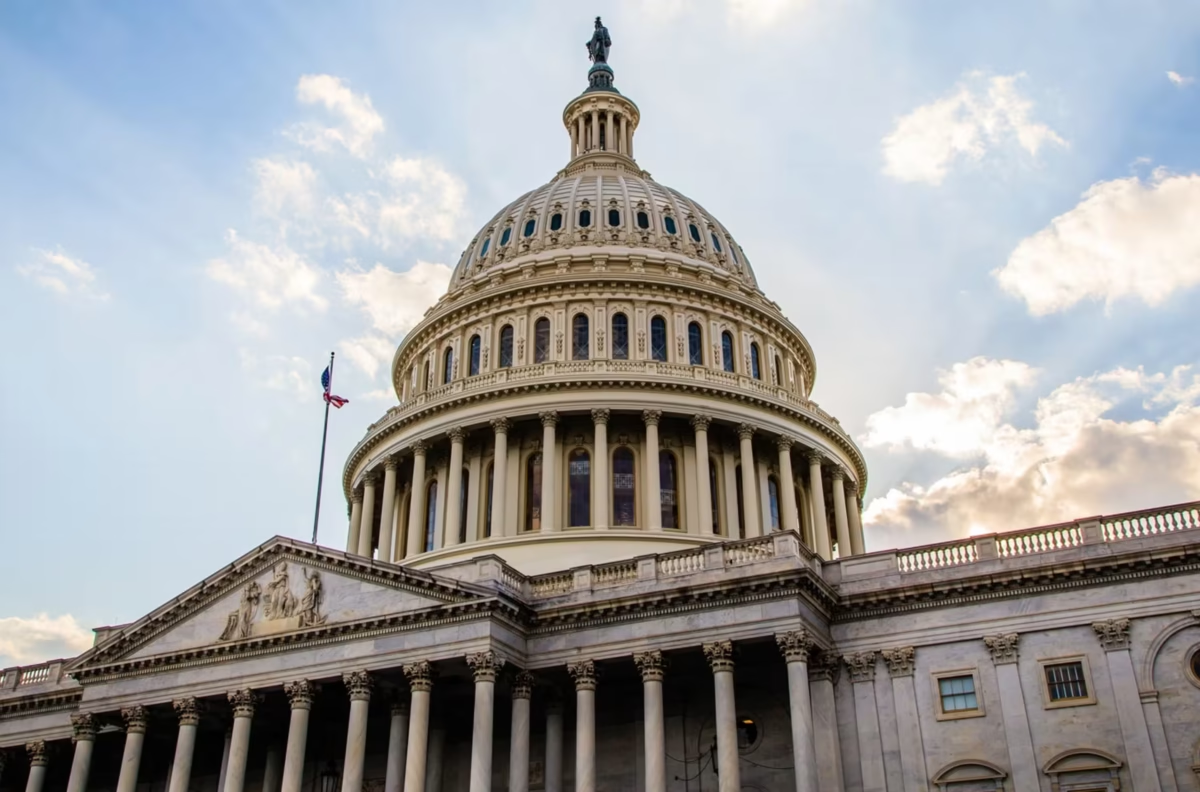
CLARITY Act faces a crucial Senate vote. Credit: Omar Chatriwala/Getty Images
The U.S. Senate is preparing for a pivotal vote on the CLARITY Act, putting one of the biggest attempts yet to establish a comprehensive regulatory framework for cryptocurrencies on a knife edge.
The vote scheduled for Tuesday, September 15, is not final passage of the bill. Senators are voting on whether to advance the legislation, with 60 votes needed to overcome the procedural hurdle and move the measure toward formal Senate consideration.
That makes the outcome particularly important for the crypto market. A successful vote would keep the legislation alive and potentially reduce regulatory uncertainty around digital assets. A failure would threaten to stall the bill at a time when the Senate has limited legislative time before the 2026 midterm elections.
Bitcoin, XRP and other major cryptocurrencies are therefore being watched closely as traders assess whether Washington is finally moving toward clearer rules for the industry.
What Is the CLARITY Act?
The CLARITY Act is designed to establish a clearer regulatory framework for digital assets in the United States.
One of its central goals is to clarify the roles of the Securities and Exchange Commission (SEC) and the Commodity Futures Trading Commission (CFTC) in overseeing crypto markets.
The legislation has attracted strong backing from cryptocurrency companies and industry groups, which argue that uncertainty over whether tokens and crypto-related activities fall under securities or commodities rules has made it harder for businesses to operate and invest in the United States.
The issue has become even more significant because federal regulators have already moved toward clearer crypto classifications. An SEC and CFTC interpretation issued earlier this year established categories including digital commodities, digital collectibles, digital tools, stablecoins and digital securities. Bitcoin and XRP were listed among examples of digital commodities under that regulatory interpretation.
The CLARITY Act would attempt to put a broader market-structure framework into federal law rather than relying primarily on regulatory interpretation.
Why the Senate Vote Matters So Much
Tuesday’s vote is a procedural test, not a vote that would immediately turn the CLARITY Act into law.
The legislation needs 60 votes to move forward. If senators approve the procedural motion, the bill can proceed to debate and further negotiations, giving lawmakers an opportunity to consider amendments.
That distinction is important for investors.
A successful vote would not mean crypto exchanges, token issuers or investors immediately operate under a new set of rules. It would mean the legislative process has survived a major obstacle.
A failed vote would send a much more negative political signal. Reuters reported that Senate Republicans have limited time to revive the legislation if it fails, given the crowded congressional calendar and approaching elections.
Why the CLARITY Act Is Facing Opposition
The biggest disagreements are no longer simply about crypto regulation.
Democrats have pushed for stronger restrictions on politicians and public officials who have financial interests in crypto ventures. The debate has drawn particular attention because of President Donald Trump’s family’s involvement in the cryptocurrency industry.
The revised bill would require officials to divest significant crypto-related interests or place those assets into blind trusts. It would also give state attorneys general greater authority to enforce certain restrictions.
Sen. Elizabeth Warren and other Democrats have argued that the changes do not go far enough.
Republicans, meanwhile, have argued that the revised language addresses concerns raised by Democrats and should allow the legislation to move forward. Senate Republicans released a substantially revised version ahead of the vote in an effort to attract additional support.
Banking Industry Raises Another Red Flag
Stablecoins are another major obstacle.
Banking groups remain concerned that stablecoin rewards could encourage consumers to move money away from traditional bank deposits. Banks argue that a large shift in deposits could eventually affect their ability to provide loans.
The latest version of the bill attempts to address some of those concerns, but banking organizations say the revisions have not gone far enough.
That creates an unusual political problem for supporters of the CLARITY Act: some of the resistance is coming from Democrats focused on ethics provisions, while parts of the banking industry are raising separate concerns about the financial consequences of stablecoin competition.
READ ALSO
Trump Ally Resigns After Clash with DOJ Over Probe into his Foes
What Could the CLARITY Act Mean for Bitcoin?
For Bitcoin, the biggest potential benefit is regulatory certainty.
Bitcoin has already received clearer treatment from federal regulators, with the SEC’s 2026 interpretation identifying BTC as a digital commodity.
A comprehensive market-structure law could nevertheless provide a stronger statutory foundation for crypto markets.
That could make it easier for exchanges, financial institutions, asset managers and other large investors to plan around U.S. regulations.
The immediate market reaction, however, may depend heavily on expectations.
Reuters reported that investors had largely priced in the possibility that the CLARITY Act would not become law in the foreseeable future. That means a successful procedural vote could provide a positive surprise, while failure could reinforce existing concerns without necessarily creating a completely new regulatory shock.
What Could It Mean for XRP?
XRP is one of the cryptocurrencies attracting particular attention because its regulatory status has been closely watched in the United States.
Federal regulators’ current crypto interpretation lists XRP among digital commodities, alongside Bitcoin and several other major tokens.
That does not mean the CLARITY Act would automatically send XRP higher.
The potential benefit for XRP would come from a broader market structure in which token classification, exchange activity and regulatory responsibilities become more predictable.
For XRP investors, the important question is whether the legislation strengthens a regulatory environment where established digital assets can operate without prolonged uncertainty over which federal regulator has jurisdiction.
A successful Senate vote could therefore improve sentiment around XRP and other major altcoins, but price movements would still depend on broader market conditions, liquidity and investor expectations.
What Happens If the Senate Advances the Bill?
If the 60-vote threshold is reached, the CLARITY Act moves into a more substantive phase of the legislative process.
That would allow senators to debate the legislation and potentially negotiate additional changes.
It would still need to pass the Senate, reconcile with the House version and ultimately reach the president before becoming law.
Crypto investors should not confuse Tuesday’s procedural vote with final enactment.
The significance is that a successful vote keeps the path open.
What Happens If the CLARITY Act Fails?
A failed vote would be a setback for the U.S. crypto industry’s push for comprehensive market-structure legislation.
It would not make cryptocurrency illegal, nor would it erase the regulatory work already carried out by federal agencies.
The SEC and CFTC have already issued guidance on how certain crypto assets and activities are treated under existing federal laws.
But failure would raise questions about when Congress could deliver a broader statutory framework.
That uncertainty could weigh on crypto-related stocks and digital assets if investors interpret the result as evidence that Washington remains divided on crypto regulation.
Bitcoin and XRP Investors Are Watching the Bigger Signal
The CLARITY Act vote matters beyond the technical details of crypto regulation.
For the market, it is a test of whether lawmakers can produce bipartisan legislation for an industry that has become a major part of the U.S. financial and political landscape.
For Bitcoin, XRP and other major cryptocurrencies, clearer rules could encourage institutional participation and reduce some of the uncertainty surrounding U.S. operations.
But Tuesday’s vote will not settle those questions on its own.
The immediate question is simpler: Can the bill secure the 60 votes required to stay alive?
That answer could determine whether the U.S. crypto market gets closer to a comprehensive regulatory framework, or faces another potentially lengthy wait.
CLARITY Act FAQs
What is the CLARITY Act?
The CLARITY Act is proposed U.S. legislation designed to establish a comprehensive regulatory framework for digital assets and clarify the responsibilities of the SEC and CFTC.
When is the CLARITY Act Senate vote?
The Senate is scheduled to hold the procedural vote on Tuesday, September 15, 2026, shortly after 2 p.m. EDT.
How many votes does the CLARITY Act need?
The bill needs 60 Senate votes to overcome the procedural hurdle and advance toward formal consideration.
Is today’s CLARITY Act vote the final vote?
No. The September 15 vote is procedural. A successful vote would allow the legislation to move forward; it would not make the CLARITY Act law immediately.
What happens if the CLARITY Act passes the Senate vote?
If it clears the procedural hurdle, senators can proceed with debate and further negotiations. The legislation would still need to complete the remaining congressional process before becoming law.
Will the CLARITY Act make Bitcoin legal?
Bitcoin is already legal to own and trade in the United States. The legislation is primarily about creating clearer rules for digital assets and market participants.
Could the CLARITY Act affect Bitcoin’s price?
It could influence market sentiment because clearer regulation may reduce uncertainty and potentially encourage institutional activity. However, the bill does not guarantee a Bitcoin price increase.
Could the CLARITY Act affect XRP?
Potentially. XRP is already identified as a digital commodity in the SEC’s 2026 crypto interpretation. A broader market-structure law could provide additional certainty around how major digital assets are regulated.
What happens to crypto if the CLARITY Act fails?
Crypto trading would continue under existing laws and regulatory frameworks. However, failure could delay comprehensive congressional rules and increase uncertainty around the future of U.S. crypto regulation.
Why are banks opposing parts of the CLARITY Act?
Banking groups are concerned that stablecoin rewards could encourage customers to shift deposits away from banks, potentially reducing the funds available for lending.