

Carbon Credits in Nigeria: How the Market Works and What to Check

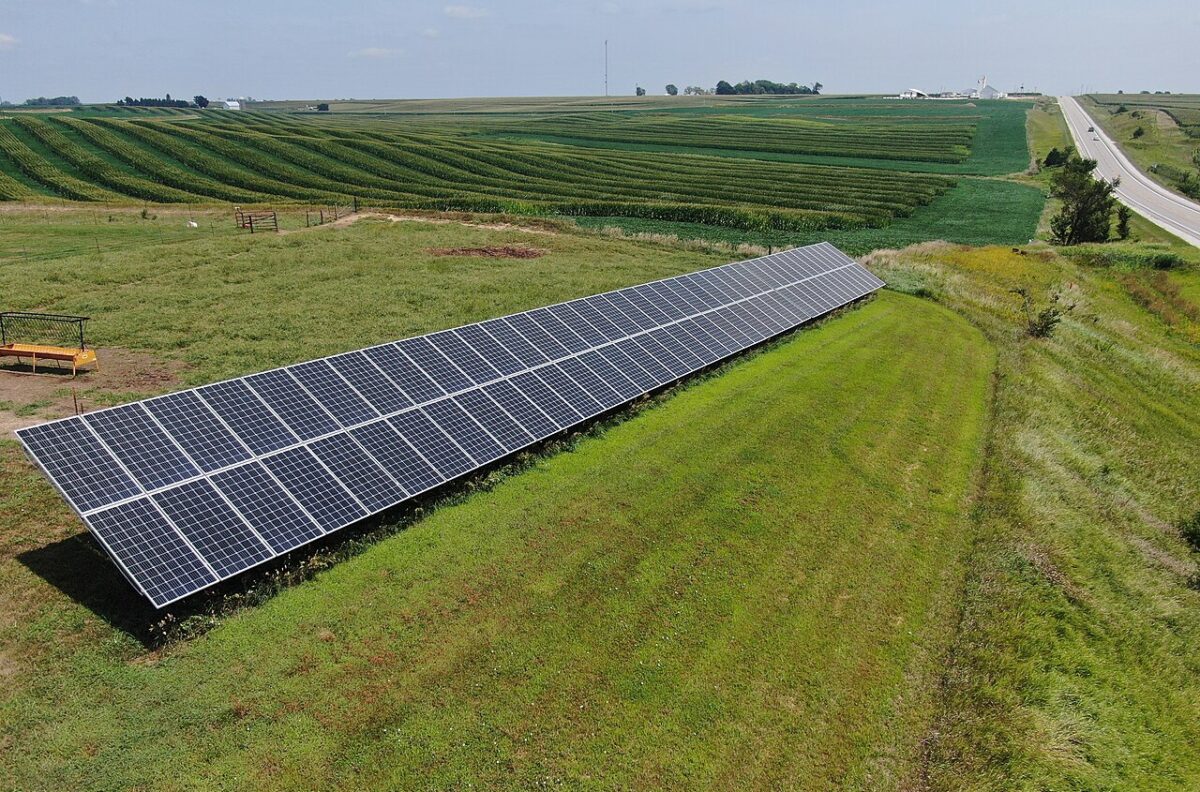
Illustrative aerial view of a US farm solar array, photographed on 9 August 2024. USDA photo by David Kosling; a US government work in the public domain via Wikimedia Commons. It illustrates a renewable-energy project type.
Carbon credits turn a verified reduction or removal of greenhouse-gas emissions into a unit that can be transferred or retired. In Nigeria, a project developer, a buyer and a registry each have a role, while the Paris Agreement and national climate policy shape how international transactions are recorded.
For businesses and readers, the central question is quality: what activity produced the credit, how much climate benefit did an independent process verify, and where does the unit sit in the market?
Key facts about carbon credits
- A carbon credit generally represents one metric tonne of carbon dioxide equivalent (CO₂e) reduced, avoided or removed.
- Project standards set methods for estimating a project’s climate benefit and monitoring its delivery.
- Independent validation and verification, public registries and retirement records help buyers trace a unit.
- Voluntary purchases and regulated compliance systems follow different rules and serve different purposes.
- Nigeria’s Climate Change Act 2021 provides a national policy framework; carbon-market arrangements also draw on the Paris Agreement’s Article 6 rules.
What are carbon credits in Nigeria?
A carbon credit is a transferable unit linked to a quantified climate benefit. The World Bank describes carbon-crediting as a way to finance emissions reductions or removals, with credits issued after a programme applies an agreed method and checks the reported result. One credit usually represents one tonne of carbon dioxide equivalent, a common measure that combines the warming effect of different greenhouse gases.
Credits can come from activities such as capturing methane, improving access to cleaner cooking, restoring forests or replacing fossil-fuel electricity with renewable power. A project’s method sets the boundary, baseline and monitoring approach. Those choices shape the number of credits a project can issue.
A carbon credit and an emissions allowance play different roles. A credit represents a measured project outcome; an allowance grants permission to emit within a regulated cap. The World Bank guide explains carbon-crediting and market transactions, while each regulated system defines its own allowance rules.
How does a carbon-credit project work?
A project moves through several checks before a buyer can make a credible claim. The details depend on the standard, method and market, yet the main stages give readers a practical way to follow a credit from a project plan to its final use.
- Project design: The developer describes the activity, location, expected emissions effect, monitoring plan and the method it intends to use. A baseline estimates the emissions outcome expected without the project.
- Validation: An independent assessment checks whether the design follows the chosen method and whether the planned result qualifies for crediting.
- Monitoring: The project records its activity and gathers data during the monitoring period. For a clean-cooking programme, records could include equipment distribution, usage checks and fuel consumption data, subject to the method.
- Verification and issuance: An independent verifier reviews the reported results. A programme issues credits for the verified quantity and records units in a registry.
- Transfer and retirement: A buyer may purchase credits and later retire them in a registry. Retirement records the unit’s use and helps prevent a second sale or claim for the same unit.
Each step creates a record that a buyer can review. The Integrity Council for the Voluntary Carbon Market groups strong market features under principles covering governance, tracking, transparency, third-party checks, additionality, permanence, quantification, double counting and sustainable-development safeguards. Its Core Carbon Principles give buyers a useful quality lens; they are a voluntary benchmark rather than Nigerian legislation.
What is the difference between voluntary and compliance carbon markets?
A compliance market operates under laws or regulations that set obligations for specified organisations or sectors. The relevant authority defines the covered emissions, reporting requirements and how units count towards compliance. A voluntary market serves buyers choosing to finance projects or make climate claims under a private standard and their own reporting rules.
The same project may interact with several systems, so the label on a credit alone gives an incomplete picture. Buyers need to identify the programme, its method, its registry, the claim they plan to make and any national accounting rules that apply.
For an international transaction connected to national climate targets, Article 6 of the Paris Agreement sets out routes for cooperation between countries. Article 6.2 covers accounting for internationally transferred mitigation outcomes; Article 6.4 establishes a UN-supervised crediting mechanism; Article 6.8 covers non-market cooperation. The UNFCCC Article 6 page explains these pathways and the accounting that accompanies transfers.
How does Nigeria’s climate framework relate to carbon credits?
Nigeria’s Climate Change Act 2021 establishes the National Council on Climate Change and sets a framework for climate action. The law gives the Council a coordinating role across national climate policy. Readers can consult the Climate Change Act text, hosted in the FAOLEX legal database.
A national carbon-market framework document hosted by the Climate and Sustainable Development Network of Nigeria describes possible market institutions and registry functions, including the tracking of issued, held, transferred and retired units. The document helps explain the proposed market architecture; readers should distinguish a framework document from an enacted law or a live credit registry. The Nigeria framework provides the source text for that design discussion.
That policy context matters for developers and buyers. A project may need to meet a private standard’s rules and the national requirements relevant to its location, authorisation and claims. Article 6 transfers also involve country-to-country accounting, including authorisation and corresponding adjustments where the applicable rules require them.
Climate finance can support a range of Nigerian project ideas, including cleaner cooking, methane capture, forest stewardship and renewable electricity. Each proposal needs its own method, baseline, safeguards and monitoring plan. Verified results and registry records establish whether a project produces creditable units.
For wider context on the climate science behind emissions reductions, CrispNG’s climate change explainer offers a concise introduction.
READ ALSO: EXPLAINER: All you need to know about climate change
How can a buyer assess carbon-credit quality?
Buyers can begin with five questions. Together, they help buyers trace the climate outcome beyond a credit’s label.
- What is the project’s method? Check the standard, methodology version, project location, monitoring period and the emissions source or removal activity.
- Would the activity have happened anyway? Additionality asks whether credit revenue changed the project’s likelihood, scale or timing. A strong method explains its test and the evidence used.
- How does the project quantify results? Review the baseline, data sources, uncertainty treatment, leakage risks and the independent verifier’s report. Clear documentation helps buyers understand the credited quantity.
- How are long-term risks managed? Forest and soil projects face reversal risks such as fire, disease or land-use change. A standard may use buffers, monitoring and other safeguards to address reversals.
- What claim will the buyer make? A retired credit records a transaction and use. A company should explain its wider emissions plan, the role of the credit and the standard behind the claim.
The Integrity Council’s principles emphasise robust quantification, independent validation and verification, registry tracking, safeguards and measures for permanence. These checks guide due diligence, while buyers should also read the project documents and the registry entry for the specific unit.

This illustration shows a broader climate-investment context, including urban adaptation. Carbon-credit projects focus on quantified emissions reductions or removals, while climate finance can also support resilience measures through other funding routes.
Another practical check is the registry. A buyer can confirm the project name, crediting period, serial numbers, account history and retirement entry where the registry makes those details public. The buyer can then keep the transaction record with its climate reporting.
Why do carbon-credit prices vary?
Credits trade at different prices because projects, methods, locations, co-benefits and buyer requirements vary. A unit linked to a particular monitoring period or project type may attract different demand from a unit with another profile. Market price alone describes a transaction; it gives only one part of a credit’s environmental quality.
Cost also reflects project development, monitoring, verification, registry services and the time required to produce a result. For Nigerian developers, access to finance, land or community agreements, technical capacity and clear authorisation can shape whether a project reaches issuance. Those factors call for project-specific research before a business commits money.
Businesses reviewing a proposal can ask for the project design document, method, validation statement, monitoring reports, verification statement, registry record and the precise wording of the intended claim. A careful review connects each commercial promise to a public document or a verifiable record.
How do carbon credits fit into a company’s climate plan?
A company can start with an emissions inventory, set a reduction plan and track progress over time. Credits can finance climate projects as a separate part of that plan, with claims describing the project, unit, registry and retirement date. This keeps the company’s own operational reductions visible alongside any contribution through credit purchases.
For public communication, precise language helps readers see what happened. A statement can name the project and standard, give the quantity retired, identify the registry and explain how the purchase relates to the company’s own emissions work. A broad claim such as “carbon neutral” needs a clear boundary and a substantiated method.
CrispNG covered the National Council on Climate Change’s leadership in its 2024 appointment report. That article gives background on the institution and its public leadership at the time of publication.
READ ALSO: Meet the new climate change council DG, Nkiruka Maduekwe
Carbon credits in Nigeria: frequently asked questions
What is one carbon credit worth?
One carbon credit generally represents one tonne of carbon dioxide equivalent reduced, avoided or removed. Its market price depends on the project, method, buyer requirements and market rules.
Who issues carbon credits?
A recognised programme or crediting standard issues units after the project passes its method, monitoring and verification requirements. A registry records the units and later transactions.
How can a Nigerian company buy carbon credits?
A company can review a project and its registry through the relevant programme or a broker, then check the unit’s serial number, verification documents, claims rules and retirement process. For international transfers, the buyer should also confirm the authorisations and accounting that apply under Article 6.
Can carbon credits help Nigeria meet its climate goals?
Well-accounted credits can channel finance towards verified emissions reductions or removals. Article 6 rules connect some international transfers to national climate accounting, while projects still need credible methods, monitoring and safeguards.
What is the difference between a carbon credit and an offset?
A carbon credit is the unit recorded by a programme or registry. “Offset” describes a claim or use that a buyer may make with a credit, so the buyer’s wording and the unit’s retirement record both matter.
Last reviewed: 3 November 2026