

Black Sea Ship Attack Off Romania Raises Wider Shipping Risks

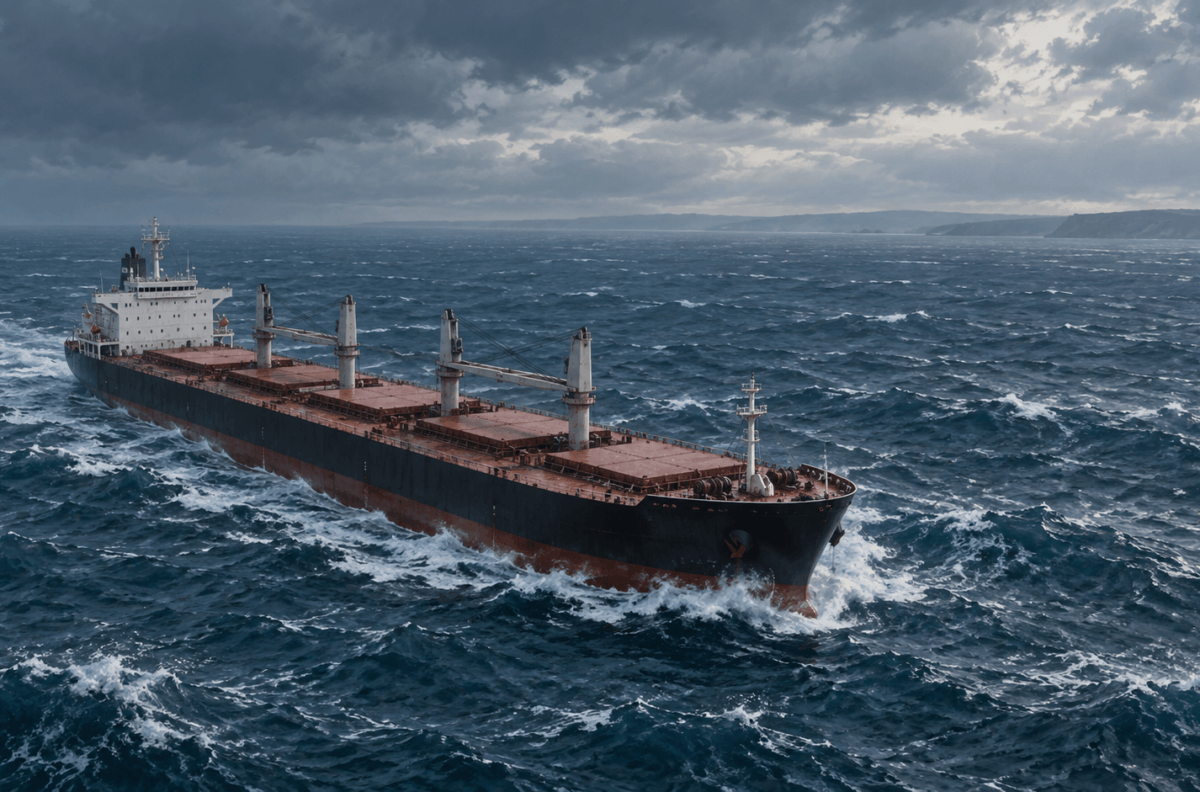
Illustrative image; not a photograph of the Khoryv or the reported attack.
The Black Sea ship attack off Romania has left one crew member dead and three missing. It also raises a wider question: how much risk can commercial shipping absorb as attacks spread across a corridor used by Ukraine’s exporters?
Romanian authorities say the Comoros-flagged Khoryv was struck by a drone about 13 nautical miles east of Constanța, just outside Romania’s territorial waters. The location puts the latest incident close to a NATO coastline, but the reported strike did not occur inside Romanian territorial waters.
What is confirmed about the Khoryv
Romania’s Maritime Coordination Centre received a distress alert at about 10 a.m. local time on Friday. The ship had 13 crew members on board: 10 Ukrainians and three Azerbaijanis. Romanian rescue services recovered nine people alive and one body; authorities said three crew members remained missing as search operations continued.
The Ministry of Internal Affairs said the vessel suffered major damage and capsized. The Associated Press and Reuters reported that it later sank. Romanian officials said it had been struck by a drone. President Nicușor Dan blamed Russia and described the incident as part of the escalation connected to the war in Ukraine. That attribution is the Romanian president’s stated assessment; the reports and releases cited below do not include publicly released forensic findings identifying the launch point or operator.
Why the Black Sea ship attack matters to the region
The Black Sea is both a conflict zone and a commercial route. Ukraine has relied on ports and shipping routes linked to the Danube and the western Black Sea to move exports after repeated attacks on its own port infrastructure. A vessel in distress close to Romania can therefore test rescue capacity, navigation safety and the confidence of operators using nearby routes, even when an incident occurs outside national waters.
The sinking also follows a run of attacks on commercial vessels near Romania and Bulgaria. Reuters reported that Romania’s Supreme Council of National Defence had agreed to accelerate work on maritime surveillance, mine countermeasures and responses to drones. NATO has also said it would increase maritime patrol aircraft, radar and drone capabilities in the region. These steps show that governments are treating shipping security as a continuing operational problem; they do not establish that any single measure would prevent another strike.
Black Sea ship attack: what remains uncertain
The immediate priority is locating the three missing sailors and confirming the full circumstances of the sinking. Romanian authorities said poor weather and low visibility prevented a helicopter rescue during the initial operation. The public updates establish the crew count, the rescue tally and the ship’s location; they do not provide a full account of how the vessel was hit or independently establish responsibility for the strike.
The incident should not be read as proof that Romania itself was attacked. The ship was reported to be just beyond Romanian territorial waters. But the proximity matters: commercial crews, rescue agencies and coastal states are having to manage dangers that sit near a NATO frontier and alongside routes important to regional trade.
What to watch next
Updates from Romania’s rescue authorities should clarify the search outcome, while investigators may release further information about the damage and the attack. For the wider region, the practical test is whether increased monitoring and coordination can protect commercial traffic without disrupting the routes that remain vital to Ukraine’s exports.
Sources
- Romania’s Ministry of Internal Affairs: rescue operation update
- AGERPRES: nine sailors rescued, one dead and three missing
- Associated Press: the Khoryv sank off Romania’s coast
- Reuters: Romania blames Russia after the ship sank
- Reuters: Romania’s plans to strengthen Black Sea surveillance