

Australia interest rate rise takes cash rate to 4.85% in fifth 2026 move

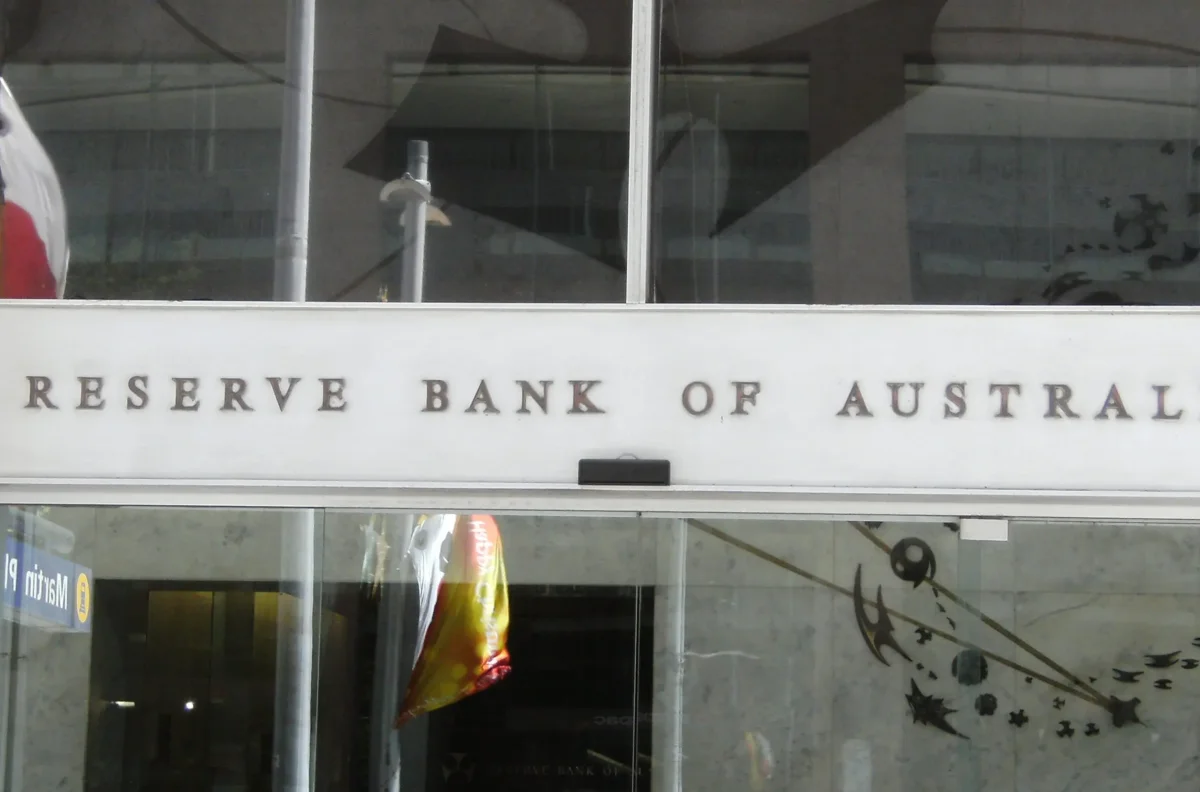
The Reserve Bank of Australia’s Sydney sign. Photo: Danausi/Wikimedia Commons (public domain).
The Reserve Bank of Australia has lifted its cash rate to 4.85 per cent, extending a year of tightening as inflation pressures prove persistent. The decision raises repayments for households with variable-rate mortgages and puts fresh attention on borrowing costs across the economy.
Australia’s interest rate rise came on Tuesday, 3 November, when the RBA increased its target by 25 basis points. The move was the fifth increase in 2026 and takes the benchmark to its highest level since late 2008, according to the ABC report and Reuters coverage.
Australia interest rate rise: why the RBA moved
The RBA’s Monetary Policy Board voted six to three to raise the cash rate from 4.60 per cent to 4.85 per cent. The three dissenting members preferred to hold the rate, showing policymakers were divided over inflation and the pressure already facing households.
In its Board statement, the bank said inflation had picked up materially and spread across several areas of the economy. It pointed to stronger-than-expected demand, capacity pressures and rising fuel and commodity costs. The RBA also highlighted rapid price growth in technology goods linked to investment in artificial intelligence.
The bank’s November economic forecasts put headline and underlying inflation above three per cent until the end of 2027, with a return to 2.5 per cent expected in mid-2028. The RBA said tighter financial conditions should help slow demand, while its forecasts also recognise falling housing prices and a higher unemployment rate.
The move follows four increases earlier this year. In February the cash rate stood at 3.85 per cent; successive quarter-point rises have since added a full percentage point. The benchmark had reached 4.35 per cent before the RBA began cutting rates in late 2024, a comparison that helps explain why borrowers are watching each decision closely.
What 4.85% means for borrowers and savers
Commercial banks set their own mortgage rates, so the RBA announcement on its own leaves each borrower’s exact new repayment to their lender. Lenders often pass on a cash-rate increase to variable home loans, while fixed-rate customers usually see a change when their current term ends or when they refinance.
As a guide, a 0.25 percentage-point increase adds about A$83 a month to repayments on a A$500,000, 25-year principal-and-interest loan, assuming the lender passes on the full change and the remaining term stays constant. The precise effect depends on the loan balance, fees and lender calculation. Households should check their lender’s notice and request an updated repayment schedule.

Savers may see higher rates on some deposit accounts, although banks set those products separately. Comparing the effective interest rate, introductory period, withdrawal conditions and account fees can help customers judge whether a new offer delivers a real return.
The RBA’s split vote also matters. It shows policymakers weighed the risk of persistent inflation against softer housing and labour-market conditions. The statement gives households a clearer account of the reasoning, while the bank’s next data releases will shape future decisions.
What should Australian households do now?
Borrowers can start with three practical checks: confirm whether their loan is variable or fixed, ask when the lender will apply any change, and compare the new payment with their monthly budget. Anyone facing repayment strain can contact the lender early to discuss hardship support and available loan options.
People considering a home purchase should test their budget against a range of interest rates rather than relying on one forecast. The RBA sets monetary policy to guide inflation over time; individual mortgage prices reflect lender decisions and future rates will depend on economic conditions.
For internationally connected readers, a higher Australian cash rate can also influence the Australian dollar, credit costs and demand in the wider economy. Currency movements respond to global interest-rate expectations, commodity markets and other forces, with the cash-rate decision forming one part of that picture.
Frequently asked questions
What is Australia’s cash rate now?
The Reserve Bank of Australia raised the cash-rate target to 4.85 per cent on 3 November 2026.
How many times has the RBA raised rates in 2026?
The November decision was the fifth increase this year, adding 1.25 percentage points in total from the 3.60 per cent level at the start of 2026.
Will every mortgage repayment rise by the same amount?
Repayments vary between lenders and by each loan’s terms, balance and repayment schedule. Customers should check their lender’s notice for the exact effect.
When is the next RBA rate decision?
The next scheduled monetary-policy decision follows the Board’s next meeting. The RBA publishes its meeting calendar and announces the cash-rate decision after each meeting.